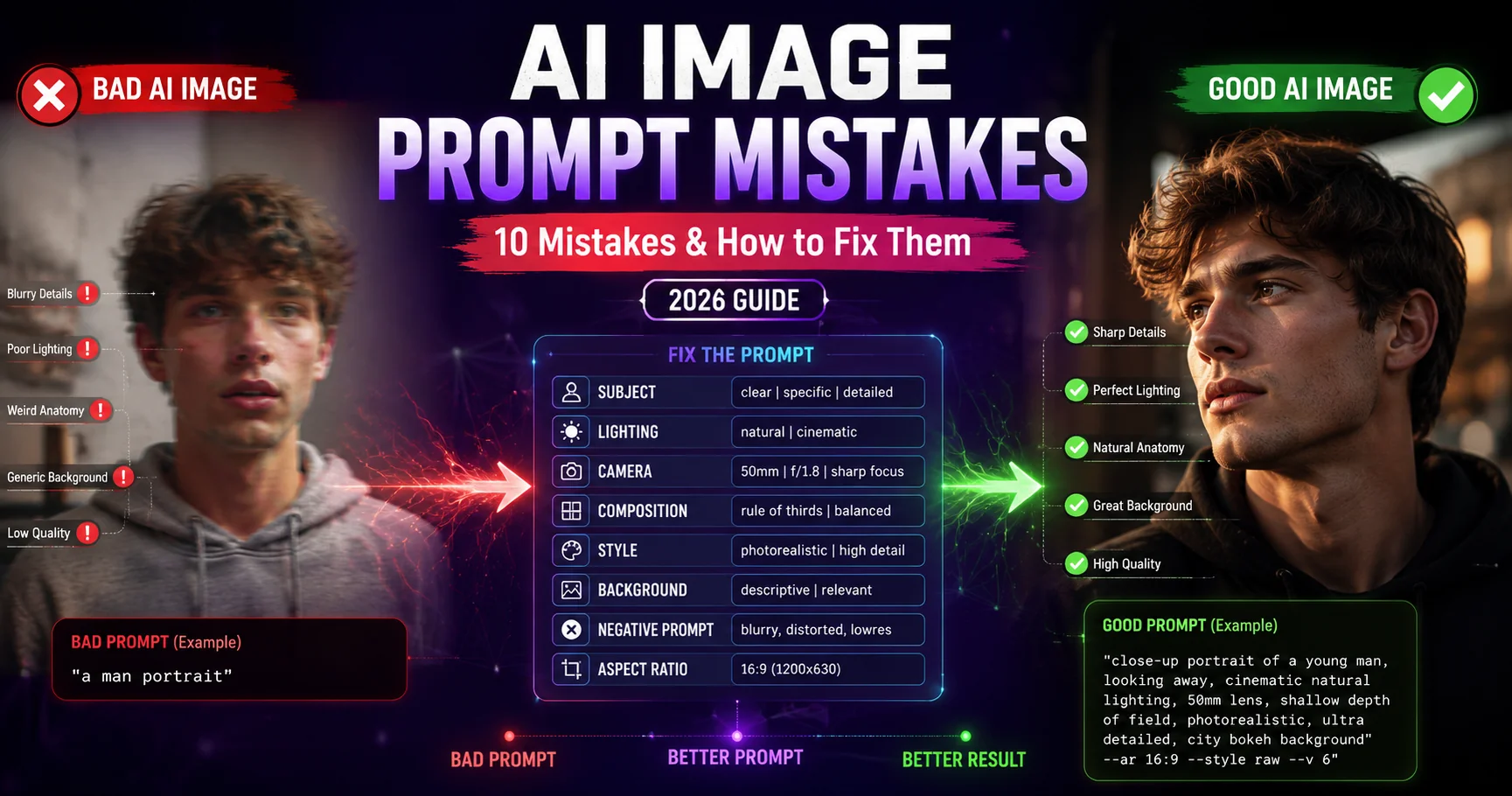
10 Best AI Image Prompts for Winter Snow Landscapes — Cinematic & Dramatic Scenes (2026)
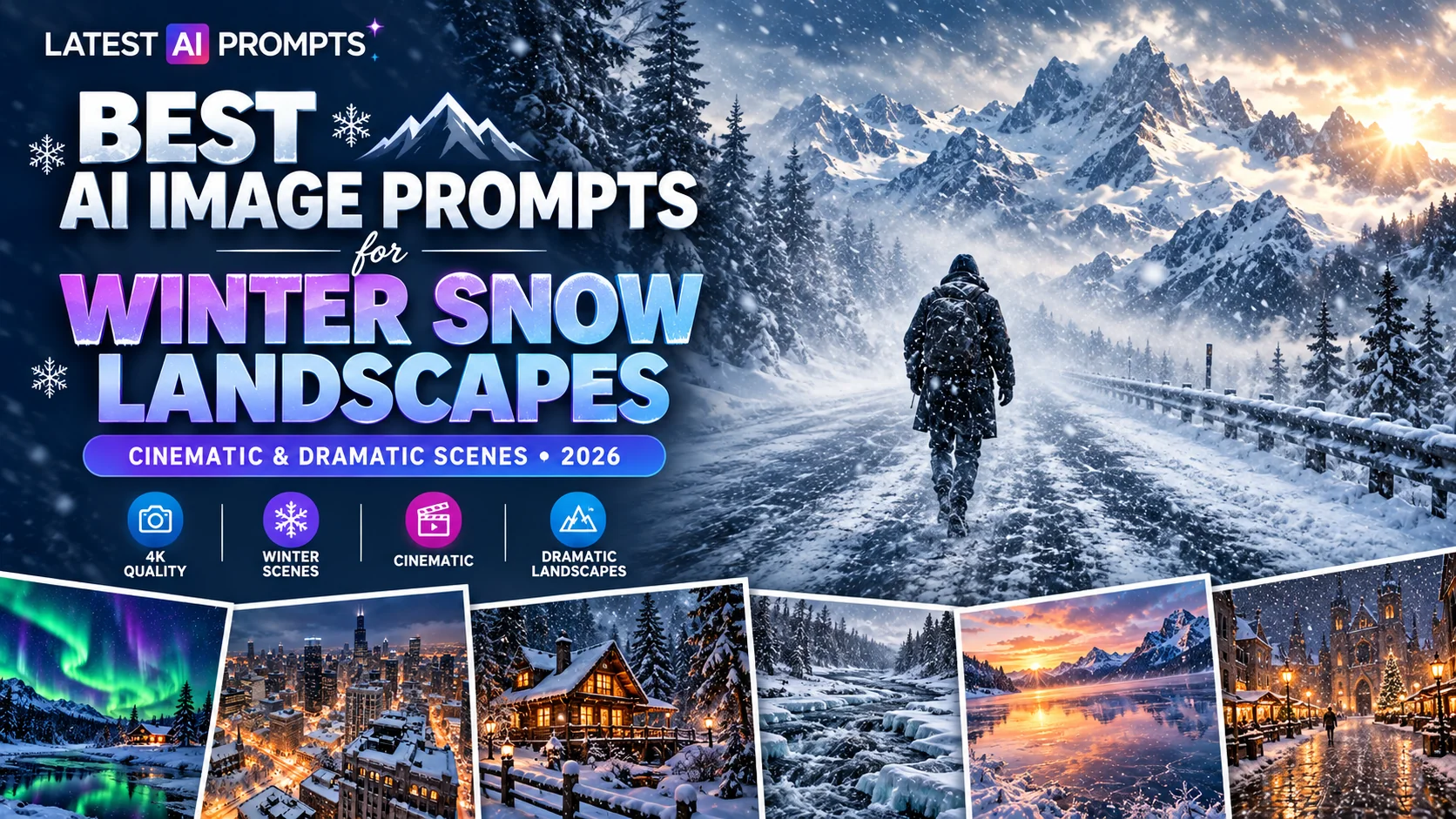
AI image prompts for winter snow landscapes have never been more relevant than right now. With forecasters at NOAA confirming a greater than 90% probability of a very strong El Niño developing through winter 2026–27 — potentially one of the most powerful on record — search interest in dramatic snowfall, mountain blizzards, and frozen winter scenery has surged by over 1,000% on Google Trends in just days. Whether you are a content creator, travel blogger, social media manager, or simply someone who wants to generate breathtaking winter imagery without a camera or a flight ticket, these 10 AI image prompts for winter snow landscapes give you everything you need to produce publication-quality, cinematic results.
The difference between a flat, unconvincing AI snow image and a genuinely cinematic winter scene comes down to how precisely you guide the model. Generic instructions like “snowy mountain” produce generic results. The prompts in this guide use layered composition techniques, exact lighting temperature descriptors, specific snow behavior language, and camera lens context to instruct tools like ChatGPT (DALL-E 3), Google Gemini AI, Midjourney v6, and Stable Diffusion XL to render winter scenes with real depth, atmosphere, and visual drama. From a violent mountain blizzard whiteout to a serene snow-dusted forest path at dawn, these prompts cover the full emotional range of winter landscape photography — and every single one is ready to copy and paste.
- 10 ready-to-copy cinematic prompts — no editing needed
- Works with ChatGPT, Gemini AI, Midjourney v6, DALL-E 3 & SDXL
- Covers blizzards, frozen lakes, cities, cabins, aurora, aerial & forest scenes
- Includes customization tips for every prompt
- Timed for the El Niño 2026–27 winter season — maximum search relevance
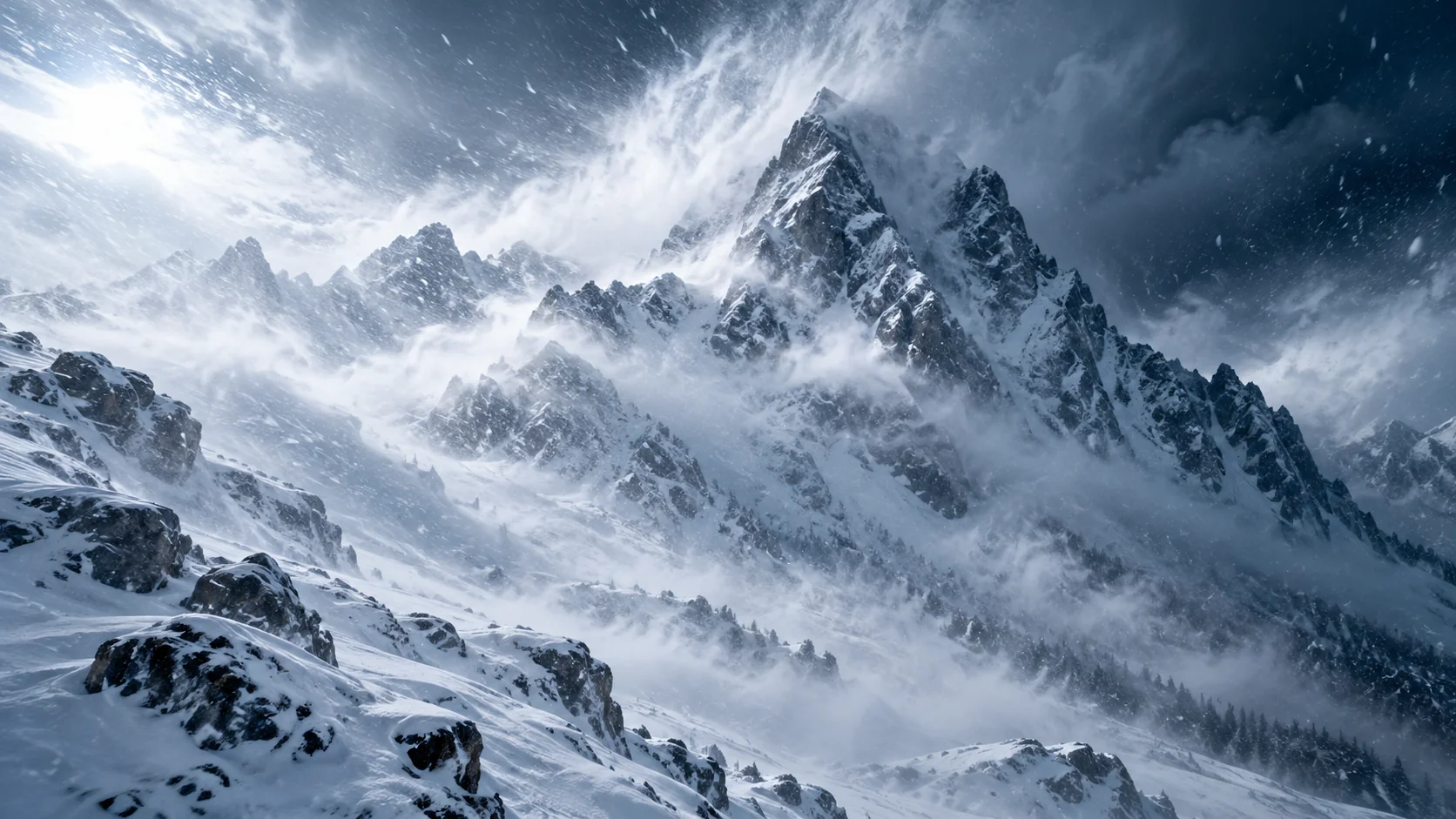
1. Mountain Blizzard Whiteout — AI Image Prompt for Winter Snow Landscapes
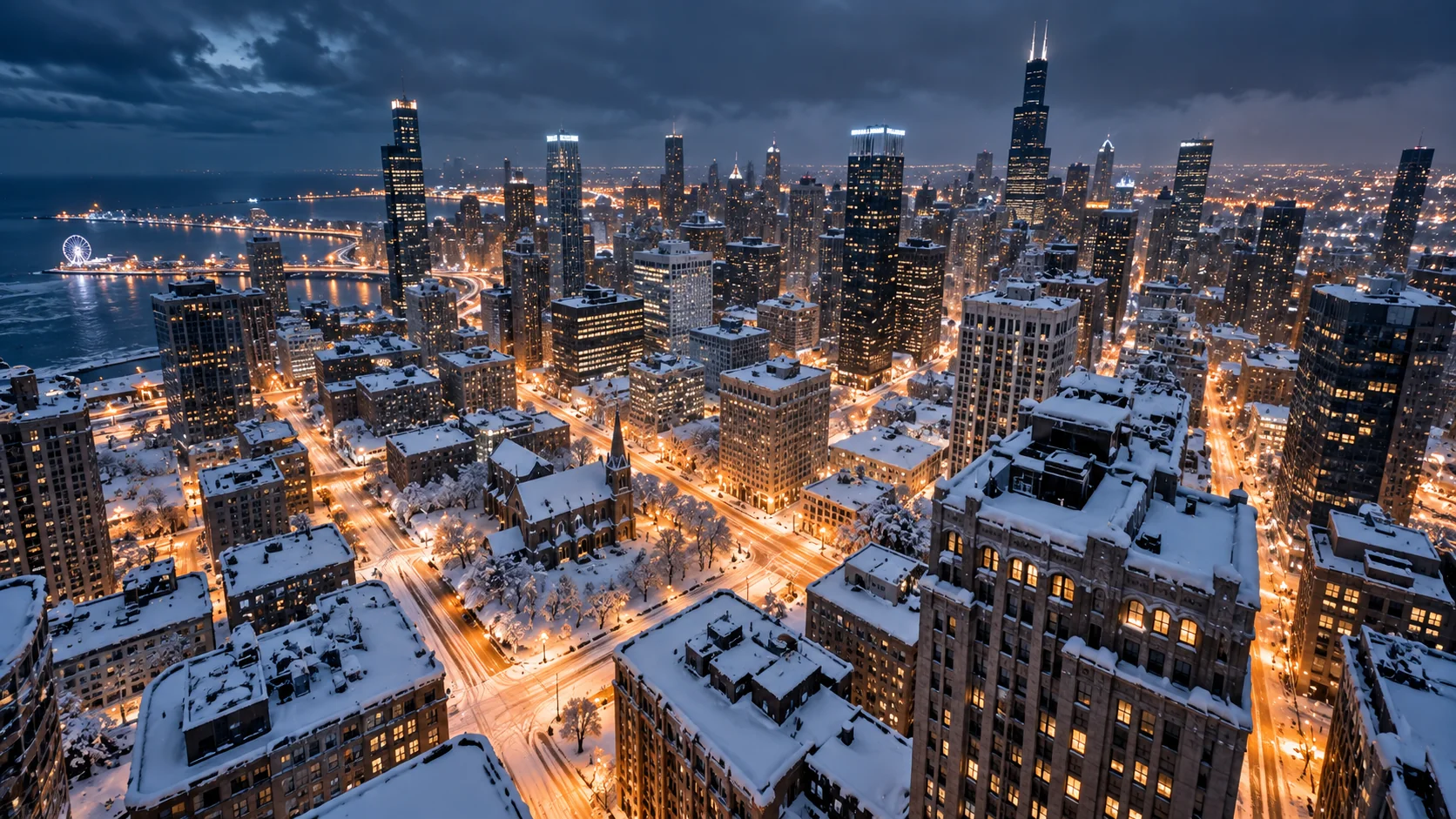
2. Snow-Covered City at Night — AI Image Prompt for Winter Snow Landscapes
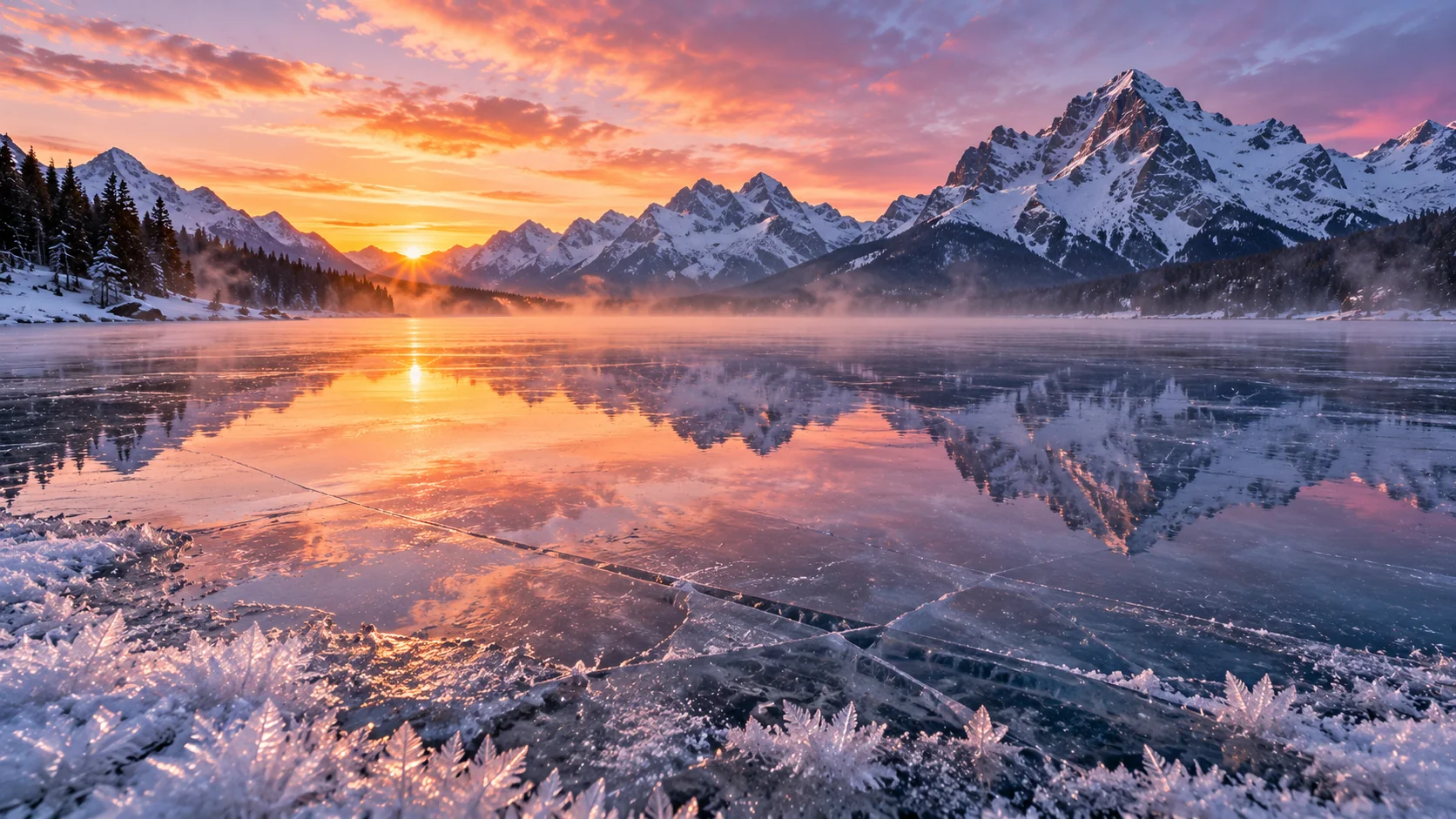
3. Frozen Lake at Sunrise — AI Image Prompt for Winter Snow Landscapes
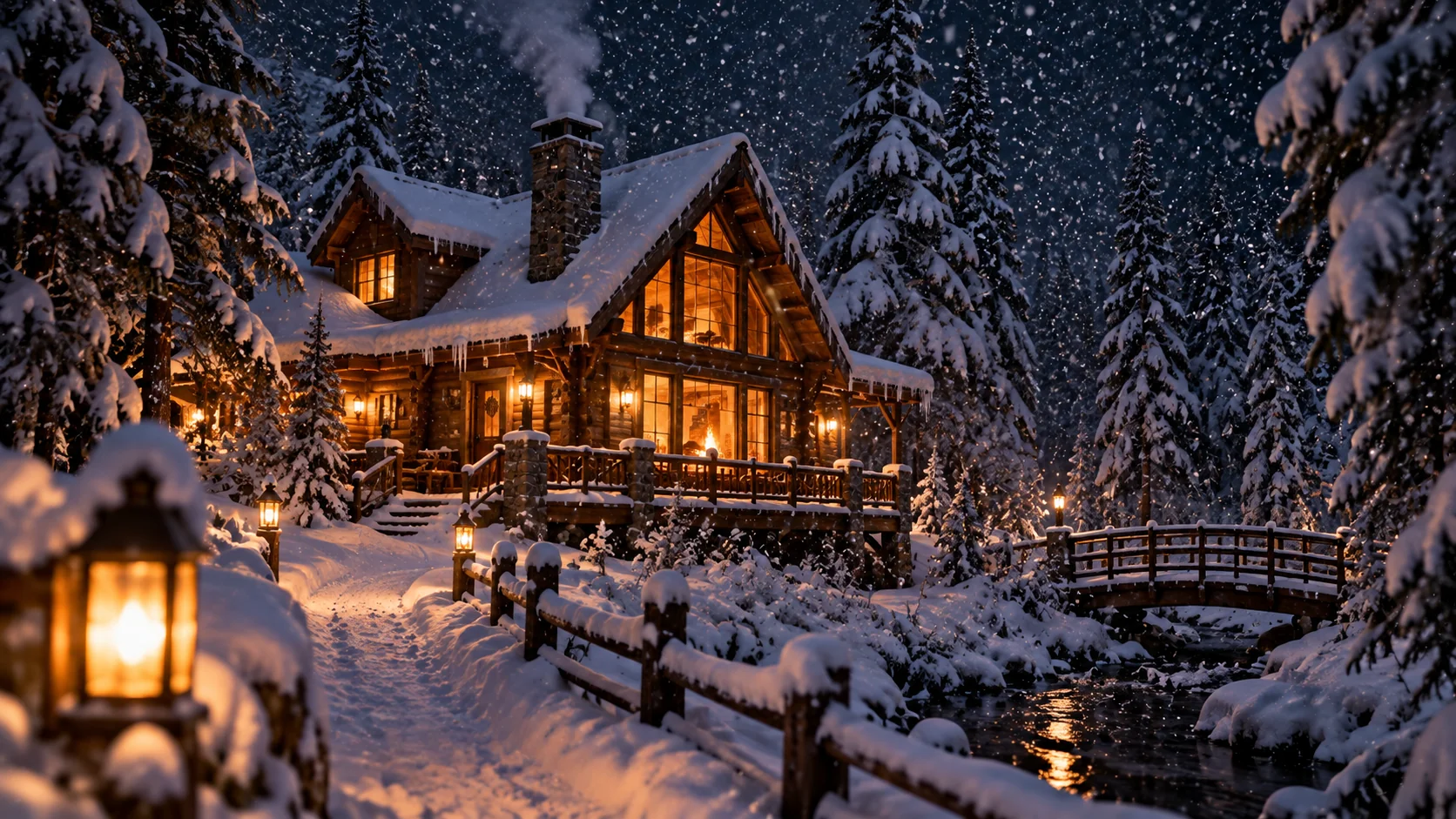
4. Cozy Cabin in a Pine Forest Snowstorm — AI Image Prompt for Winter Snow Landscapes
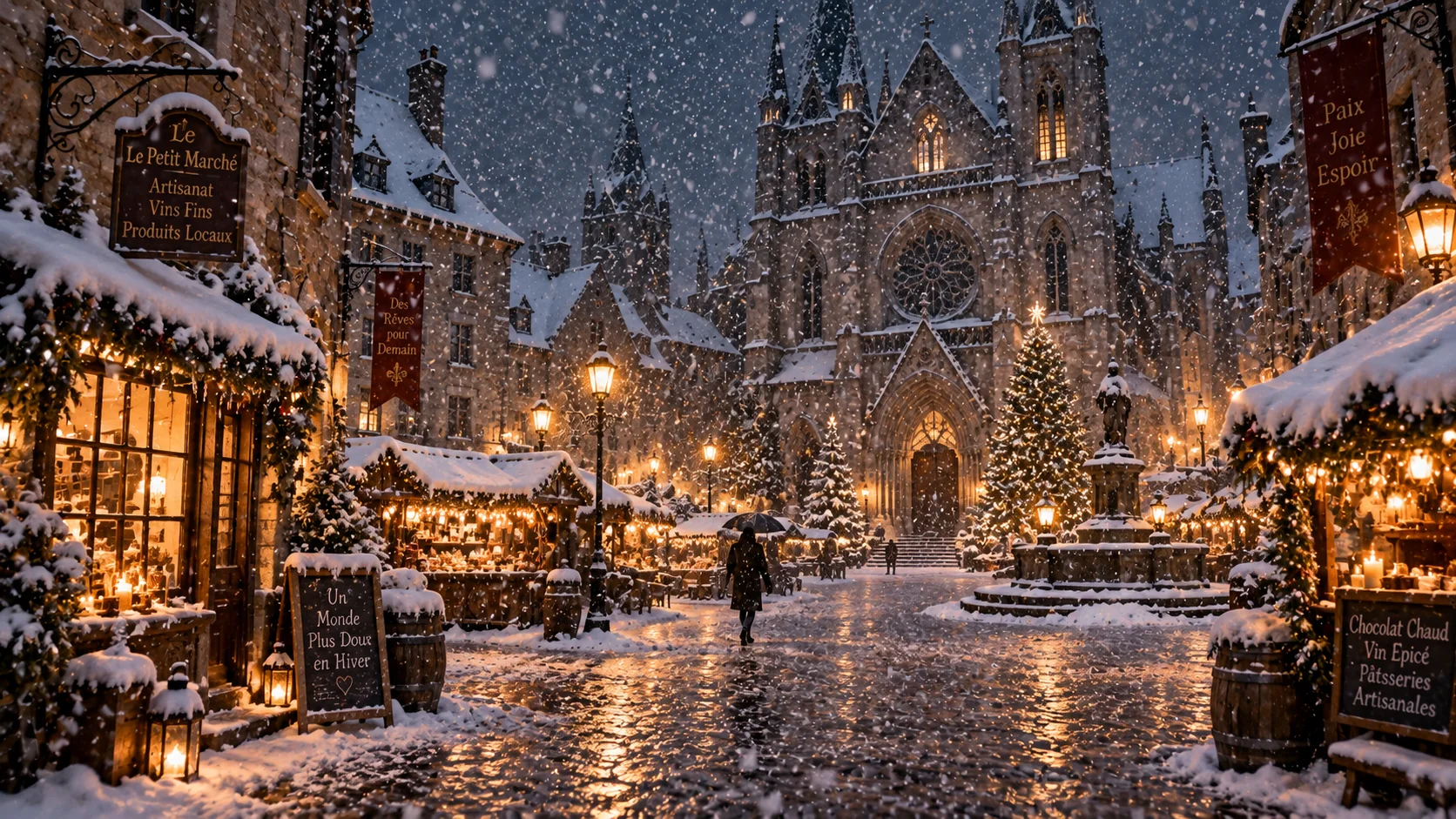
5. Heavy Snowfall in a European Old Town Square — AI Image Prompt for Winter Snow Landscapes
How to Write Better Winter Snow AI Image Prompts
The 10 prompts in this guide all follow the same underlying framework. Before you start customizing them, understanding why they work will help you create your own high-quality winter landscape prompts from scratch.
Describe Snow Behavior, Not Just Snow
Replace the generic word “snow” with “wind-driven snow flurries”, “heavy wet snowfall”, “fresh powder dusting”, or “frost crystals on every horizontal surface”. Behavioral language gives the AI model a specific physical event to render rather than a vague concept.
Use Three-Layer Composition
All great landscape photographs use foreground detail (frost crystals, ice edge, snow-covered rocks), a mid-ground subject (cabin, figure, frozen lake), and a background element (mountain peaks, aurora sky, storm clouds). Specifying all three layers forces the AI to create genuine depth.
Specify Light Temperature
Winter scenes gain enormous power from light temperature contrast. Combine “cool 4500K blue-grey overcast ambient light” with “warm 2700K amber firelight spilling through a window”. This contrast is what makes cabin-in-snow scenes feel so emotionally compelling — cold outside, warmth within.
Add Camera and Lens Context
Adding a real camera model and lens specification (“Sony Alpha 1, 16mm f/11” for vast landscapes or “85mm f/1.4” for intimate scenes) signals to AI models that you want a photorealistic result with proper optical physics. It is the single most effective realism booster.
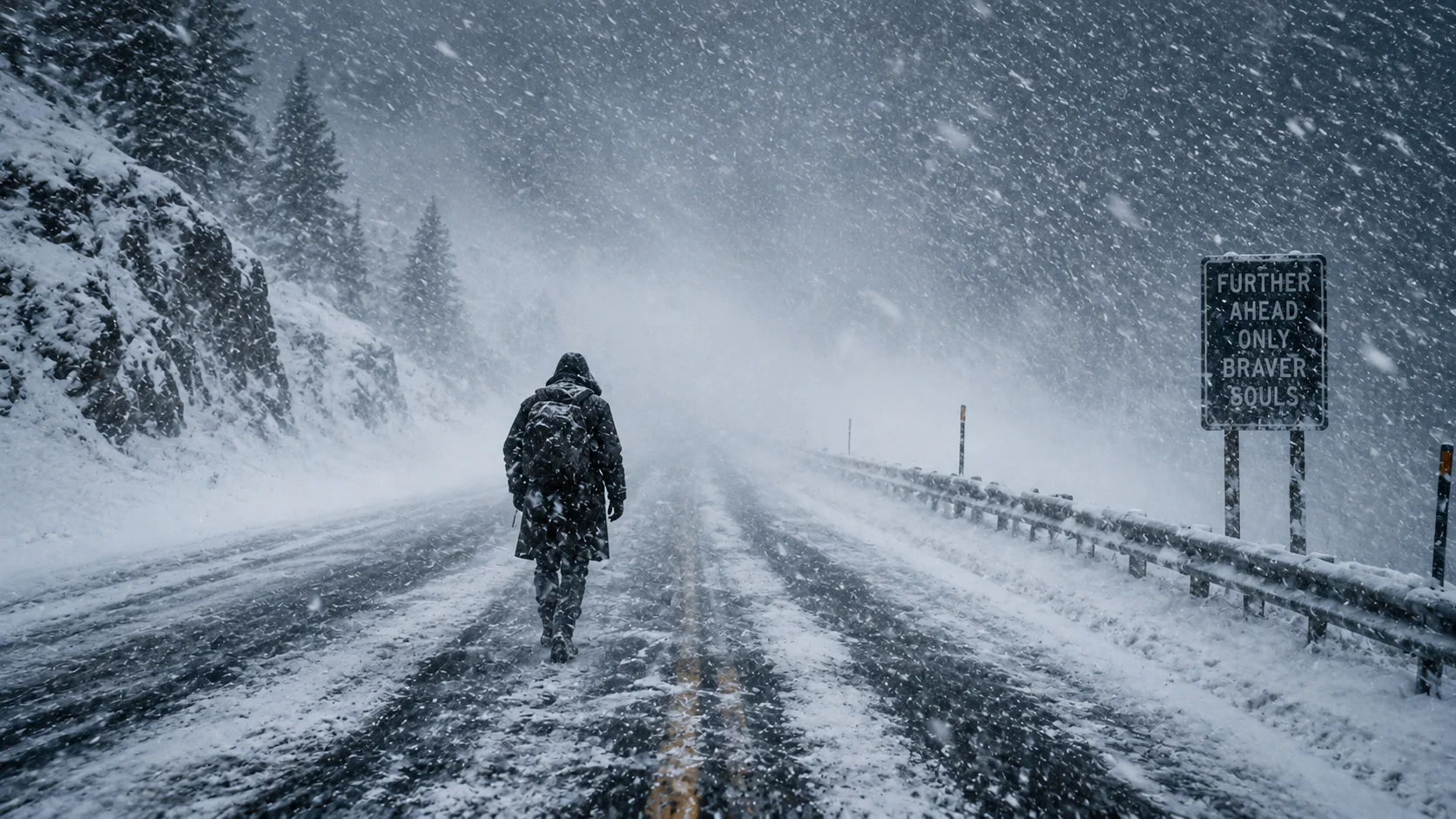
6. Lone Figure Walking Through a Blizzard — AI Image Prompt for Winter Snow Landscapes
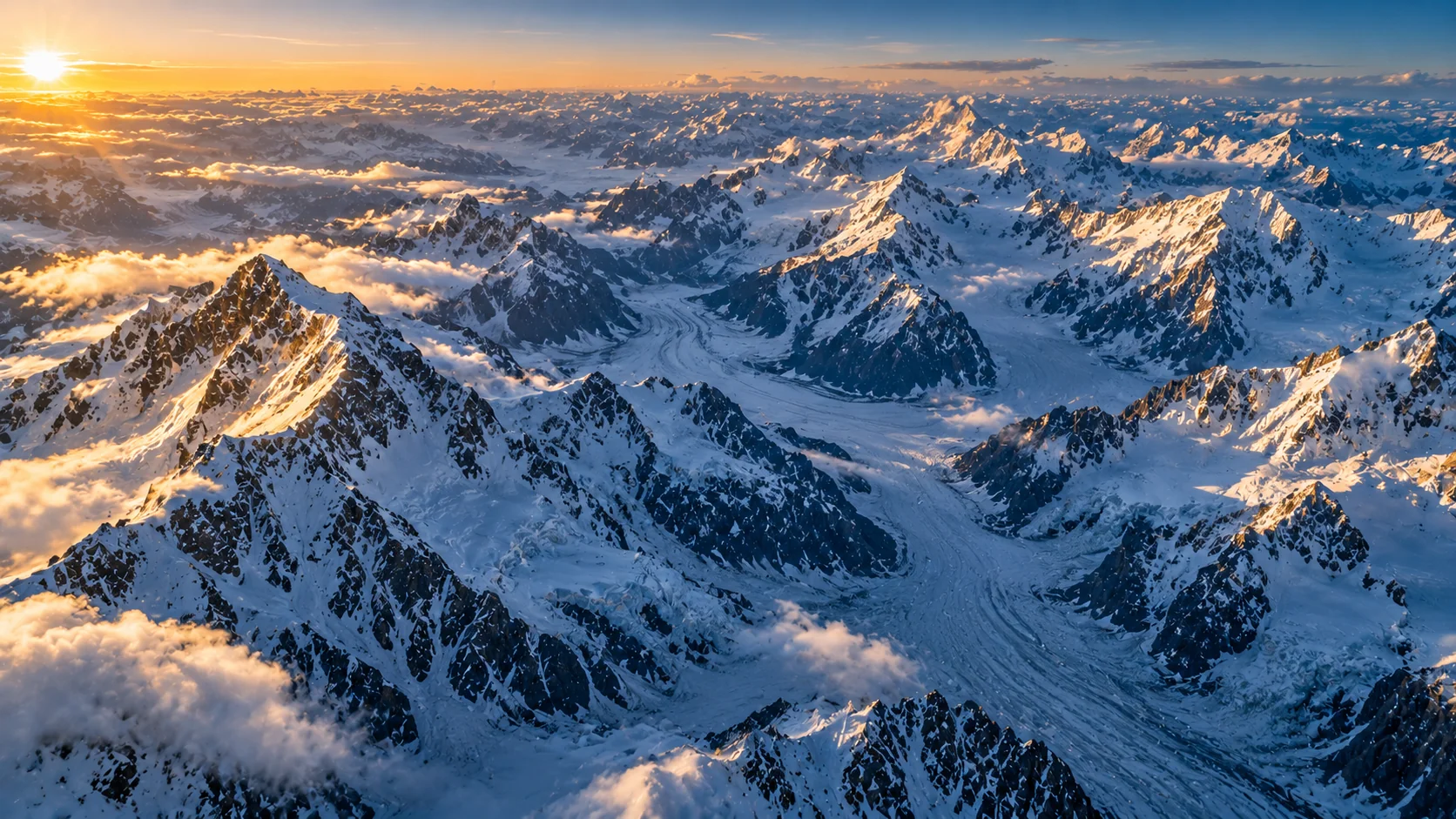
7. Aerial View of a Snow-Covered Mountain Range — AI Image Prompt for Winter Snow Landscapes
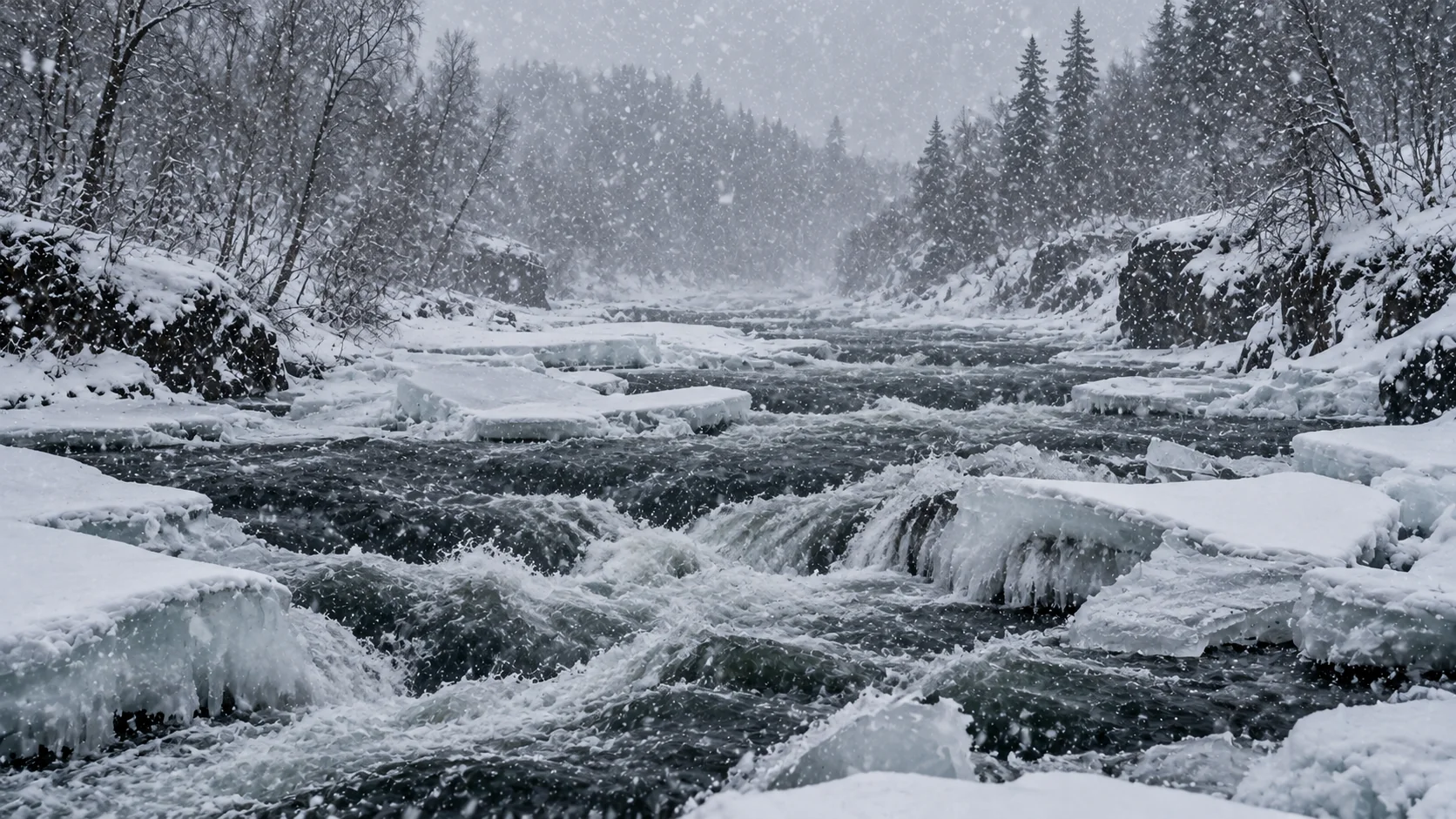
8. Snowstorm Over a Frozen River — AI Image Prompt for Winter Snow Landscapes
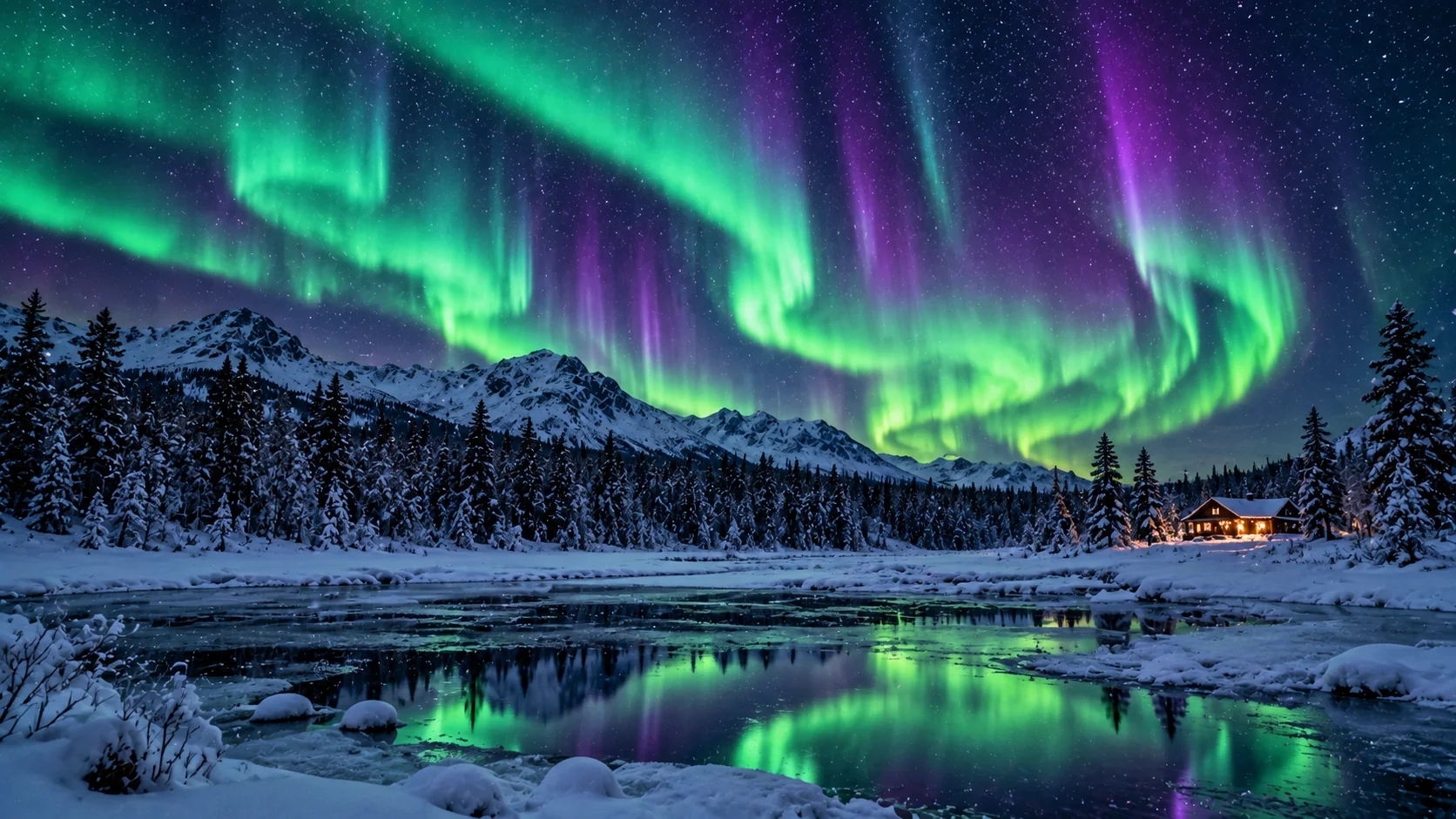
9. Northern Lights Over a Snow-Covered Landscape — AI Image Prompt for Winter Snow Landscapes
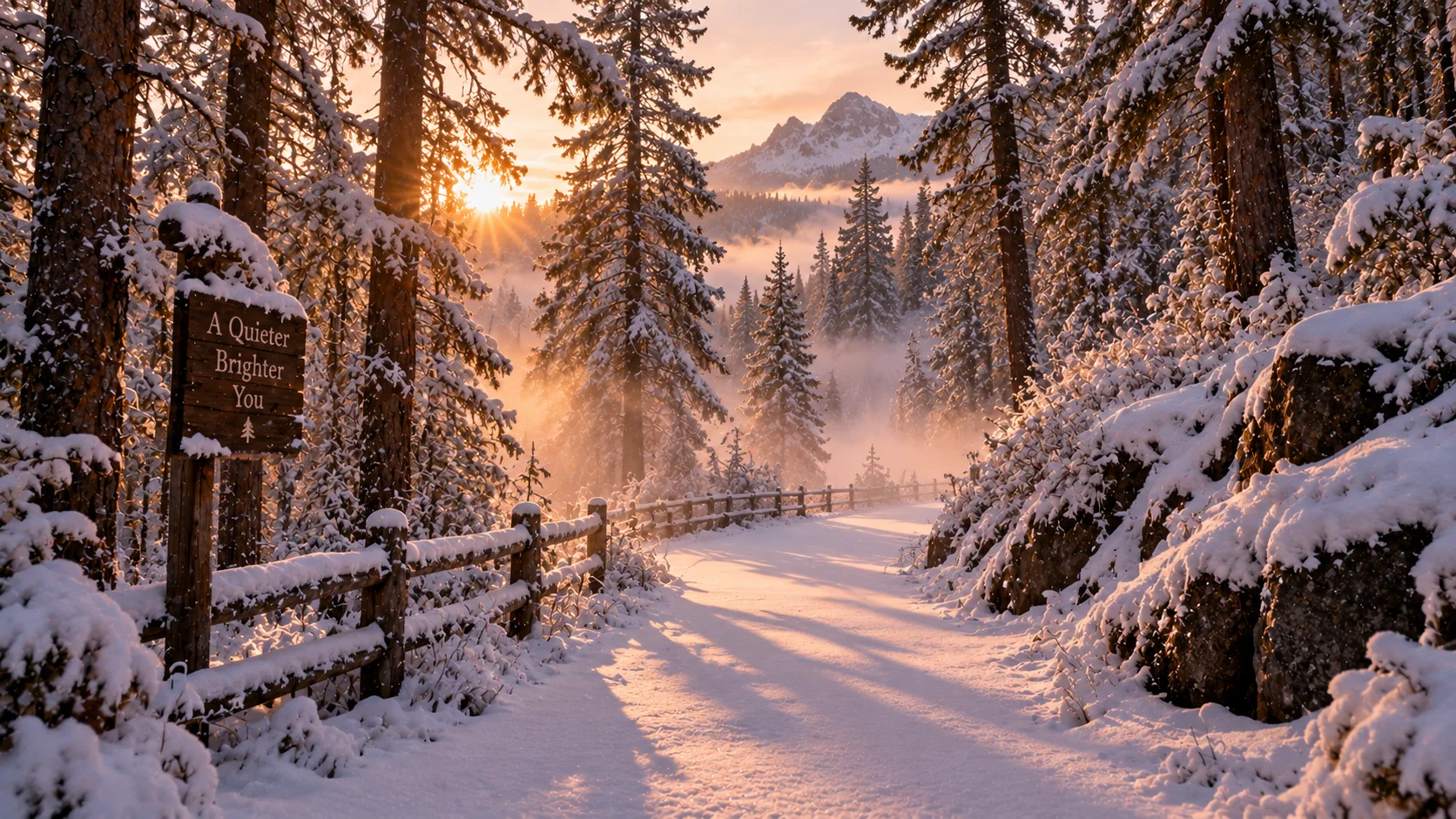
10. Snow-Dusted Forest Path at Dawn — AI Image Prompt for Winter Snow Landscapes
These AI image prompts for winter snow landscapes are optimized for ChatGPT (DALL-E 3), Google Gemini AI, Midjourney v6, Stable Diffusion XL, and Microsoft Copilot. For even stronger results, append terms like “award-winning landscape photography”, “National Geographic quality”, or specific aspect ratios — use --ar 16:9 for widescreen editorial covers, --ar 4:5 for Instagram portrait posts, and --ar 1:1 for square social posts. Experiment with different storm seasons (early season powder versus late-season wet ice), times of day (blue hour versus golden hour versus midnight), and geographic locations (Sierra Nevada, Appalachians, Rockies, Alps, Himalayas) to build an entire library of cinematic winter imagery from a single afternoon of prompting.
Why These AI Image Prompts for Winter Snow Landscapes Produce Cinematic Results
Every prompt above is constructed using the same four core principles of effective landscape AI prompt engineering. Understanding these principles means you can build on these prompts — or write your own from scratch — with consistently outstanding results.
Compositional Depth
Every prompt specifies a foreground element (frost crystals, ice edge, snow-covered path), a mid-ground subject (mountain, cabin, figure), and a background (sky, mountain range, aurora). Without all three layers, AI generates flat, centerless images with no visual journey for the eye.
Directional Light Source
Specifying exactly where light comes from — “low-angle morning light from the left”, “warm firelight from the right window” — gives the AI model a physics anchor. This prevents the flat, directionless lighting that makes AI images look artificial and unreal.
Color Palette Anchoring
Winter photography’s emotional power comes from color contrast — cold steel-blue against warm amber, dark rushing water against white ice. Naming specific color relationships in the prompt instructs the AI to maintain that tension throughout the entire image.
Photographic Realism Anchors
Real camera models, lens focal lengths, and aperture values are not decoration — they are signals to the AI that physics-based optics should apply. The result is an image with proper depth-of-field falloff, natural bokeh, and believable lens perspective rather than a computationally generated look.

Jitendra Patra
AI Prompt Researcher & Software Engineering Student
Jitendra Patra is a software engineering student and AI prompt researcher specializing in Google Gemini and generative image models. He actively experiments with structured prompt engineering techniques to produce high-quality, reproducible visual outputs across landscape, atmospheric, and seasonal photography categories.
His work focuses on iterative prompt development, with particular attention to lighting direction, compositional depth, and atmospheric realism in AI-generated landscape and nature imagery.
The prompts in this guide are developed with close attention to photographic structure, cinematic color language, and the specific visual challenges of AI snow and winter scene generation.
Frequently Asked Questions
Can I use these winter snow AI image prompts with free tools?
Yes. All prompts in this guide work with free-tier versions of ChatGPT (DALL-E 3), Google Gemini AI, and Microsoft Copilot. Midjourney requires a paid subscription, but Stable Diffusion XL is available completely free via platforms like DreamStudio, Automatic1111, or ComfyUI. For zero-cost results, start with ChatGPT or Gemini AI — both produce impressive winter landscape imagery directly from the prompts above.
How do I make AI-generated snow look more realistic and not flat?
To make AI-generated snow more realistic, describe its specific behavior rather than just using the word “snow”. Use terms like “fresh powder snow”, “wind-driven snow flurries”, “heavy wet snowfall”, “frost crystals on surfaces”, or “snowflakes catching the directional light”. Additionally, build a three-layer composition — foreground frost, mid-ground subject, background sky — and always specify a directional light source temperature such as “cool 4500K overcast diffused light” or “warm 2700K firelight from the right”.
Which AI tool produces the best winter landscape images?
Midjourney v6 currently produces the most cinematic and photorealistic winter landscape images, especially when paired with the --style raw parameter which reduces over-stylization. DALL-E 3 (via ChatGPT) excels at detailed environmental storytelling and atmospheric depth. Google Gemini AI handles moody and atmospheric snow scenes particularly well. For ultra-sharp aerial and architectural winter compositions, Stable Diffusion XL with a landscape-specific LoRA model is a strong choice.
Can I use AI-generated winter landscape images commercially?
Commercial usage rights depend entirely on the AI platform you use. Midjourney’s paid plans grant commercial usage rights per their Terms of Service. DALL-E 3 via ChatGPT Plus grants commercial rights under OpenAI’s current usage policies. Google Gemini AI outputs are subject to Google’s terms. Always review the specific Terms of Service of your chosen tool before using any generated image for commercial purposes, as these policies are updated regularly.
Why does my AI-generated snow scene look washed out or overexposed?
AI models frequently over-brighten snow because large white surfaces confuse the exposure algorithm. To correct this, add contrast anchor elements to your prompt — dark foreground details like “bare birch trees”, “dark rushing river water”, “deep blue shadows in the snowdrifts”, or “a dark stone cabin”. Also include “high dynamic range”, “deep shadow detail preserved”, or “correctly exposed snow with visible surface texture”. Defining a specific directional light source also helps the AI render dimensional, textured snow rather than flat blown-out white.
How does El Niño affect winter snowfall in the United States?
During a strong El Niño event, the subtropical jet stream shifts southward, which typically delivers wetter and stormier conditions to the southern United States — including the South, Mid-Atlantic, and Southeast regions — while the northern US and Pacific Northwest may experience drier or warmer-than-average conditions. The Sierra Nevada in California and parts of New England and the Appalachians often benefit from above-normal snowfall during strong El Niño winters. For the most current and localized seasonal snow outlook, NOAA’s Climate Prediction Center (CPC) is the authoritative source.