1980s Glamour AI Photo Prompts: Create Vintage Film-Camera Portraits With ChatGPT
1980s glamour AI photo prompts are the secret to recreating that iconic vintage film-camera portrait aesthetic — the warm Kodachrome glow, butterfly studio lighting, big dramatic hair, and rich saturated colour grading that defined an era. In this guide we share the 10 best 1980s glamour AI photo prompts covering Bollywood heroine styles, power suit executive portraits, golden hour outdoor glamour, classical Indian dancer portraits, vintage bridal shots, and moody night glamour sessions. Every prompt is crafted for ChatGPT DALL·E 3, Midjourney, Google Gemini AI, and Stable Diffusion with precise film stock references, period lighting techniques, and authentic era styling instructions. Whether you want to recreate the Sridevi-era Bollywood glamour, the Dynasty power-dressing aesthetic, or the dreamy soft-focus studio portraits of the 1980s, these prompts deliver cinema-quality vintage results instantly.
- 10 ready-to-copy prompts — no editing needed
- Works with ChatGPT, Gemini, Midjourney, DALL·E & SDXL
- Covers studio butterfly light, Bollywood heroine, golden hour, evening gown, bridal & night glamour
- Includes real film stock references (Kodachrome 64, Ektachrome 100, Kodak Gold 200)
- 100% free — no signup required
5 Key Elements of a Great 1980s Glamour AI Prompt
Every authentic 1980s glamour portrait relies on the same building blocks that made film-camera photography so distinctive. Include these five elements in your prompts for consistently cinematic vintage results.
Film Stock Reference
Naming a real film stock transforms your prompt instantly. Kodachrome 64 produces warm orange-red tones with fine grain. Ektachrome 100 gives vivid, slightly cool clarity. Kodak Gold 200 delivers warm amber skin tones. AI models trained on photography data respond strongly to these real film names.
Period Lighting Technique
Butterfly lighting (a single key light above the subject creating a butterfly-shaped shadow under the nose) was the defining glamour studio technique of the 1980s. Clamshell lighting added a reflector below for the flawless, shadow-free skin glow seen in fashion editorials of the era.
Era-Accurate Styling
Big permed or teased hair, bold smoky eyes, red or fuchsia lips, shoulder-pad power suits, sequin gowns and off-shoulder satin dresses are the visual shorthand for 1980s glamour. In Indian contexts, heavy temple jewellery, Kanjivaram silk sarees and jasmine flowers in big curly hair place the image firmly in the Bollywood heroine era.
Vintage Colour Grading
Specify the colour character of the image: warm magenta cast, slightly faded highlights, fine film grain in shadow areas, halation around bright light sources, and warm 3200K tungsten glow. These grading terms guide AI models to replicate the exact photochemical limitations that gave 1980s portraits their timeless aesthetic.
Lens and Camera Context
Referencing a period-accurate lens like an 85mm f/1.4 Nikkor or a Hasselblad 80mm Zeiss tells the AI to generate the specific focal compression, shallow depth of field, and buttery bokeh that characterised professional glamour photography of the era. This single detail separates generic retro from truly authentic 1980s film-camera quality.
1. Studio Butterfly Light Glamour — Classic 1980s Portrait
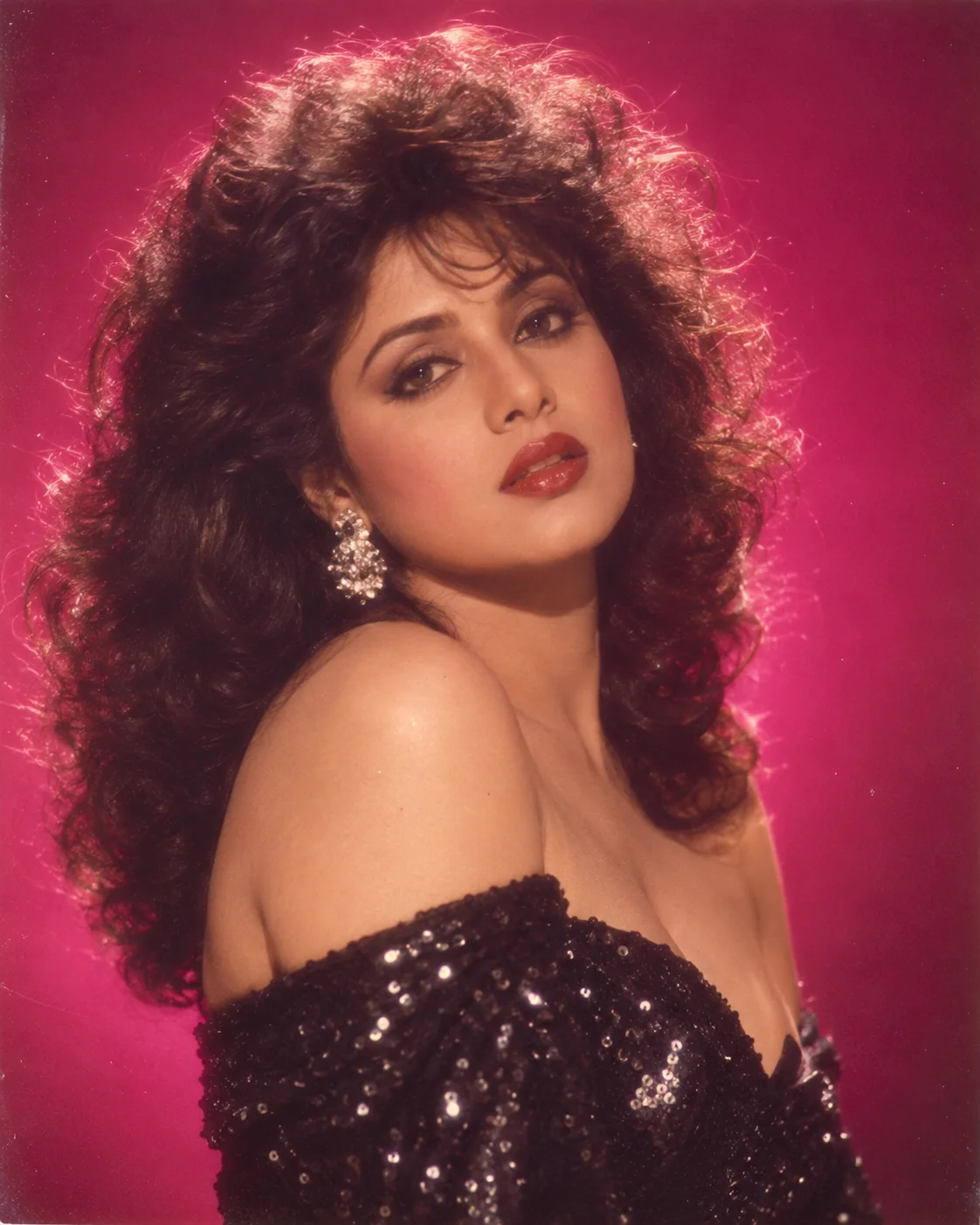
Butterfly lighting — a single key light positioned directly above and in front of the subject creating a small butterfly-shaped shadow beneath the nose — was the defining studio technique of Hollywood glamour photography from the 1930s through the 1980s. By the time Kodachrome 64 replaced earlier film stocks as the professional standard, its characteristic warm orange-red cast and rich primary saturation had become synonymous with the glamour portrait aesthetic seen in publications like Vogue, Harper's Bazaar and Cosmopolitan. The magenta gel backdrop was a fixture of high-end studio portrait work throughout the decade, producing a vivid chromatic contrast with the warm skin tones that Kodachrome rendered so distinctively. Studios across America and Europe equipped with large soft box fills and butterfly rigs produced millions of these portraits for aspiring models, local celebrities, and families who wanted to capture the era's cinematic glamour in a single frame.
2. Bollywood Heroine Style — 1980s Indian Glamour Portrait
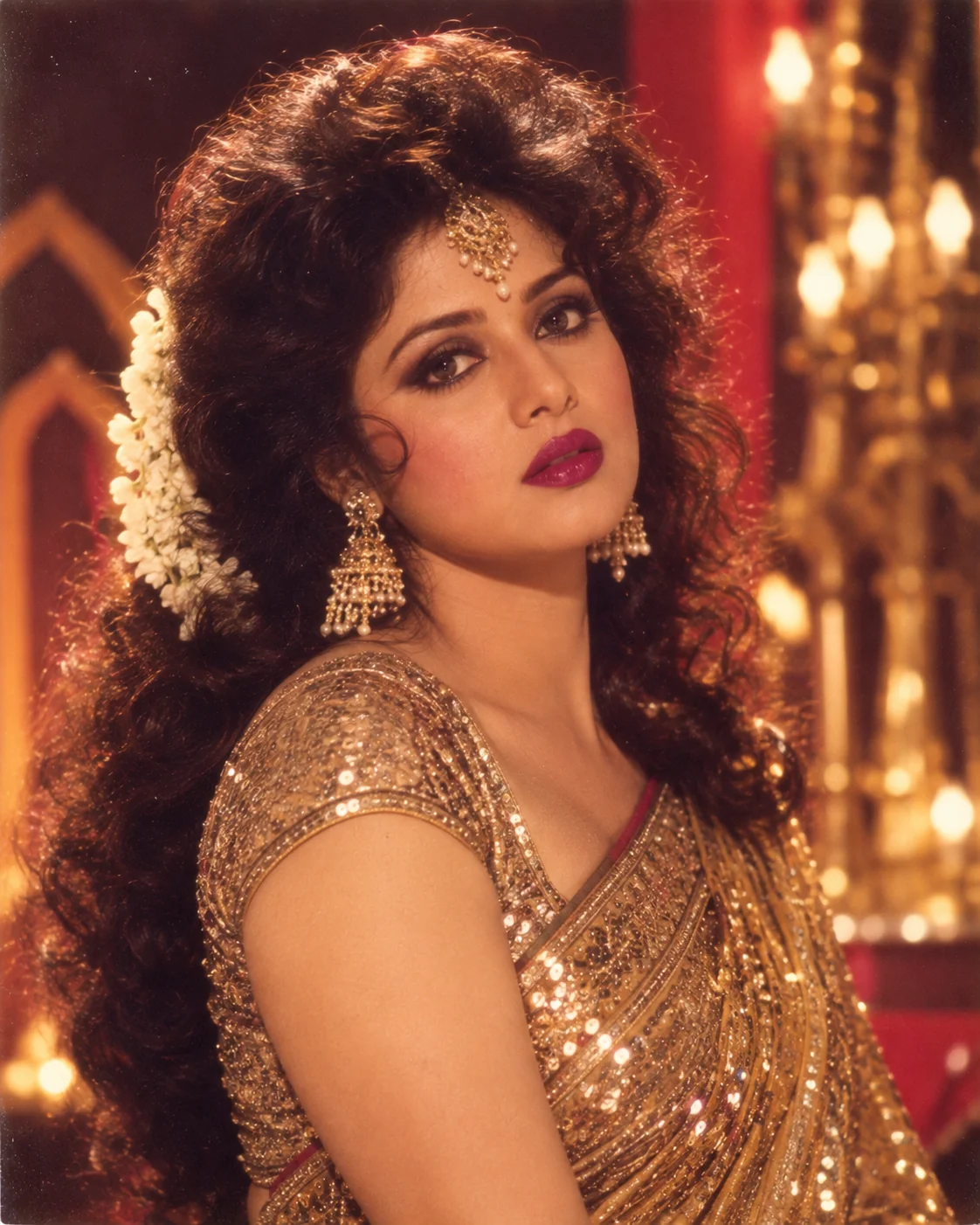
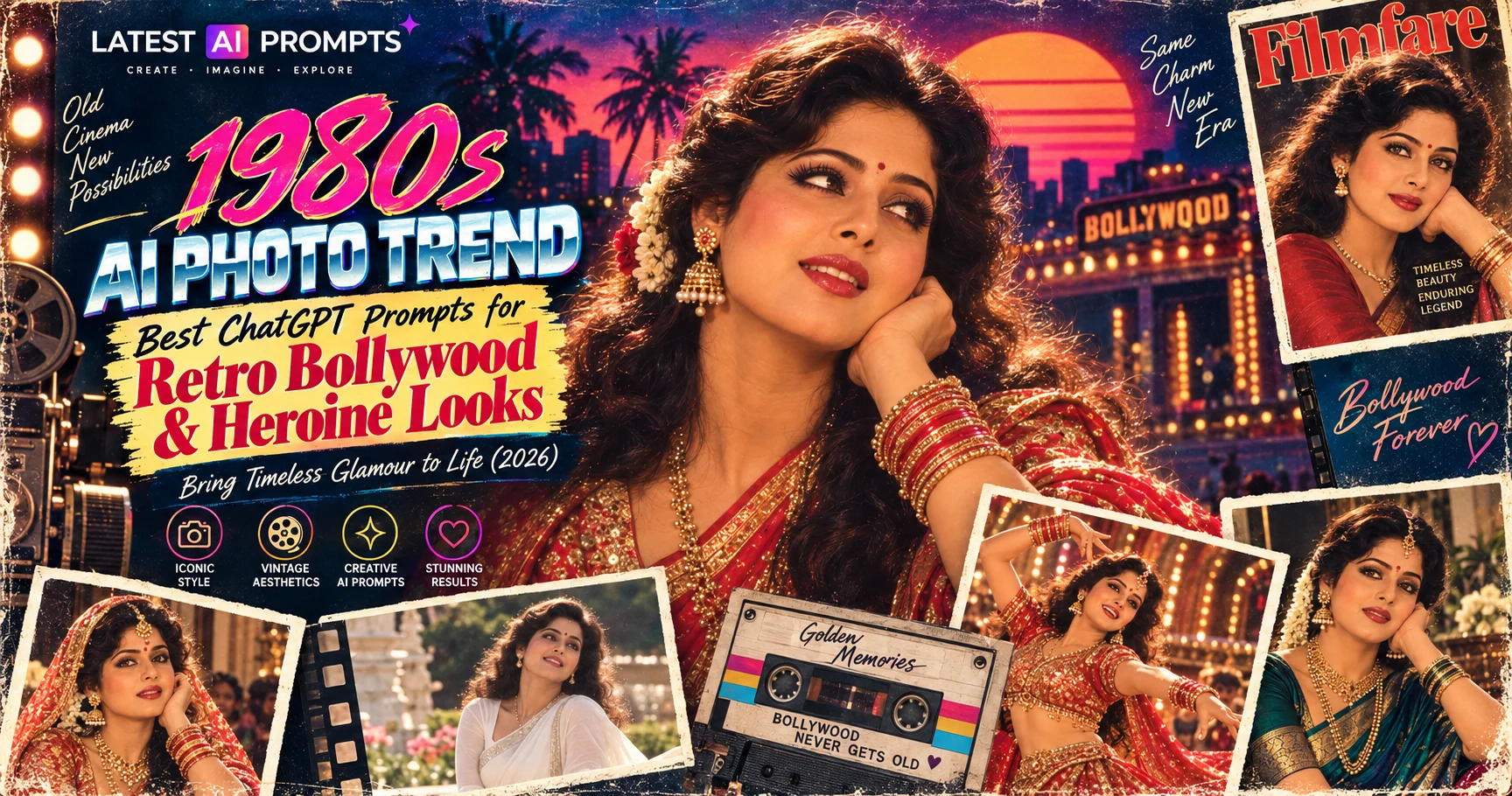
The 1980s was the defining decade of Bollywood visual maximalism — a period when heroines like Sridevi, Hema Malini, and later Madhuri Dixit established an aesthetic language of heavily embellished sequin and zari sarees, dramatic stage-style studio lighting, and voluminous curly hair adorned with jasmine garlands that became instantly recognisable across India and the Indian diaspora. Film sets and promotional studios of the era used powerful tungsten lights with coloured gel fills to produce the vivid warm-amber and gold saturation that came to define the Bollywood glamour portrait. Ektachrome 100's ability to render Indian skin tones with exceptional warmth and saturation while maintaining the sparkle of zari and sequin embroidery made it the preferred film stock for Bollywood publicity photographers throughout the decade. These images circulated as printed posters, film magazine covers, and calendar art, becoming the visual shorthand for Indian glamour that still resonates deeply today.
3. Power Suit Executive Portrait — 1980s Corporate Glamour
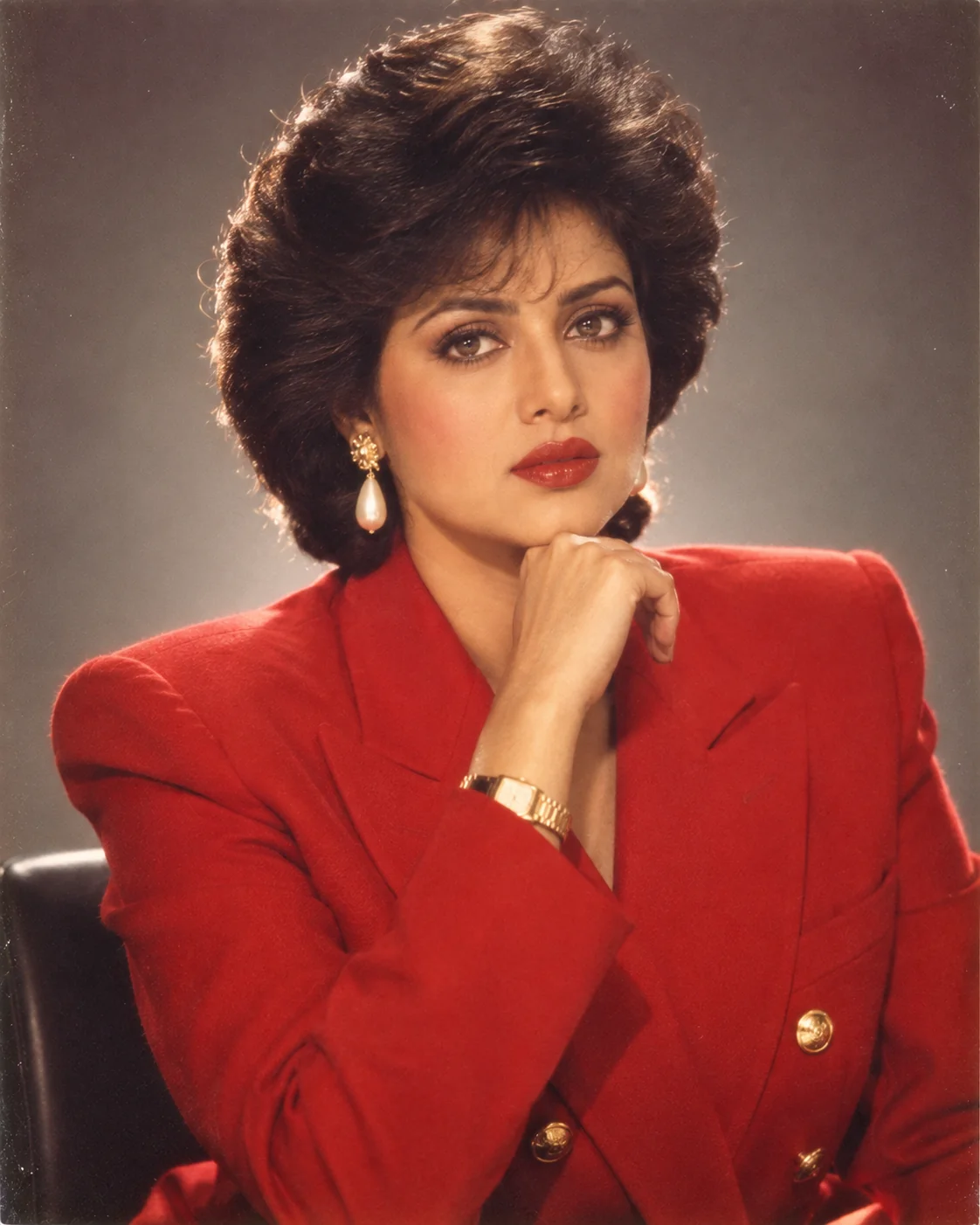
The power suit — a tailored blazer with dramatically padded shoulders worn over a matching skirt or wide-leg trousers — emerged as the defining garment of 1980s corporate feminism. Popularised by television series like Dynasty (1981–1989) and Working Girl (1988), the silhouette communicated ambition, authority, and sartorial confidence in equal measure. Professional portrait studios catering to corporate clients in this era standardised the clamshell lighting setup: a large soft box above combined with a circular reflector below eliminated unflattering shadows and produced the flawless, even-toned skin quality that conveyed polished professionalism. Kodak Gold 200's warm amber rendering made it ideal for these portraits, adding a subtle golden quality to skin and fabric that felt authoritative without being theatrical.
4. Evening Gown Ball Portrait — 1980s Formal Glamour
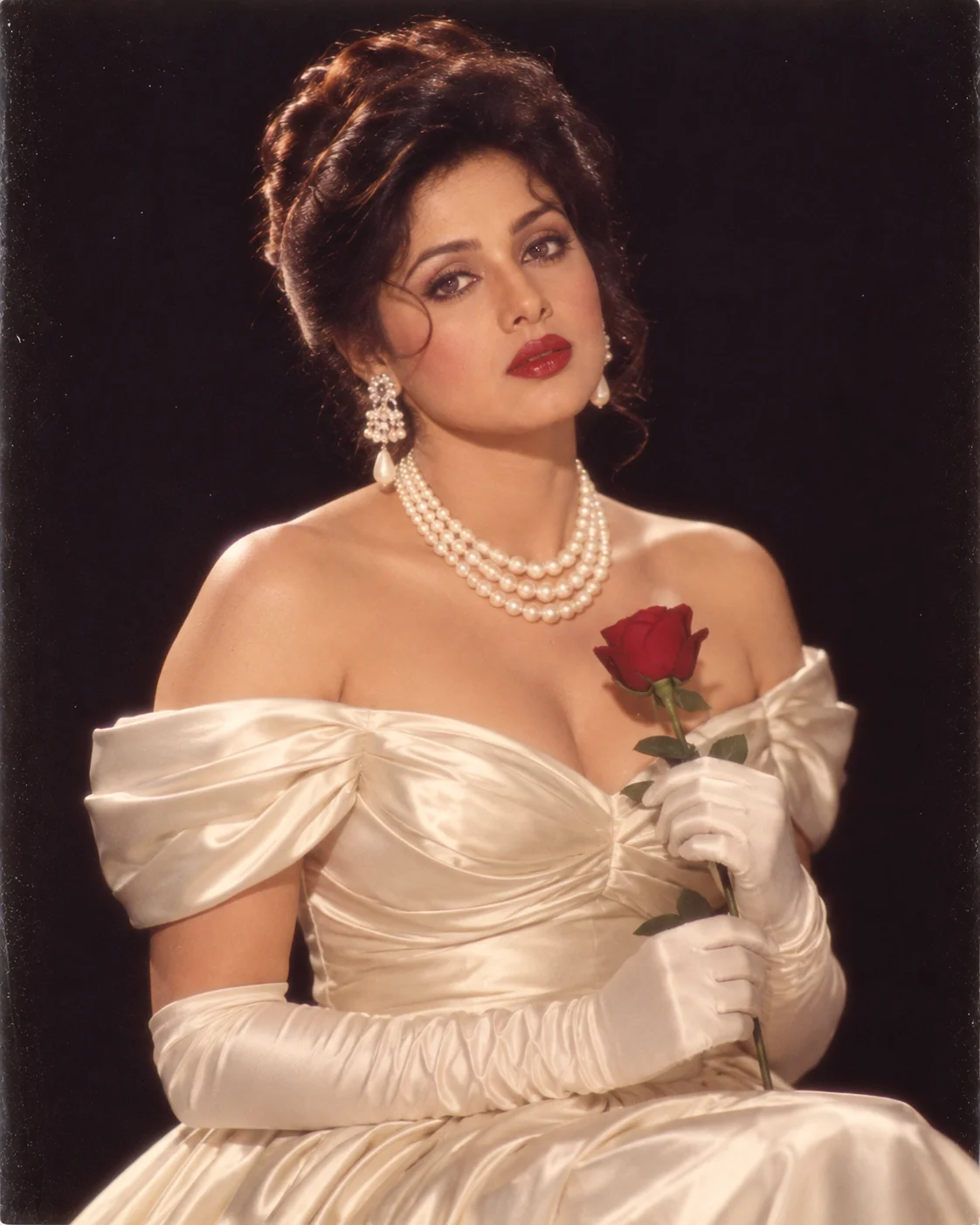
The Hasselblad 500 C/M with its 80mm Zeiss Planar lens was the gold standard of formal portrait photography throughout the 1970s and 1980s, used by celebrity photographers and society portrait studios across Europe and America. Its medium format negative captured fine detail in ivory satin fabric, pearl jewellery and hair that 35mm film simply could not match. The off-shoulder evening gown with puffed or structured sleeves was a signature silhouette of 1980s formal fashion, seen at black-tie events, embassy receptions, and debutante balls across the decade. Pearl jewellery — particularly layered strands and chandelier drop earrings — experienced a major fashion revival in the 1980s, worn as a marker of refined status that complemented the era's preference for classic elegance over the bolder maximalism of Bollywood or nightclub glamour.
5. Outdoor Golden Hour Glamour — Kodachrome Warm Film Portrait
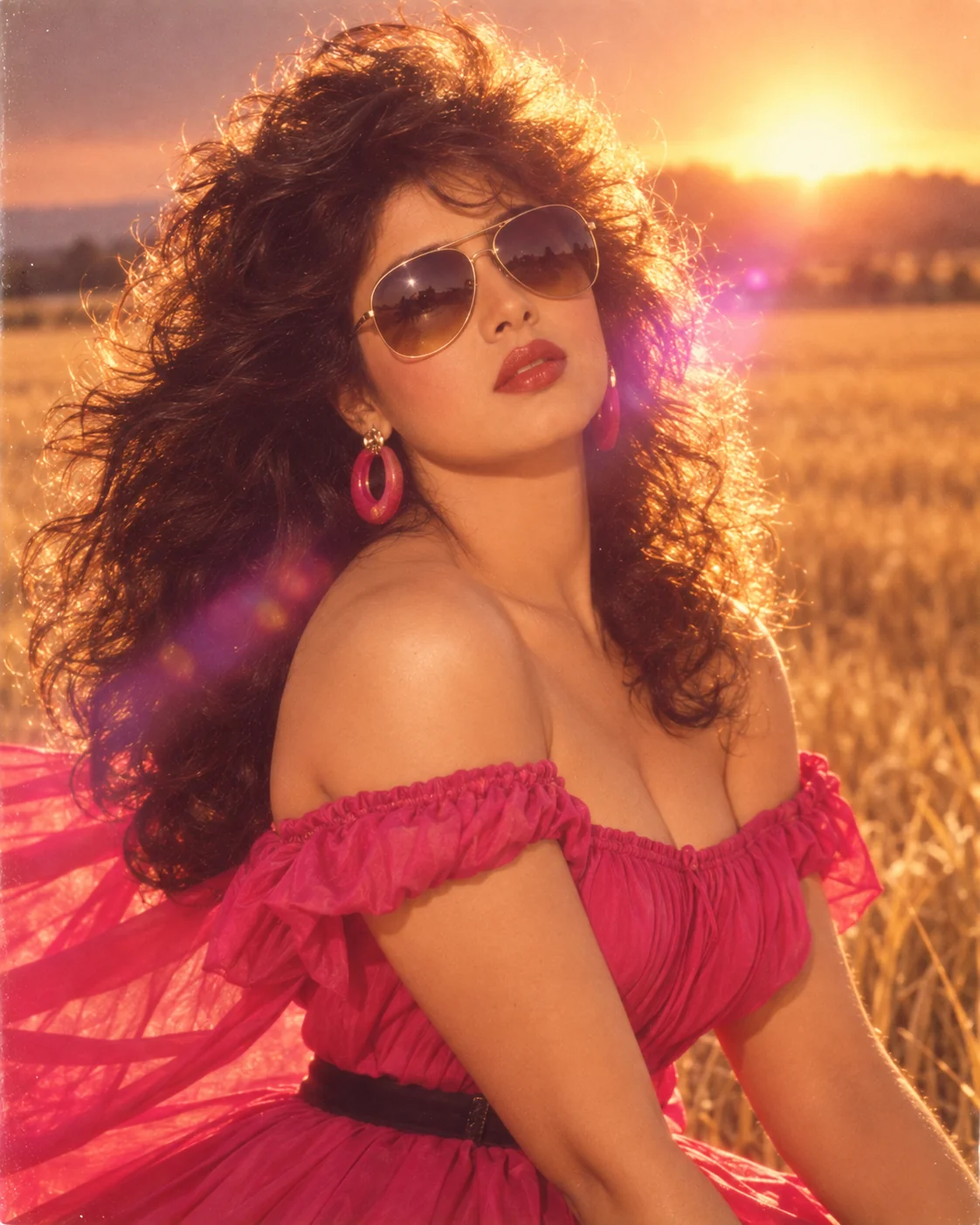
Kodachrome 64 was uniquely suited to outdoor golden hour photography due to its ability to translate warm late-afternoon sunlight into extraordinarily saturated amber and orange tones that felt richer and more cinematic than the actual scene. Photographers shooting in open fields or coastal landscapes in the 1980s exploited this characteristic deliberately, positioning subjects backlit by the low sun to create the signature Kodachrome halo effect — a glowing luminosity around windswept hair that became one of the most copied aesthetic qualities of 1980s fashion photography. The strong purple-magenta lens flare produced by period-accurate single-coated lenses shooting into sun was not considered a flaw but an aesthetic signature, frequently preserved in published editorial images. The fuchsia-pink sundress against warm amber light and rich Kodachrome saturation created a colour harmony that was particularly popular in women's magazine outdoor editorials of the era.
6. Classical Indian Dancer Portrait — 1980s Studio Glamour
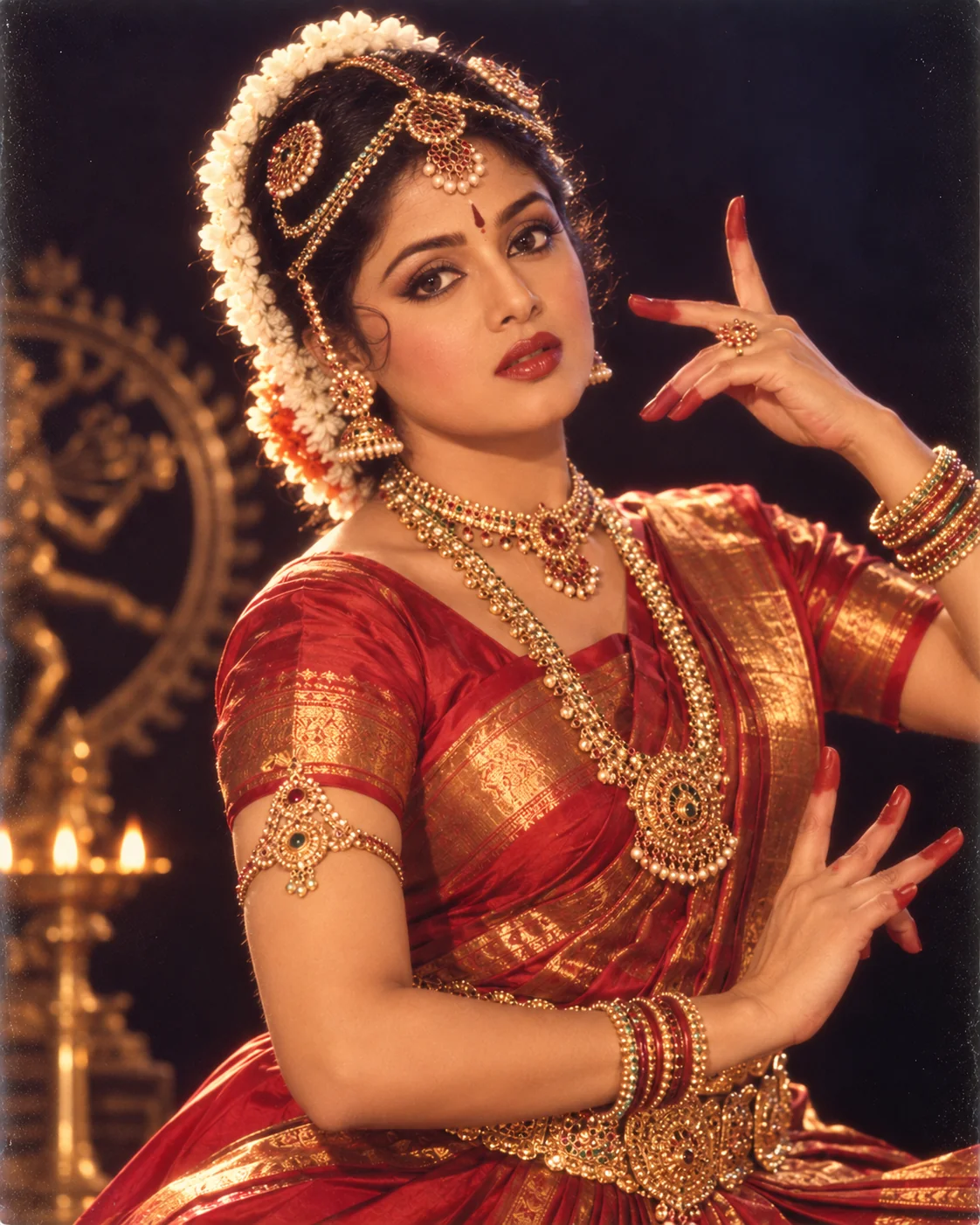
Bharatanatyam — originating in the temples of Tamil Nadu and codified as a concert form in the 1930s — experienced a major revival and institutionalisation across South India throughout the 1970s and 1980s as dance academies established formal training programmes and annual Arangetram debut recitals became important cultural events. Studio photography documenting Bharatanatyam performers in full costume became a distinct professional genre, with photographers using three-point lighting setups that could simultaneously illuminate the intricate gold zari embroidery of the silk costume, the complex layered temple gold jewellery, and the precisely applied stage makeup including the wide kohl-outlined eyes and red-painted palms. Kodak Ektachrome 100's vivid colour rendering was particularly valued for this genre because it preserved both the deep reds and rich golds of the costume without either channel becoming dominant. These studio portraits served as promotional material for dance academies, illustrations for performance programmes, and documentation for the dancer's personal archive.
7. Vintage Bridal Glamour — 1980s Wedding Portrait
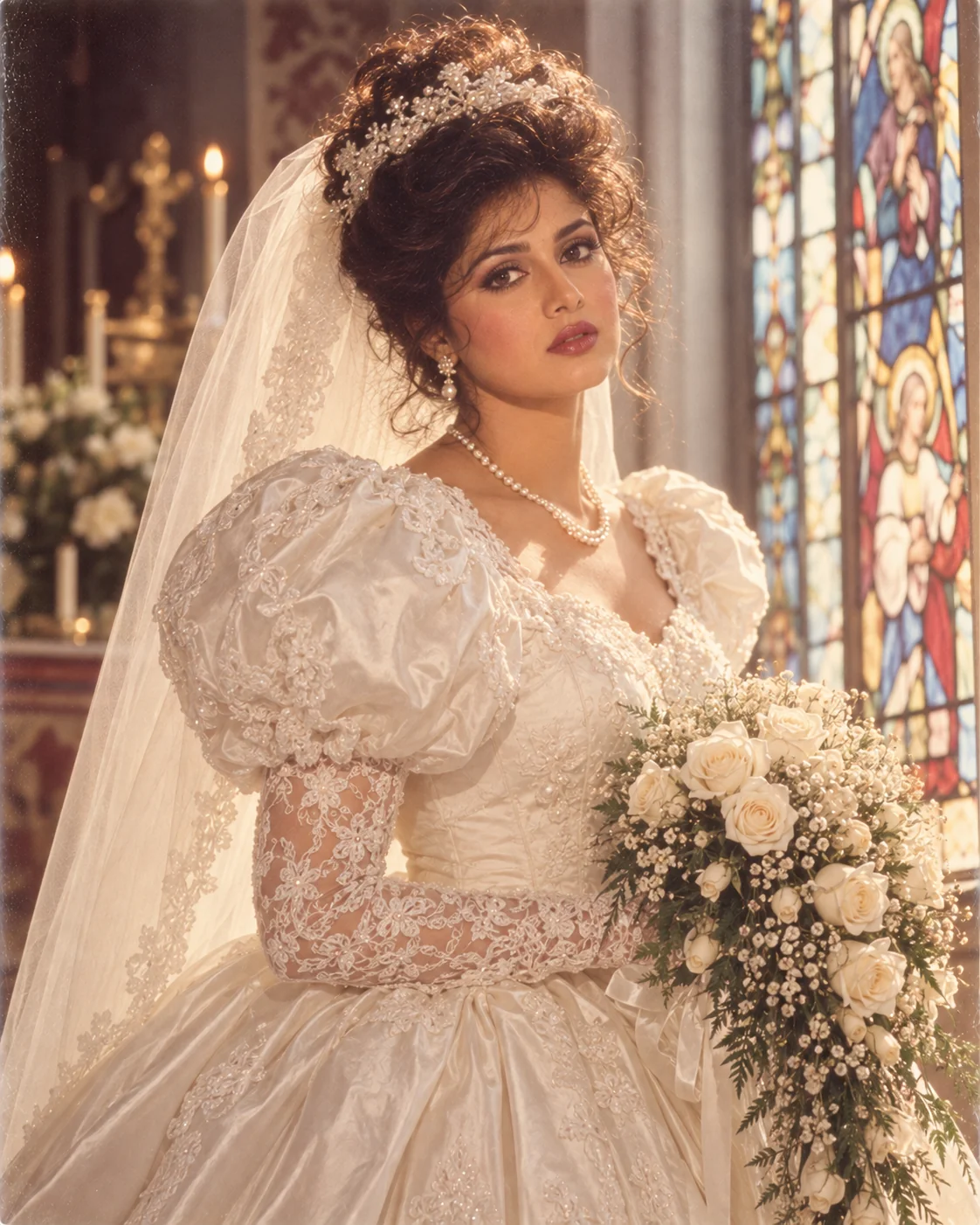
The 1980s bridal aesthetic was characterised by architectural excess — cathedral-length veils, dramatically puffed sleeves (inspired by the 1981 wedding dress of Diana, Princess of Wales), full A-line or ballgown skirts, and heavily beaded or lace-applique bodices. Wedding photographers of the era standardised the church window portrait: the bride positioned beside a tall stained-glass or clear-glass window, the soft diffused light creating a naturally lit halo effect on the veil that no studio lighting could replicate. Agfa Vista 200's warm, slightly soft rendering made it a popular choice among wedding photographers who wanted romantic rather than clinical results — its characteristic warm cream-to-amber tone palette complemented ivory lace beautifully. The soft-focus filter technique, achieved by stretching a piece of nylon stocking over the lens or applying a small amount of petroleum jelly to a UV filter, was standard practice in wedding photography of the era, producing the dreamy, slightly ethereal quality that gave 1980s bridal portraits their timeless romantic atmosphere.
8. Beach Coastal Glamour — Warm Summer Film Portrait
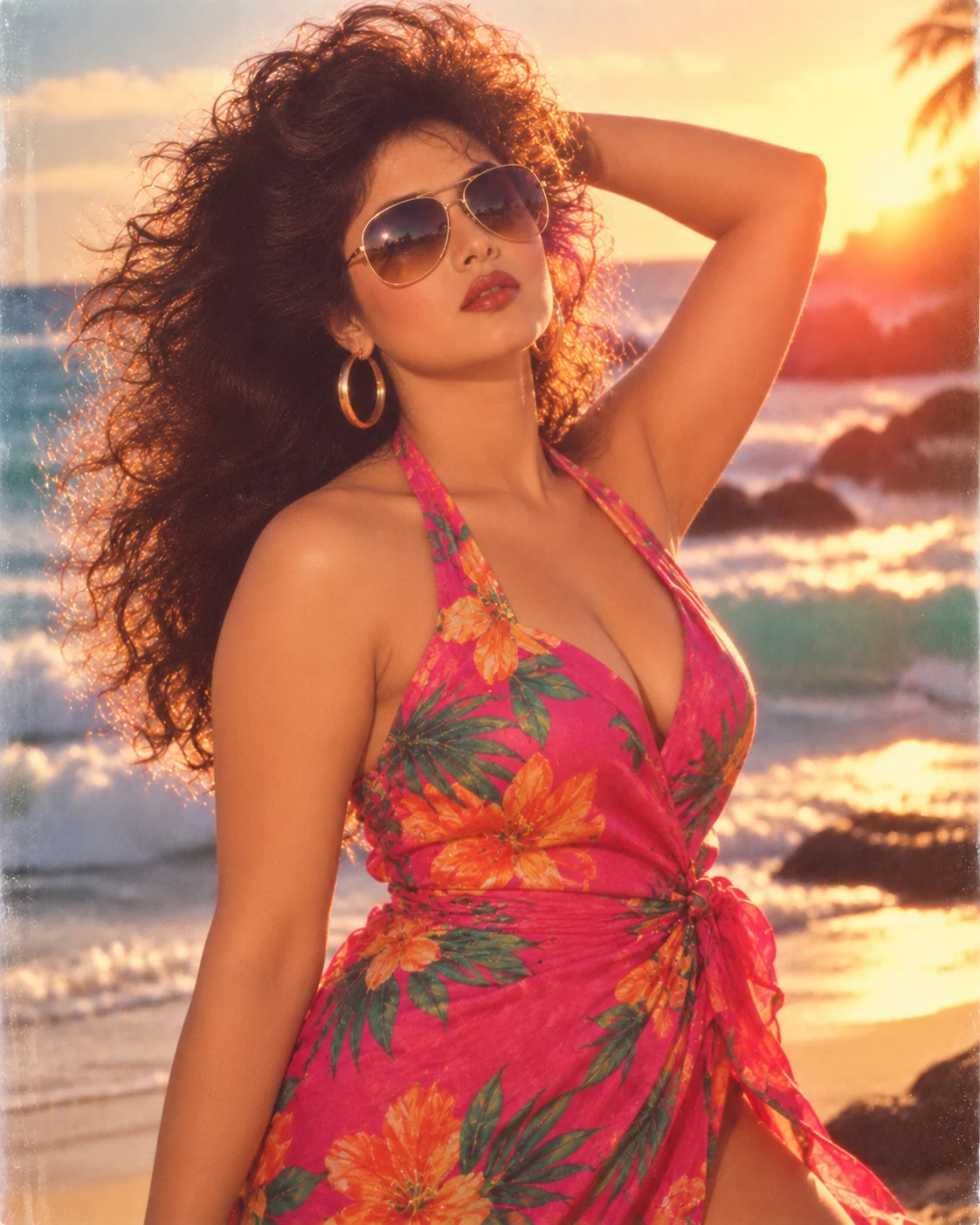
Kodachrome 64's response to strong tropical and coastal sunlight was exceptional — its ability to retain detail in both the bright sky and the sun-lit skin of the subject under conditions that would blow out other film stocks made it the first choice of travel and lifestyle photographers shooting in beach or coastal settings throughout the 1980s. The characteristic lens flare produced by low afternoon sun entering the frame from the side — a strong purple-magenta streak across the frame — was considered a signature aesthetic quality of this type of work rather than a technical failure. The fuchsia and tropical print sundress against warm Kodachrome summer colours created a richly saturated palette that appeared in countless women's magazine travel editorials and holiday features throughout the decade. The oversized gold-framed aviator sunglasses were the defining accessory of 1980s outdoor glamour, worn by fashion icons and photographed in virtually every editorial shoot set in a warm climate.
9. Close-Up Beauty Shot — 1980s Film Grain Portrait
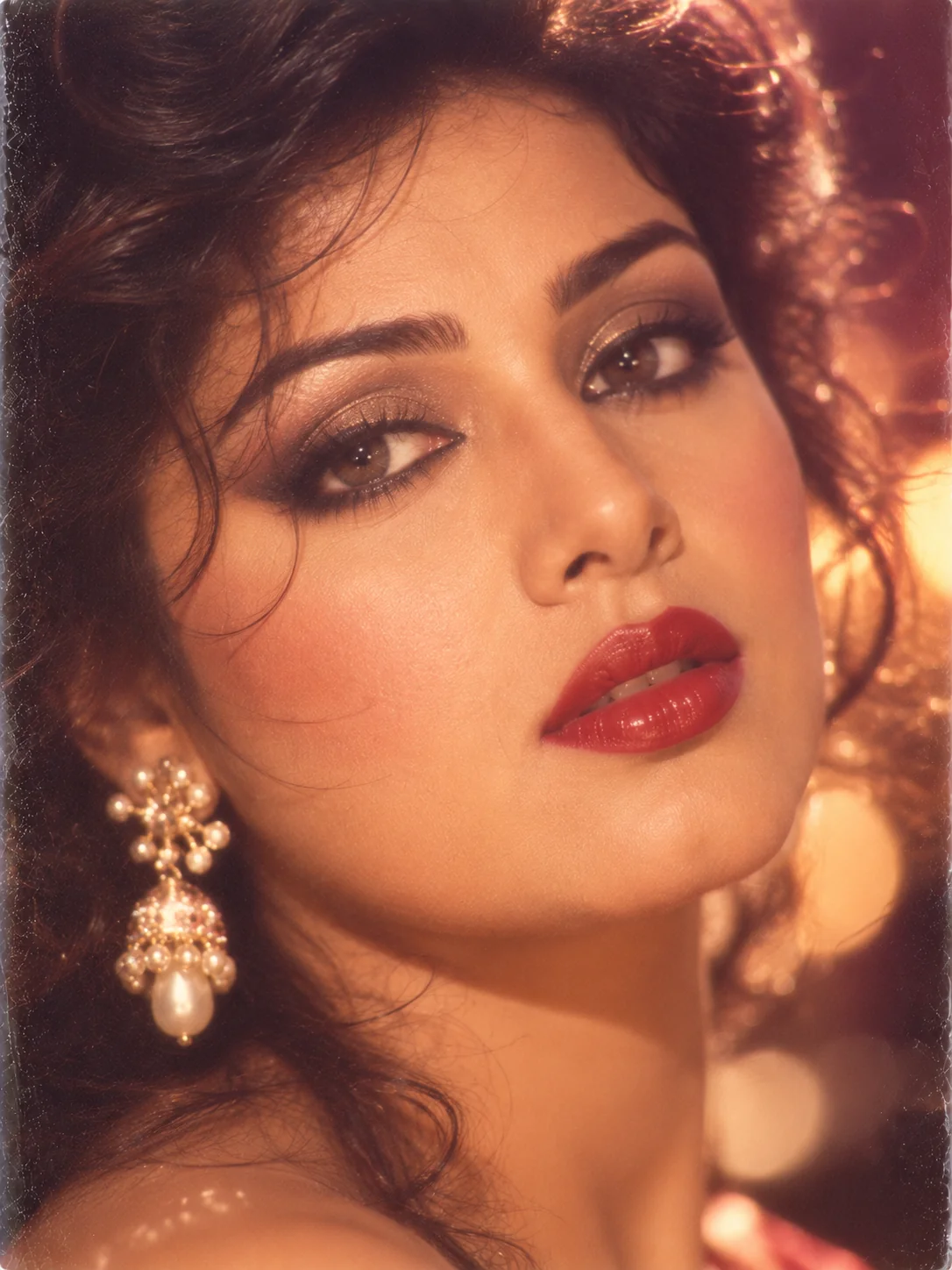
The extreme close-up beauty shot — filling the entire frame with the face from hairline to chin, often cropped to just the eyes and lips — became a staple of 1980s cosmetics advertising and fashion editorial. Shot on an 85mm lens at minimum focus distance with butterfly lighting refined to produce maximum cheekbone definition and skin luminosity, these images were technically demanding because any slight movement produced soft focus on the critical eye plane. Ektachrome 100's fine grain and vivid colour rendering made it ideal for this format — the bold charcoal-and-gold smoky eye and classic red lip photographed with exceptional saturation and detail that made cosmetics look their most vibrant. The visible film grain in the mid-tones and slightly over-exposed highlights with halation were not corrected in darkroom printing for editorial use — they were considered part of the aesthetic quality of the medium that distinguished film beauty photography from its sterile digital successor.
10. Retro Night Glamour — Tungsten Light Velvet Gown Portrait
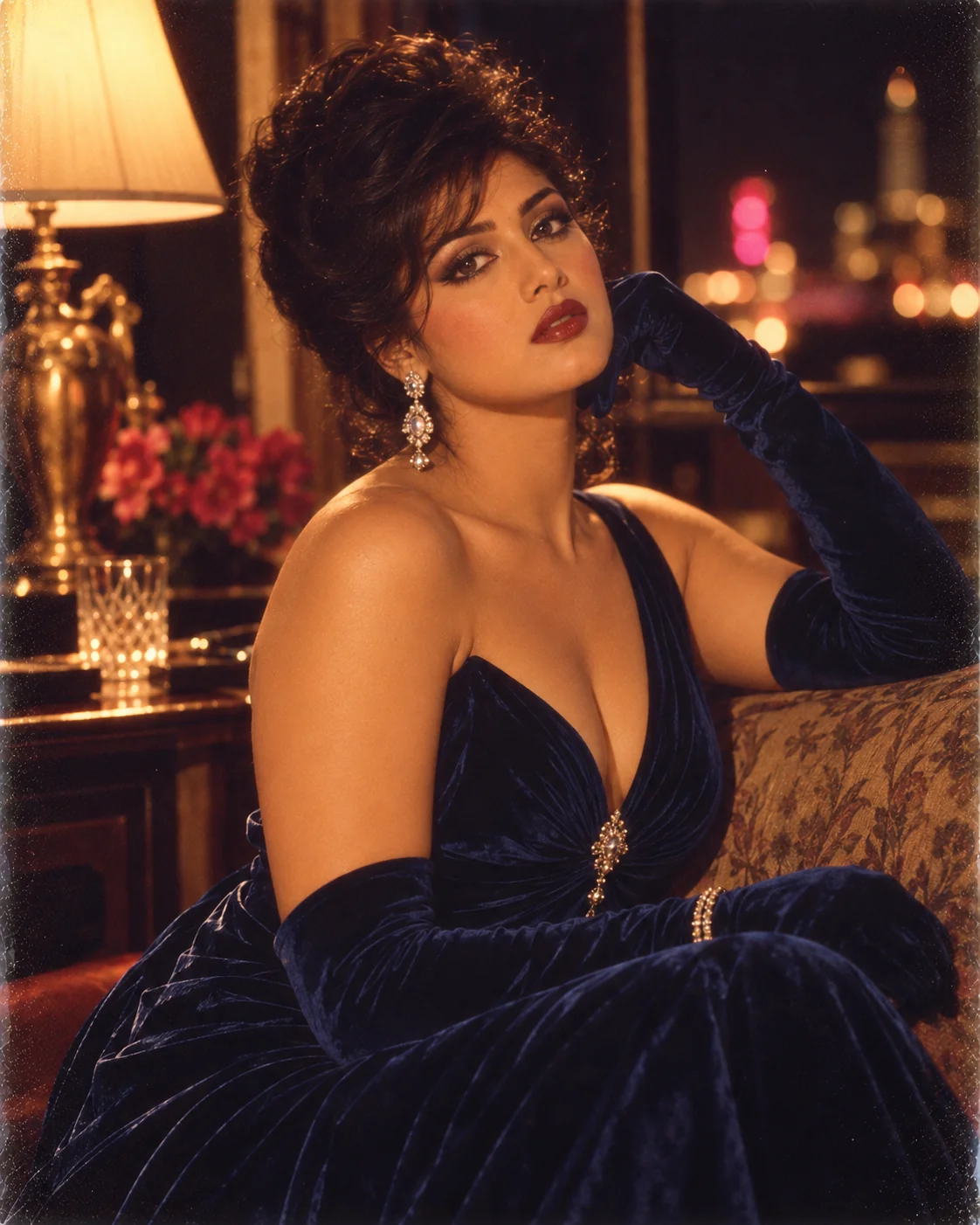
Night glamour photography in the 1980s was defined by the warm colour cast of practical tungsten lighting — the amber 3200K colour temperature of table lamps, candelabras, and wall sconces was not corrected with white balance adjustments but embraced as a defining atmospheric quality. Photographers pushed Kodak Gold 200 to ISO 400 to gain sufficient exposure under these conditions, accepting and often celebrating the increased visible grain as part of the moody aesthetic. The midnight-blue velvet evening gown was a fixture of 1980s luxury fashion — worn to film premieres, charity galas, and state dinners, its deep pile fabric absorbed and reflected tungsten light in a distinctly rich way that no other fabric replicated. Long elbow gloves, a fashion holdover from the 1950s that experienced a major revival in the 1980s through the influence of designers like Thierry Mugler and Claude Montana, completed the maximalist evening look that the decade's glamour photography documented so eloquently.
How to Get the Best Results from 1980s Glamour AI Prompts
Getting truly authentic vintage film-camera results requires more than just describing a style. These six techniques will consistently improve the quality and authenticity of your 1980s glamour AI portraits.
Upload a Reference Photo
In ChatGPT and Gemini AI, uploading a reference image alongside your prompt dramatically improves accuracy. Use an actual 1980s glamour photograph as a reference — the AI will extract the lighting, colour palette, grain texture and styling from it and apply them to your generated portrait.
Name a Specific Film Stock
Never write "vintage film look" — specify the exact stock. Kodachrome 64 gives warm orange-red with rich saturation. Ektachrome 100 produces vivid, slightly cooler tones. Kodak Gold 200 creates warm amber skin with visible grain. AI models trained on photography databases respond precisely to real film stock names.
Reference a Cultural Touchstone
Ground the image in a specific cultural reference: "Sridevi-era Bollywood heroine look," "Dynasty TV show power-dressing aesthetic," "Vogue 1983 editorial style," or "Glamour Shots mall portrait studio." These cultural anchors tell the AI exactly which sub-era and style universe to draw from.
Specify the Colour Grading
Add explicit colour grading terms: "warm magenta cast," "slightly faded highlights," "halation around light sources," "fine grain in shadow areas," "over-saturated amber tones." These are photochemical characteristics of real 1980s film that AI models can accurately replicate when explicitly instructed.
Generate Multiple Variants
Run each prompt 4–6 times and select the best output. Vary one element between runs — change the gel background colour, the lip shade, or the hair volume. AI glamour portraits benefit from this iterative selection process, which mirrors how professional photographers shoot multiple rolls to find the perfect frame.
Add Era-Accurate Imperfections
Real 1980s film portraits were not technically perfect — they had slight lens vignetting, minor colour fringing, and occasional soft focus from Vaseline or nylon filters. Adding "subtle lens vignetting," "slight colour fringing at edges," or "dreamy soft-focus glow" to your prompts creates a more believable and charming vintage result.
Why These 1980s Glamour Prompts Work So Well
The authenticity of these prompts comes from using real photographic vocabulary rather than generic retro descriptors. Here is why each technical layer matters.
Film Stock Accuracy
Kodachrome 64, Ektachrome 100, and Kodak Gold 200 are real film products with well-documented photochemical characteristics. Because AI models are trained on millions of real photographs, naming these specific stocks triggers accurate colour, grain, and contrast responses that generic terms like "vintage" cannot achieve.
Period Lighting Simulation
Butterfly lighting, clamshell studio setups, and tungsten practical lighting are all documented and widely photographed techniques from the 1980s. Specifying them by name anchors the AI in the exact technical context of the era, producing dramatically more authentic lighting than simply writing "studio light."
Cultural Context Anchoring
Referencing Bollywood heroine aesthetics, Dynasty power-dressing, or Vogue 1980s editorial gives the AI strong cultural signal layers beyond just visual description. This produces styling choices — specific hair, jewellery, makeup, and clothing combinations — that feel genuinely period-accurate rather than generically retro.
Colour Grading Specification
Warm magenta cast, halation, fine grain, and faded highlights are the actual photochemical signatures of 1980s film photography. When specified explicitly, AI models apply these characteristics in a technically accurate way that transforms a modern-looking digital portrait into something that genuinely appears to have been shot on a 1980s film camera.

Jitendra Patra
AI Prompt Researcher & Software Engineering Student
Jitendra Patra is a software engineering student and AI prompt researcher specialising in Google Gemini and generative image models. He actively experiments with structured prompt engineering techniques to produce high-quality, reproducible visual outputs across portrait, glamour, and vintage photography categories.
For this guide, his research focused on authentic 1980s photographic vocabulary — real film stocks, period lighting techniques, and era-accurate cultural styling from both Western glamour and Indian Bollywood cinema — to create prompts that produce genuinely vintage results rather than generically retro outputs.
The prompts in this guide are developed through iterative testing across ChatGPT DALL·E 3, Midjourney, Gemini AI, and Adobe Firefly with attention to film grain texture, colour grading accuracy, and period-authentic styling details.
Frequently Asked Questions
What are the best AI prompts for 1980s glamour photography?
The best 1980s glamour AI photo prompts combine a real film stock name (Kodachrome 64, Ektachrome 100, Kodak Gold 200), a period lighting technique (butterfly lighting, clamshell studio), era-accurate styling (big permed hair, smoky eyes, bold red lips, sequin dress or shoulder-pad power suit), and authentic colour grading terms like warm magenta cast, fine film grain, halation around highlights and slightly faded whites. These specific technical ingredients produce genuinely vintage results that generic "retro style" prompts cannot match.
Which AI tool works best for vintage 1980s glamour portrait prompts?
Midjourney v6 currently produces the most authentic film grain texture and vintage colour grading for 1980s glamour portraits. ChatGPT with DALL·E 3 is excellent for Bollywood heroine styles with Indian cultural detail. Google Gemini AI handles warm Kodachrome skin tones and soft studio lighting very well. For maximum control over grain and colour, Stable Diffusion SDXL with a film photography LoRA model produces outstanding results.
How do I make AI glamour portraits look authentically 1980s?
To achieve authentic 1980s glamour results: (1) always specify a real film stock by name, (2) name the lighting technique (butterfly or clamshell), (3) include era-accurate styling details — big permed or teased hair, shoulder pads, smoky eyes, bold lip, sequin or satin fabrics, (4) add colour grading vocabulary — warm magenta cast, halation, fine grain, faded highlights, and (5) reference a cultural anchor like "1980s Vogue editorial style" or "Sridevi-era Bollywood heroine look". All five layers together create a convincingly period-accurate result.
Can I use these prompts for Indian 1980s Bollywood glamour portraits?
Absolutely. Prompts 2 and 6 are specifically crafted for Indian glamour aesthetics — the Bollywood heroine sequin saree portrait and the classical Bharatanatyam dancer studio portrait. You can adapt any prompt by replacing Western styling with Indian elements: Kanjivaram silk saree, temple gold jewellery, jasmine flower hair garlands, heavy kohl-lined eyes, maang tikka, vanki armlets, and warm Ektachrome colour grading that suits Indian skin tones beautifully.
What aspect ratio should I use for 1980s glamour portrait AI prompts?
Use --ar 4:5 for Instagram portrait posts and the classic upright glamour portrait
format. Use --ar 3:4 for close-up beauty shots and magazine cover compositions. Use
--ar 1:1 for square social media posts and profile pictures. Use --ar 16:9
for YouTube thumbnails and wide editorial banner images. The 4:5 ratio most closely matches the
original film photography format used in 1980s portrait studios.
What is butterfly lighting and why is it important for 1980s glamour prompts?
Butterfly lighting (also called Paramount lighting) places the key light directly above and in front of the subject, creating a small butterfly-shaped shadow directly under the nose. It was the signature lighting technique of Hollywood and fashion glamour photography from the 1930s through the 1980s. Including "butterfly lighting" in your AI glamour prompts tells the model to generate the exact high-cheekbone, shadow-enhancing, flattering light pattern that defined the golden age of glamour portrait photography, making your images look authentically period-accurate.