1980s AI Photo Trend: 10 Best ChatGPT Prompts for Retro Bollywood & Heroine Looks (2026)
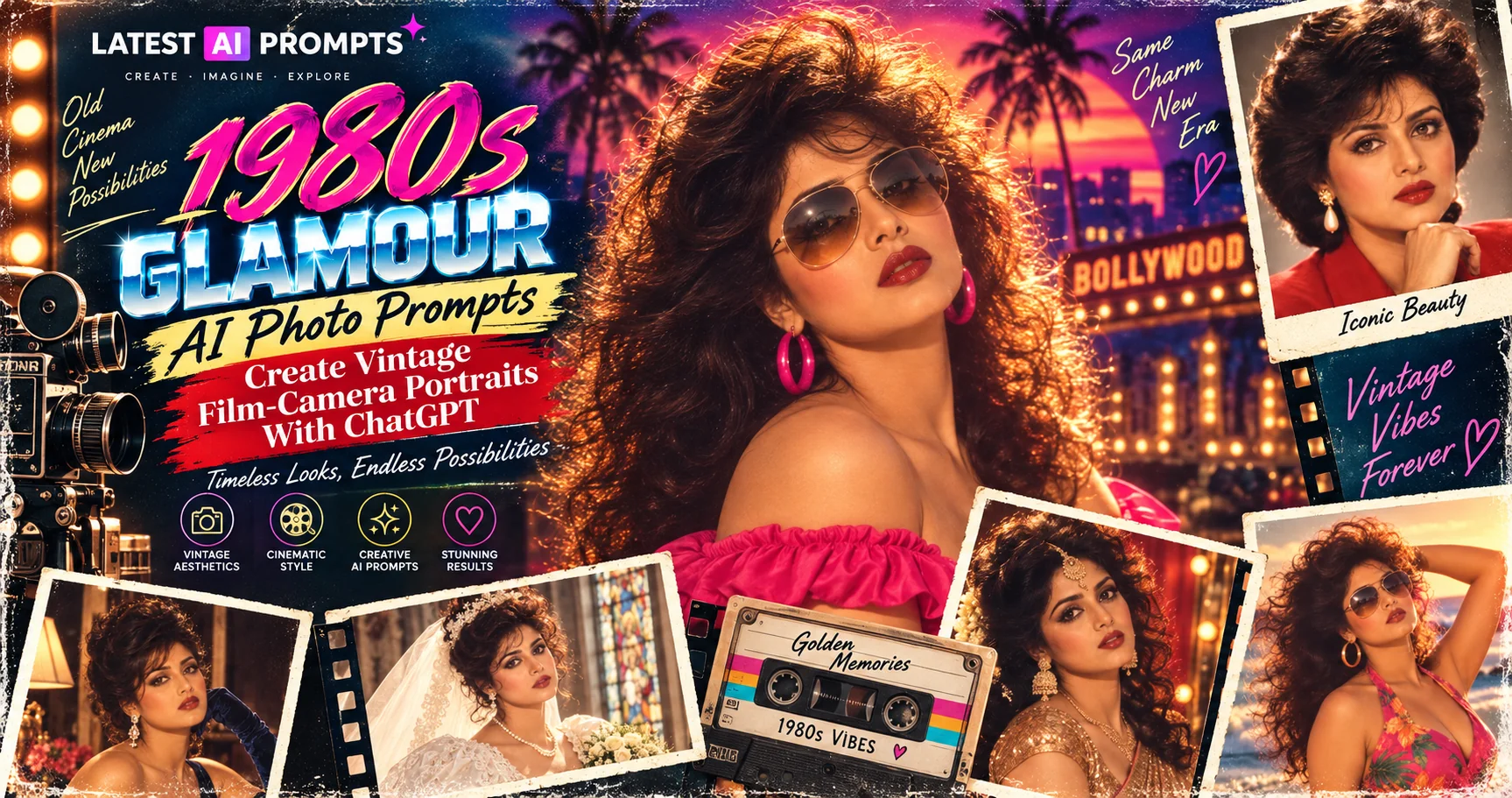
The viral ChatGPT 80s photo trend has taken a beautifully Indian turn, and the results are breathtaking. Across Instagram and WhatsApp, people are using AI to transform their modern photos into retro 1980s Bollywood heroine portraits — complete with flowing chiffon sarees, elaborate gold jewellery, kohl-darkened eyes, and the warm luminous photography aesthetic of Hindi cinema's most glamorous decade. The 1980s was Bollywood's golden age of visual opulence: heroines like Sridevi, Rekha, Madhuri Dixit, Hema Malini, and Zeenat Aman defined an era of cinematic beauty that remains deeply embedded in Indian cultural memory. Now, with ChatGPT DALL·E 3, Google Gemini, Midjourney, and Adobe Firefly, you can step into that golden era yourself. In this guide, we present the 10 best ChatGPT prompts for retro Bollywood and heroine looks — covering the full visual spectrum of 1980s Hindi cinema, from the iconic Chandni white chiffon saree to the dramatic Filmfare magazine cover, from a vintage Bollywood film poster to a golden stage performance.
- 10 ready-to-copy prompts — Bollywood heroine styles for ChatGPT & Gemini
- Covers Sridevi, Rekha, Madhuri, Hema Malini-era looks with specific styling language
- Includes saree, jewellery, makeup & lighting descriptors for authentic results
- Works with ChatGPT, Google Gemini, Midjourney & Adobe Firefly
- Instagram-ready — styled for maximum engagement on Indian social media
The 1980s Bollywood aesthetic is having a major revival in 2026, fuelled by AI image technology that can accurately reproduce the warm studio lighting, era-accurate costumes, and photographic characteristics of vintage Hindi cinema photography. Whether you were born in the 80s and grew up watching Sridevi dance through fountains in white chiffon, or you are a younger fan who has discovered the era through OTT platforms and social media, these prompts give you the most culturally specific and visually accurate route to transforming your modern photo into a genuine 1985 Bollywood heroine portrait. Each prompt in this guide encodes specific cultural, cinematic, and photographic knowledge of the era — from the exact saree types and jewellery combinations to the lighting signatures of legendary directors like Yash Chopra and Subhash Ghai — to produce results that go far beyond generic “vintage Indian woman” AI outputs.
What Made 1980s Bollywood Portrait Photography So Iconic?
To appreciate why these prompts produce such authentic results, it helps to understand what specifically characterised 1980s Bollywood portrait photography and made it visually distinctive from both earlier and later Indian cinema photography:
Iconic Costume & Saree Styling
1980s Bollywood heroines wore some of the most visually extravagant costumes in Indian cinema history. Chiffon sarees in pastels and white defined the Sridevi-Yash Chopra aesthetic — flowing, almost weightless, suggesting ethereal femininity. Heavily embroidered silk kanjivaram sarees in jewel tones were Rekha's signature. Sequined lehengas dominated the decade's dance sequences. Understanding these distinctions allows the prompts to invoke specific subcultural aesthetics rather than generic “Indian woman in saree” outputs, which is why each prompt in this guide specifies the saree type, fabric, colour, and embroidery with precise cultural accuracy.
Dramatic Kohl-Lined Eye Makeup
The eyes were the defining feature of 1980s Bollywood portrait photography. Heavy kohl eyeliner extending into dramatic wings, thick mascara-lengthened lashes, bold eyeshadow in gold, teal, or smoky tones — every heroine of the era used the eyes as the primary instrument of expression. Rekha's kohl-rimmed gaze, Sridevi's large luminous eyes, Madhuri's expressive dance-eye — each was distinct. Including specific eye makeup descriptors in prompts — “heavily kohl-lined doe eyes with golden eyeshadow” — triggers the AI to produce the most characteristically Bollywood-80s eye aesthetics that immediately signal the era to any Indian viewer.
Warm Tungsten Studio Lighting
1980s Bollywood photography used warm tungsten studio lighting that gave skin tones a luminous golden glow — very different from the cooler, neutral lighting of modern Indian photography. This warm light, combined with a soft-focus diffusion filter for glamour shots, created the distinctive dreamlike quality of the era's Filmfare magazine covers and film promotional portraits. The golden skin glow it produced became an aesthetic standard in itself — the heroine was not just photographed but illuminated, almost worshipped by the light. Specifying “warm tungsten studio lighting, golden skin glow” is the single most important technical phrase for achieving 80s Bollywood authenticity in AI portrait generation.
Elaborate Traditional Jewellery
No 1980s Bollywood heroine portrait was complete without elaborate jewellery. Maang tikka (forehead ornament), jhumka earrings in gold or silver, layered kundan necklaces or chokers, gold bangles, kamarbandh (waist jewellery), and traditional nose rings for classical looks — each piece was chosen to maximise visual richness and cultural authenticity. This jewellery was not merely decorative; it was communicative, signalling a woman's social status, religious tradition, regional heritage, and cultural identity. The more specifically you describe the jewellery in an AI prompt, the more elaborately accurate and traditionally authentic the generated portrait becomes.
1. Sridevi Chandni Chiffon Saree — Bollywood ChatGPT Prompt
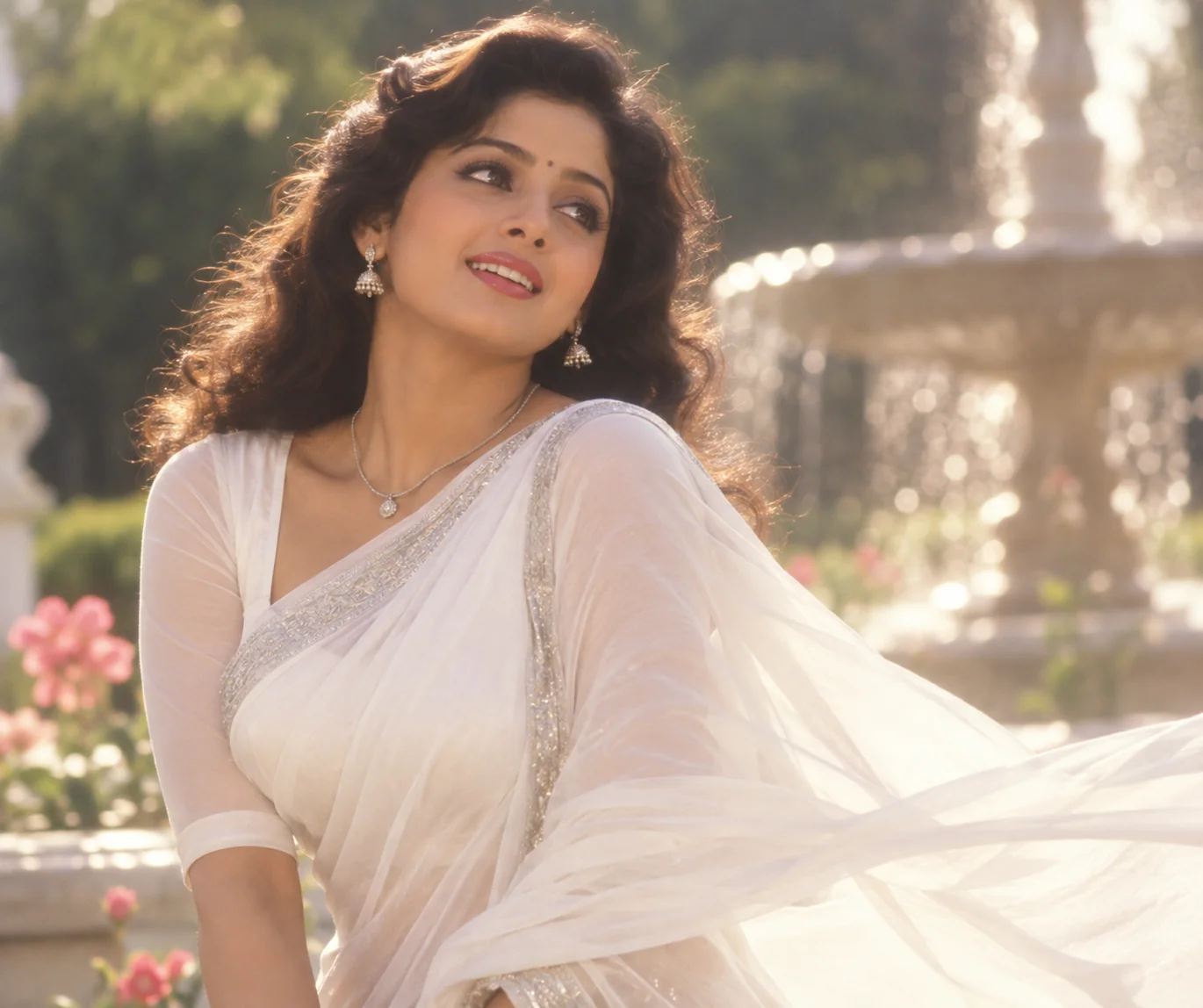
Sridevi's portrayal of Chandni in the 1989 Yash Chopra film of the same name created one of Indian cinema's most enduring and beloved visual archetypes — the luminous heroine in flowing white chiffon, moving through a garden or fountain with a quality of supernatural grace. Yash Chopra, who directed some of the decade's most visually beautiful films, had a distinctive photographic signature: soft diffusion filters, outdoor natural settings, flowing fabrics, and warm golden-hour light that gave his heroines an almost divine luminosity. The white chiffon saree has since become one of Bollywood's most iconic costume archetypes — reproduced in tribute shoots, fashion editorials, and now AI portrait transformations. This prompt replicates every element of that iconic aesthetic with precision, producing portraits that feel genuinely rooted in the golden era of Hindi cinema.
2. Rekha Classic Glamour Portrait — Bollywood ChatGPT Prompt
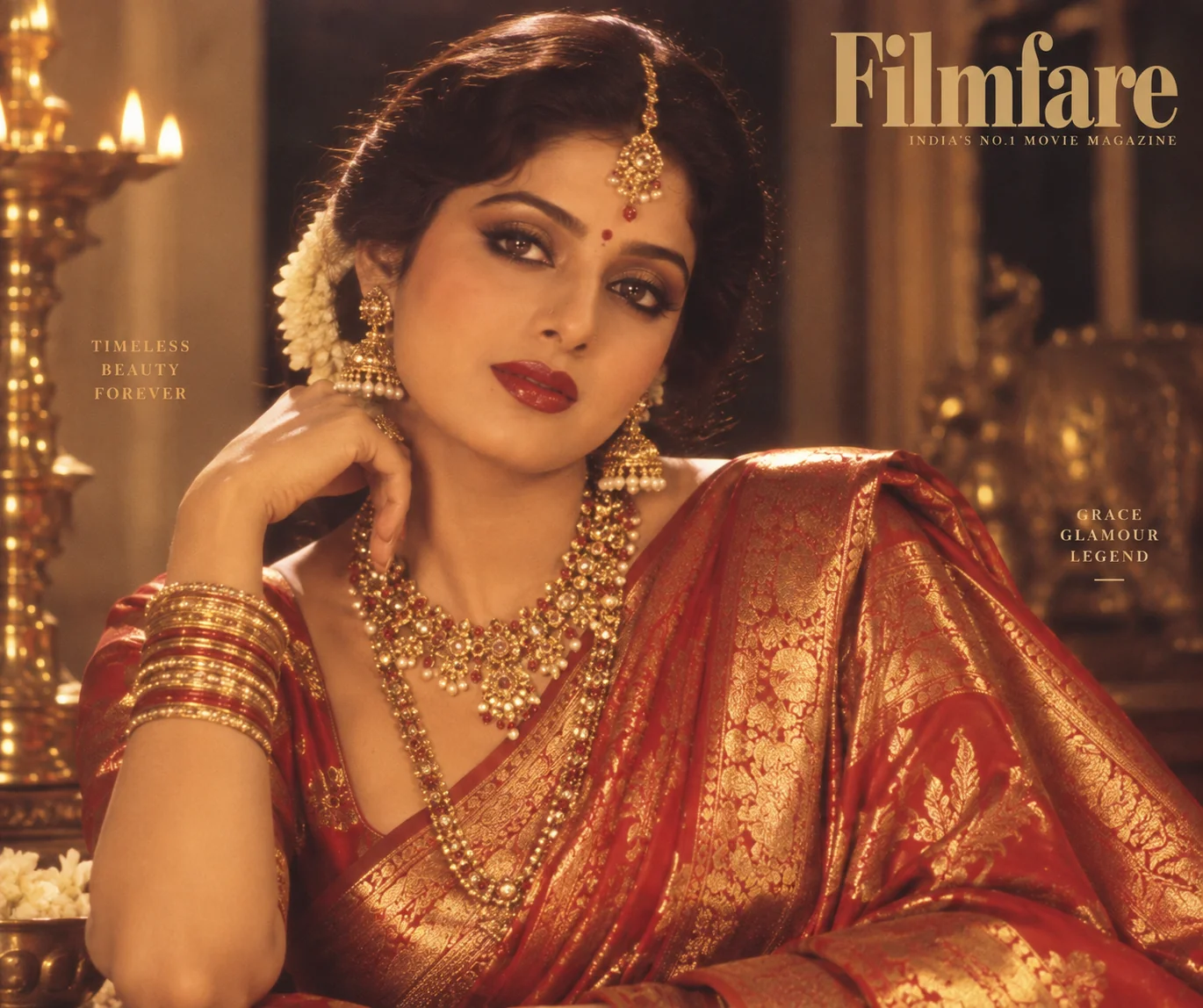
Rekha is widely considered the definitive icon of 1980s Bollywood glamour — a standard of beauty and grace that remains unmatched in Indian cinema. Her transformation throughout the 1980s from a raw screen presence to a fully refined cinematic icon was accompanied by a visual evolution that culminated in the kind of portraits that defined the era's standard of screen beauty. The rich kanjivaram silk sarees in deep jewel tones, the elaborate traditional gold jewellery that transformed each portrait into a display of Indian craftsmanship, the precisely kohl-lined eyes that gave her gaze its legendary depth — and the warm tungsten studio lighting that made her skin luminous — are all precisely encoded in this prompt. Filmfare magazine featured this aesthetic on hundreds of covers throughout the 1980s, cementing it as the definitive image of Indian cinematic beauty.
3. Vintage Bollywood Film Poster — ChatGPT Prompt
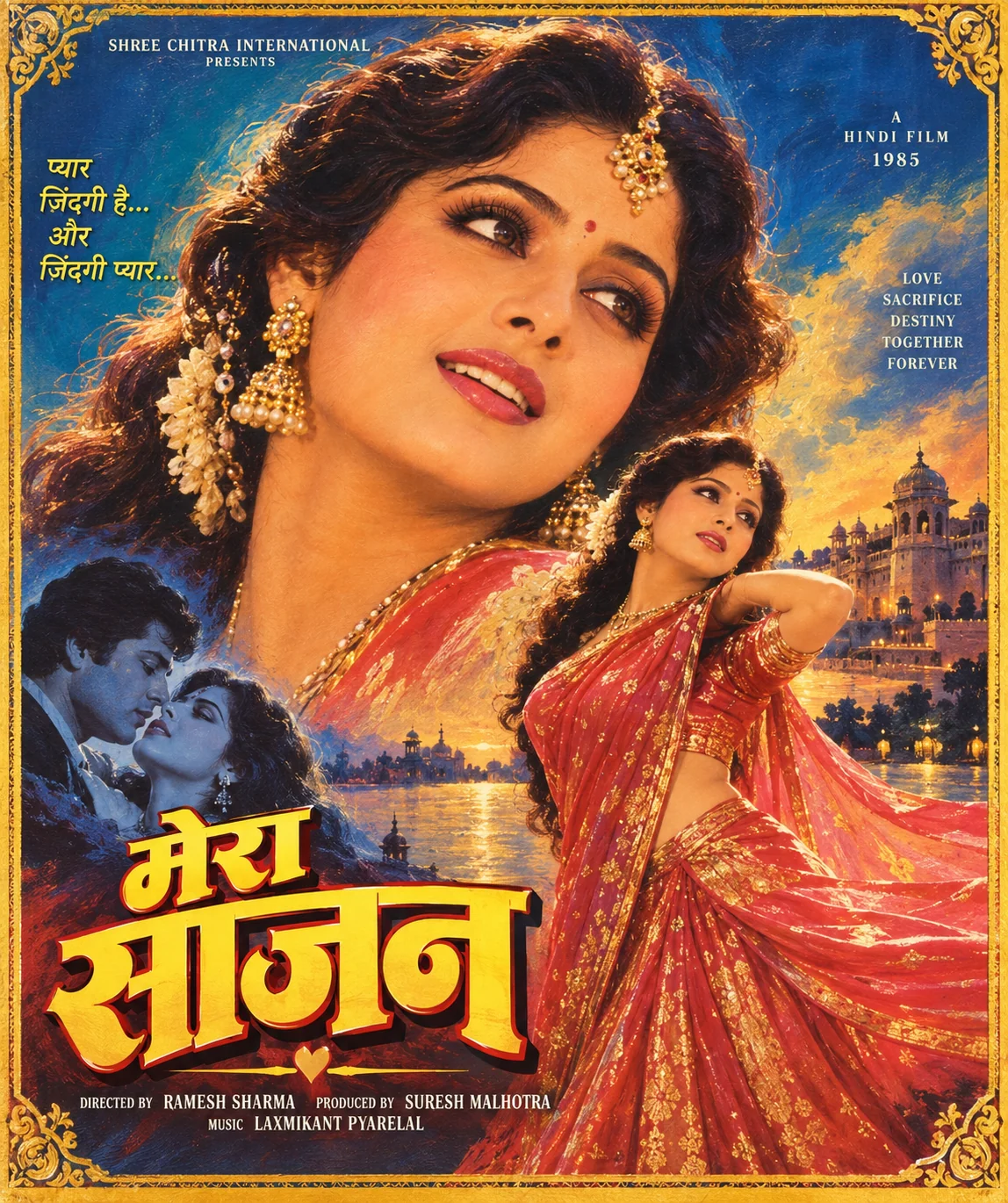
The vintage Bollywood film poster was one of the most distinctive and visually powerful art forms of 1980s Indian popular culture. Before digital printing, Bollywood posters were hand-painted by studio artists who elevated commercial poster art to a form of high visual drama. The results were characterised by saturated, slightly unrealistic colours, exaggerated beauty, dramatic poses, and ornamental gold borders that framed the heroine like a religious icon. Cities across India were covered in these hand-painted artworks, making them one of the most democratically visible art forms of the era. The specific visual language of these posters — the way light catches jewellery at impossible angles, the impossibly rich colours of silk and velvet costumes, the dramatic architectural or natural settings — is deeply embedded in the visual memory of everyone who grew up in India during the 1980s. This prompt uses specific language to guide AI tools toward this hand-painted, ultra-saturated Bollywood poster aesthetic.
4. Madhuri Dixit Dance Portrait — ChatGPT Bollywood Prompt
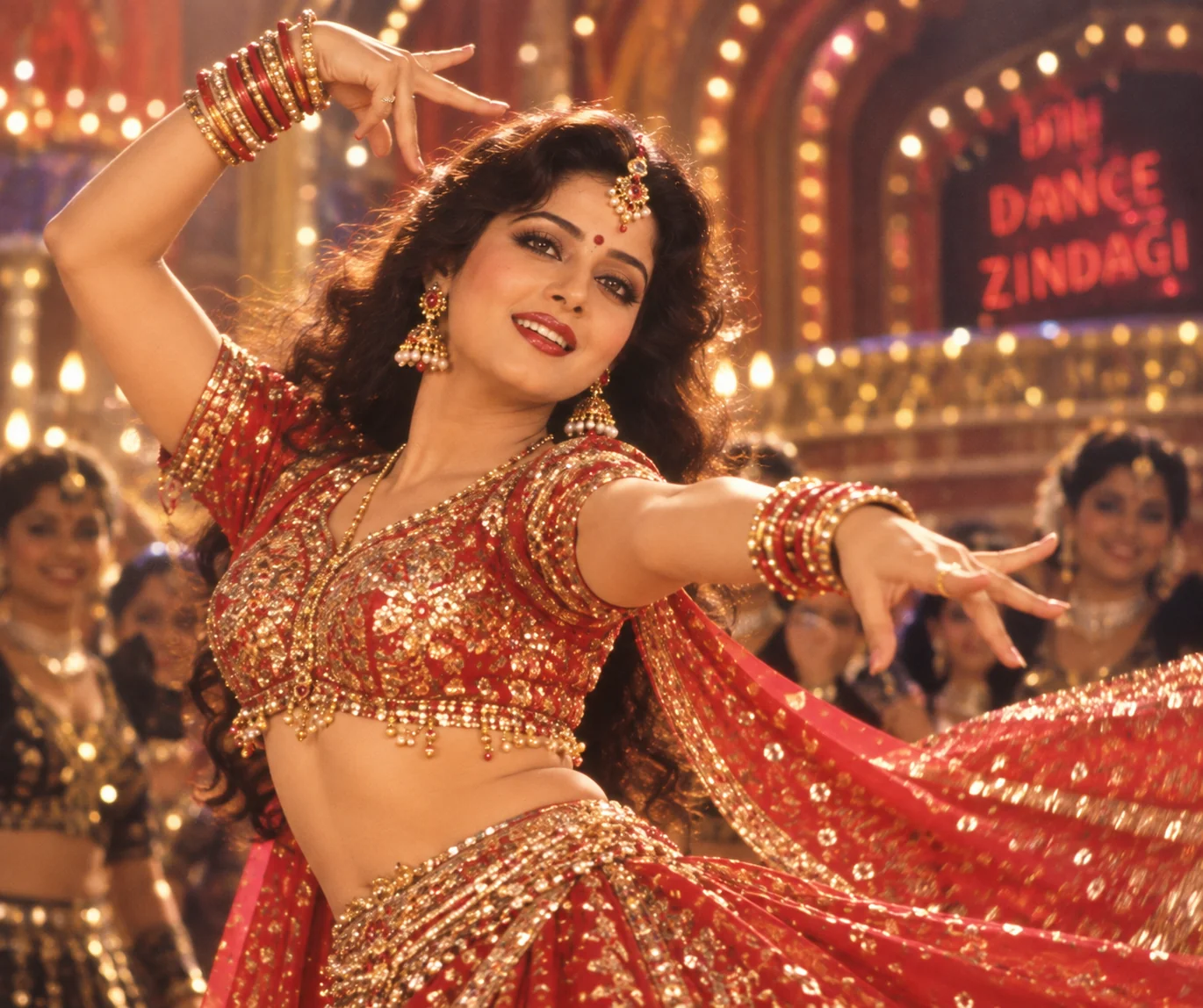
The late 1980s was the era when Bollywood dance became a cinematic art form in its own right, largely through performers like Madhuri Dixit whose dance sequences in Tezaab (1988) and Ram Lakhan (1989) set a new standard for expressive, energetic Bollywood choreography. The visual language of these dance sequences — the sequined and embroidered lehengas, the stage performance lighting, the expressive hand gestures of classical Indian dance forms adapted for Hindi cinema, the flowing dupatta as a kinetic element — created an aesthetic that remains one of Bollywood's most beloved. When Madhuri danced, the entire frame became a study in controlled kinetic grace, and the costumes were designed specifically to amplify that movement: sequins catching the spotlight, dupattas trailing through the air, bangles catching the beat. This prompt precisely captures the energy, colour, and styling of that iconic dance performance portrait tradition.
5. Filmfare Magazine Cover — Bollywood ChatGPT Prompt
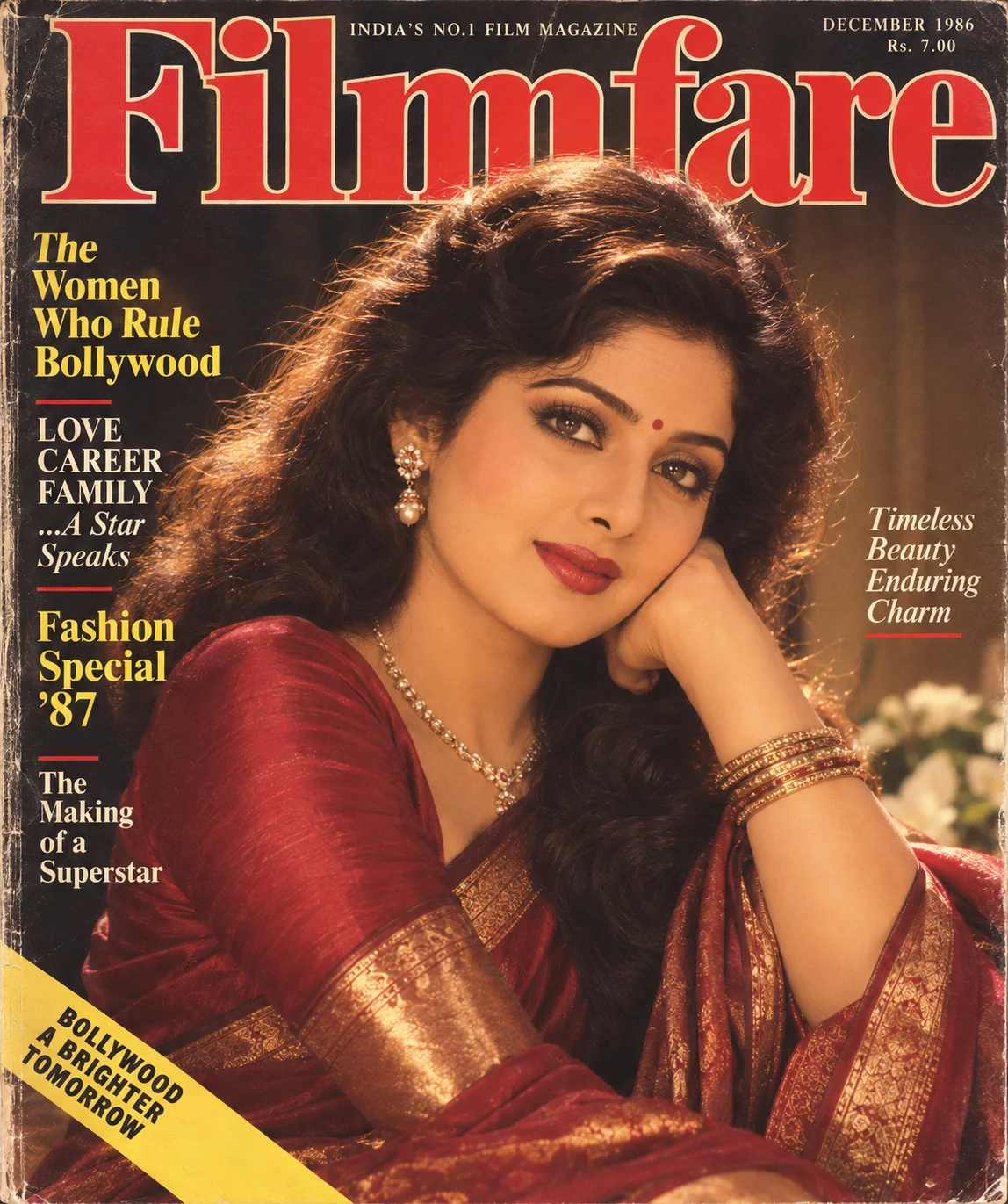
Filmfare — India's most prestigious film magazine throughout the 20th century — defined the visual standard of Bollywood heroine portraiture in the 1980s. A Filmfare cover in that era meant a specific kind of photograph: more refined and sophisticated than the extravagant Stardust covers, more formal than promotional film stills, with a quality of composed, intelligent beauty that honoured both the subject and the publication's prestige. The magazine had a roster of dedicated portrait photographers who developed a specific visual language: warm but controlled studio lighting, expert makeup and styling, a soft diffusion filter that created an almost painterly quality, and an atmosphere of dignified glamour that communicated the heroine not just as an attractive woman but as a significant cultural figure. A Filmfare cover was a cultural achievement, and the photography reflected that weight.
6. 80s Bollywood Stage Performance — ChatGPT Prompt
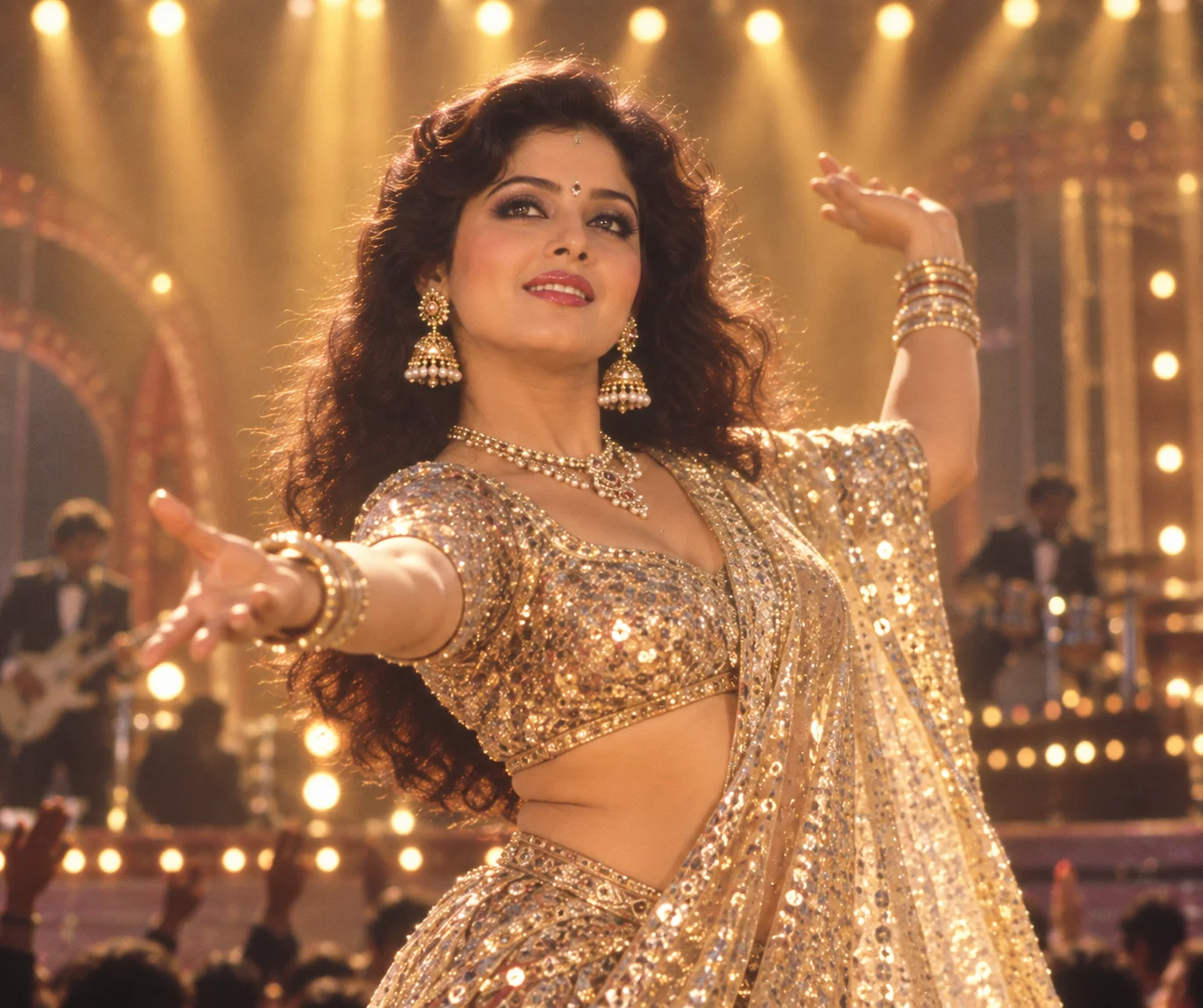
The Bollywood stage show was a defining entertainment institution of 1980s India. Live performances by film stars — singing to playback tracks and dancing at stadium and auditorium events — were some of the most spectacular entertainment productions of the decade. These shows brought the magic of cinema to live audiences in ways that television and VHS recordings could not replicate: the actual presence of the star, the live stage lighting, the scale of a real performance. The visual language of these performances combined theatre lighting, extravagant costuming, and the kind of bold, confident presence required to fill a stadium. The golden overhead stage lighting that is central to this prompt creates a particularly striking portrait effect — the warm illumination from above creates dramatic highlights and shadows that make the subject appear to radiate their own golden glow, evoking the divine status of the Bollywood star in the Indian popular imagination of the 1980s.
7. Hema Malini Classic Silk Saree Portrait — ChatGPT Prompt
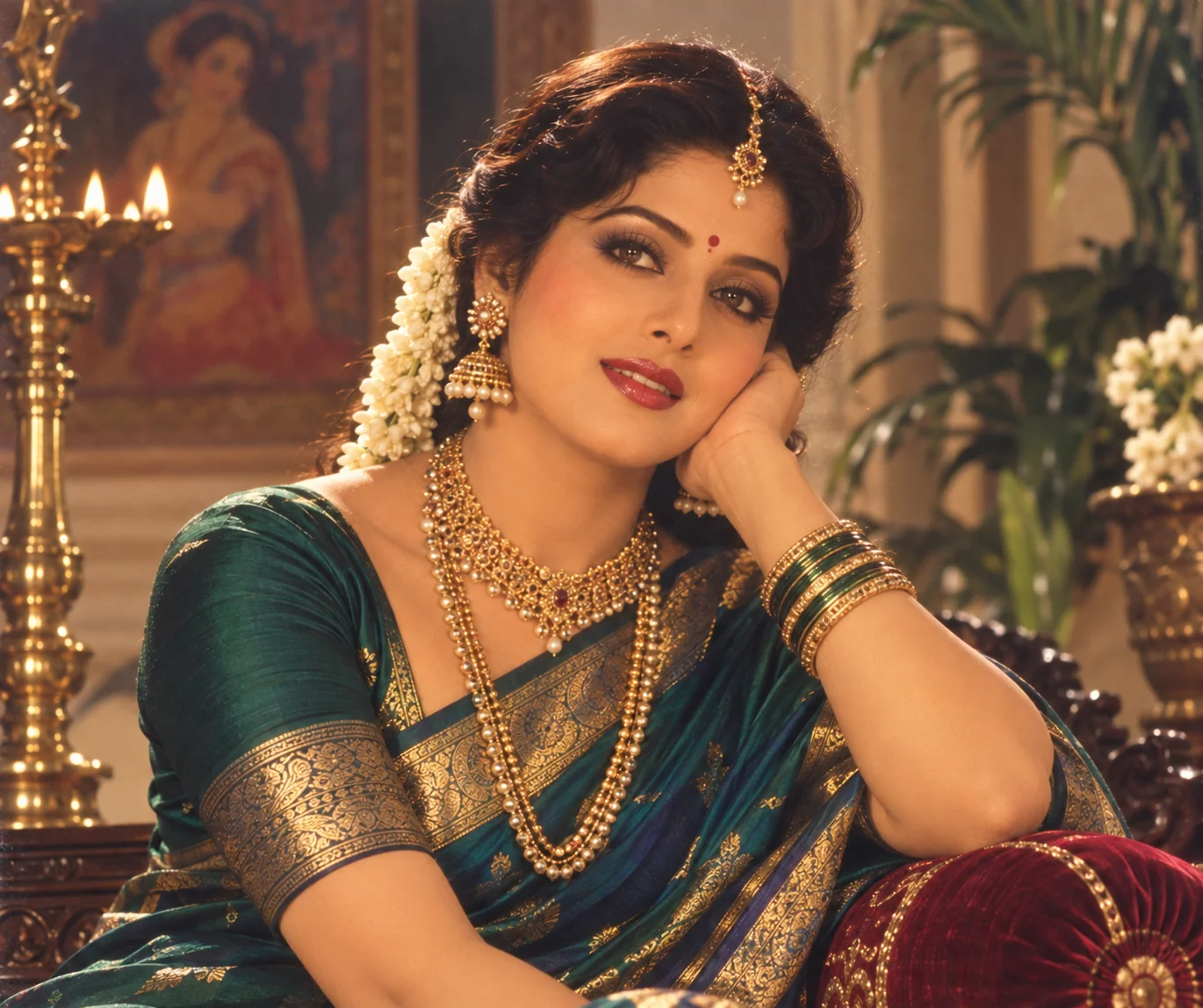
Hema Malini represented a different dimension of 1980s Bollywood heroine beauty: serene, dignified, rooted in classical Indian traditions of aesthetics. Known as the “Dream Girl” of Indian cinema, she embodied a more composed, Bharatanatyam-influenced elegance that drew from classical Indian aesthetics rather than the dramatic glamour of Rekha or the supernatural grace of Sridevi. Her portraits from the 1980s have a timeless quality — the rich silk paithani sarees, the jasmine garlands, the dignified expression, and the classical jewellery all work together to create portraits that feel simultaneously period-accurate and enduringly beautiful. The Hema Malini portrait aesthetic represents the meeting point between classical Indian feminine beauty traditions and modern Bollywood glamour, and it remains one of the most aesthetically satisfying 80s portrait styles available for AI generation.
8. Vintage Bollywood Bridal Portrait — ChatGPT Prompt
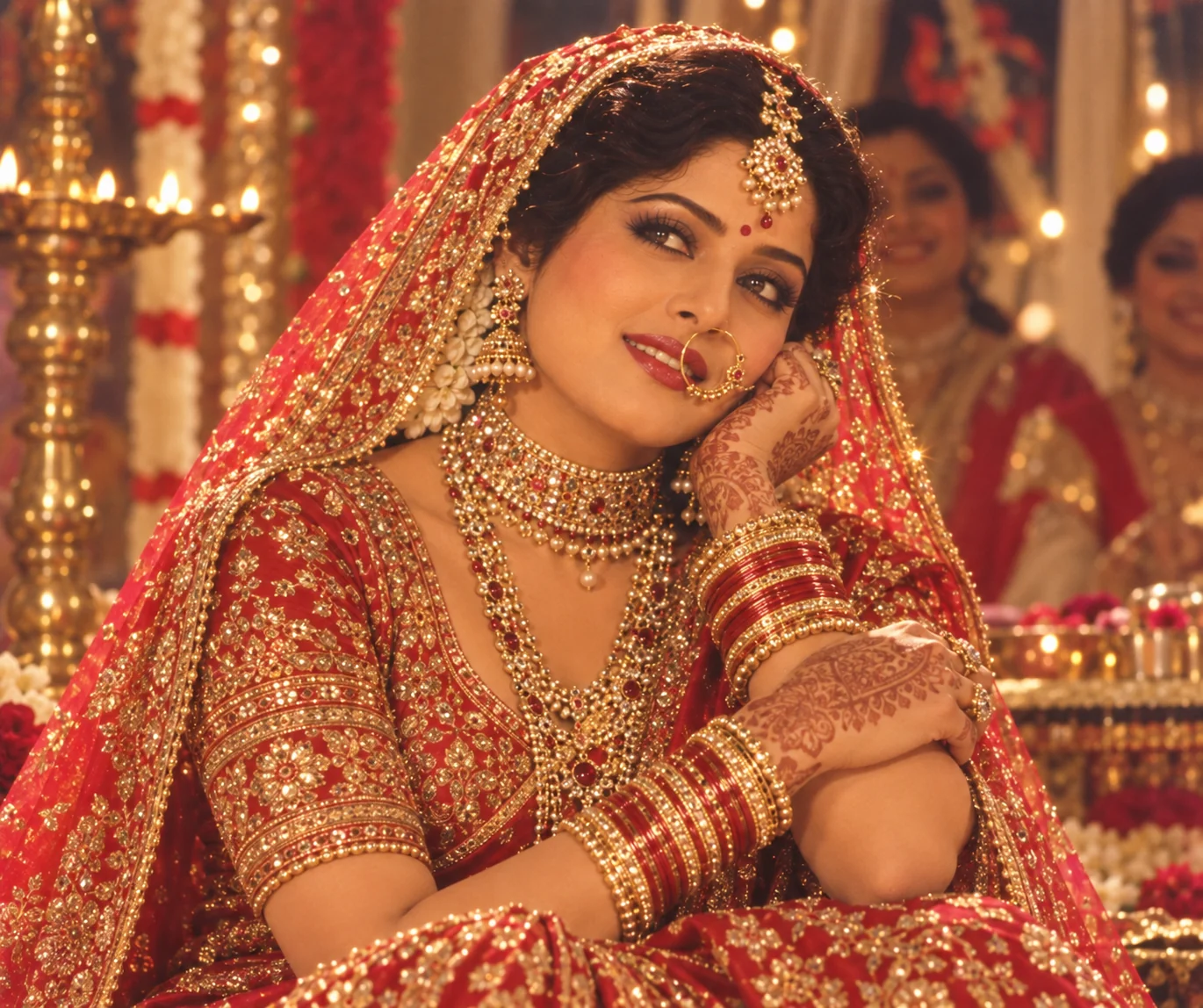
The Bollywood wedding sequence of the 1980s was a cinematic set piece in its own right — an occasion for the most elaborate costuming, the most dramatic emotional performances, and the most extravagant production design in any given film. Directors used these sequences to display the full wealth of traditional Indian bridal culture: layered gold jewellery, heavily embroidered red and gold lehenga, complete bridal makeup with deep kohl eyes and traditional red bindi, and the elaborate gold ornaments that signified prosperity and tradition. This visual language has influenced Indian wedding photography and fashion right up to the present day — the “Bollywood bridal” aesthetic remains a benchmark for Indian wedding styling that brides across the country aspire to recreate. The AI-generated version allows any woman to experience this iconic look in a portrait that captures the full glamour of the 1986 Bollywood bridal tradition.
9. Zeenat Aman Modern Fusion 80s Glamour — ChatGPT Prompt
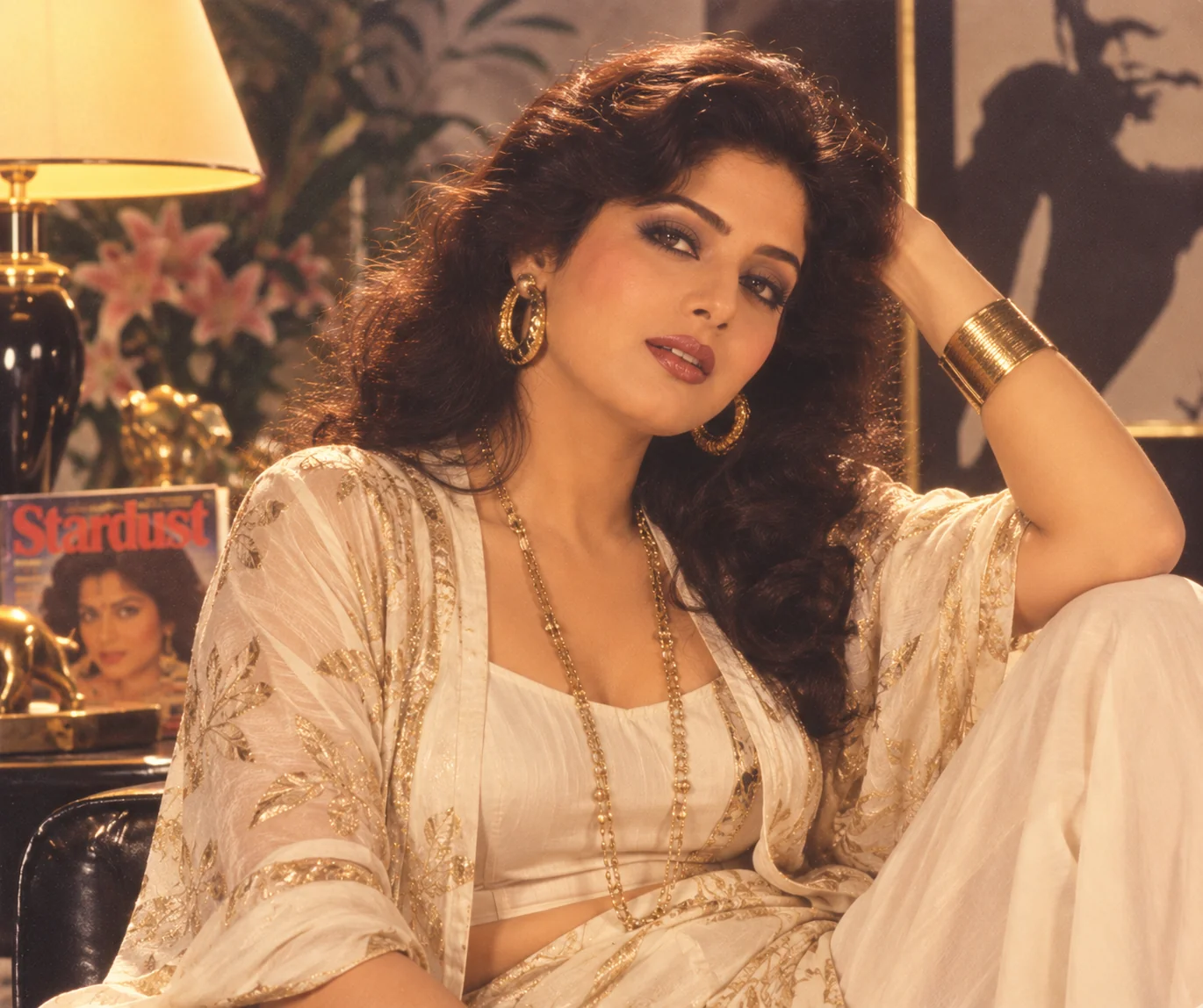
Zeenat Aman was Bollywood's great moderniser — the heroine who brought international fashion sensibility to Hindi cinema and continued to influence the early 1980s with a fusion aesthetic that combined Indian elegance with Western sophistication. While Rekha defined traditional Indian glamour and Sridevi defined ethereal grace, Zeenat Aman represented the cosmopolitan Indian woman who was equally comfortable in a contemporary kurta-palazzo ensemble as in a traditional saree — and who looked equally stunning in both. She embodied a specifically 1980s Indian modernity: educated, internationally aware, aesthetically adventurous, but culturally grounded. The Stardust magazine aesthetic that frames this prompt was slightly more daring and fashion-forward than Filmfare — it celebrated this cosmopolitan Indian femininity with a visual language that mixed Western fashion photography with Indian glamour.
10. 80s Bollywood Dramatic Close-Up Portrait — ChatGPT Prompt
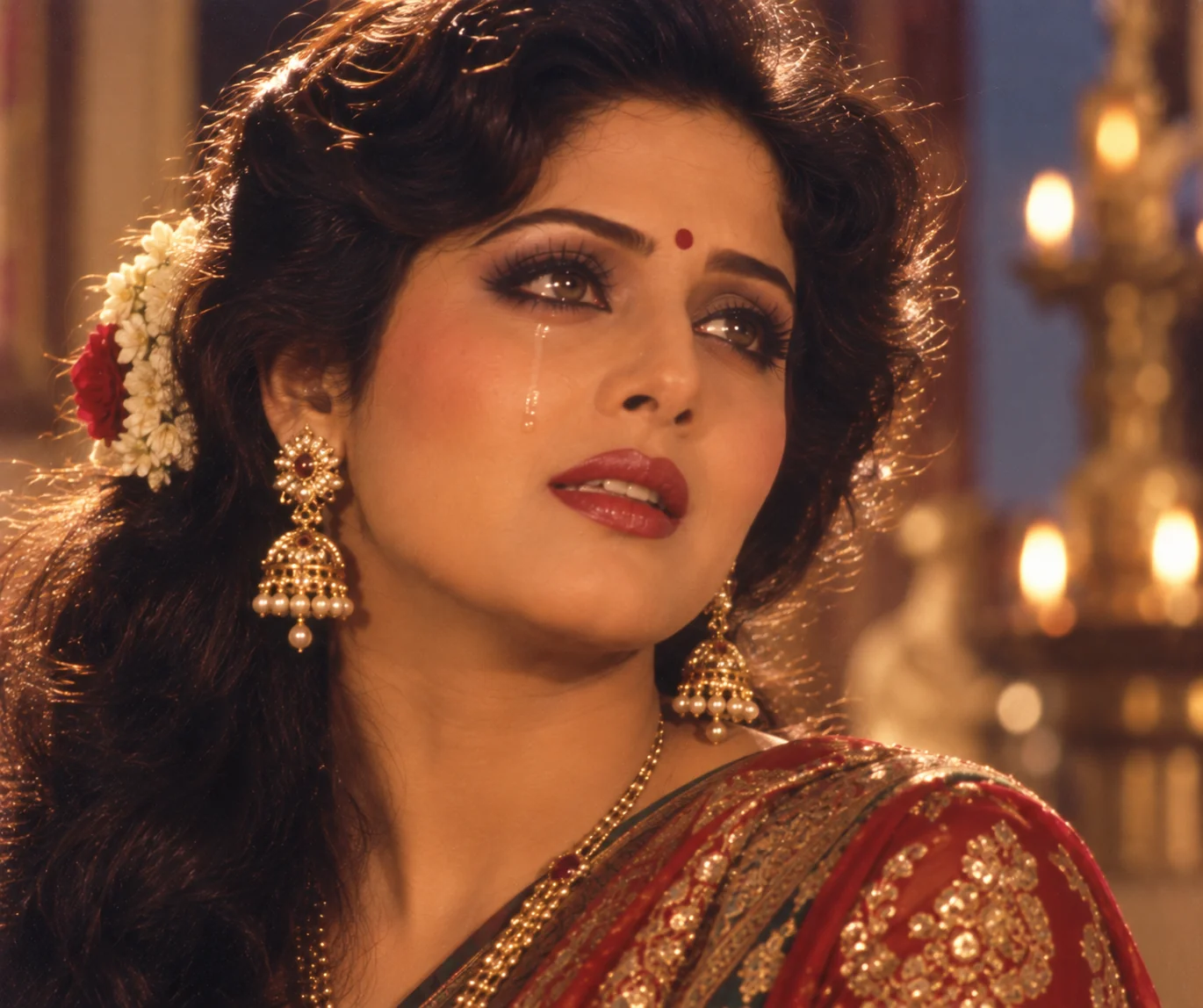
The dramatic close-up was one of Bollywood's most powerful cinematic tools in the 1980s — a tightly framed portrait of the heroine's face at a moment of intense emotion, often with tears, anguish, or passionate longing rendered in extraordinary detail by the actress and captured with extraordinary sensitivity by the cinematographer. Directors like Yash Chopra, Ramesh Sippy, and Manmohan Desai elevated this technique to an art form, using warm side lighting, shallow depth of field, and the expressive abilities of their lead actresses to create images of enormous emotional impact that became some of the most iconic single frames in Indian film history. The unshed tear, the kohl-smeared eye, the trembling lip, the jewellery catching the light against the blurred rich background — these visual elements combined to create portraits of emotional beauty that remain among the most powerful in world cinema.
These ChatGPT Bollywood 80s prompts are designed to work immediately with ChatGPT DALL·E 3, Google Gemini, Midjourney, and Adobe Firefly. For the most authentic Indian skin tone rendering, Google Gemini consistently produces the warmest and most culturally accurate results, particularly for jewellery detail and traditional fabric textures. For the highest overall visual quality with Bollywood-specific styling detail, Midjourney with --style raw --ar 4:5 produces the most cinematic results. When using ChatGPT, upload a well-lit photo and select “HD quality” for the most detailed fabric, jewellery, and makeup rendering. Remember that 1980s Bollywood photography was characterised above all by warmth — warm skin tones, warm lighting, warm colour palettes — so append “warm golden Indian photography, luminous skin glow, rich saturated colour” to any prompt to strengthen the era's characteristic visual quality. The more culturally specific your prompt language, the more era-authentic your AI portrait will be — and these 10 prompts represent the most culturally and cinematically specific language available for 1980s Bollywood portrait generation.
Jitendra Patra
AI Prompt Researcher & Software Engineering Student
Jitendra Patra is a software engineering student and AI prompt researcher specialising in Google Gemini and generative image models. He actively researches AI image generation trends with a specific focus on culturally specific prompting for South Asian and Indian aesthetic contexts.
His research into Bollywood retro portrait prompting includes comparative testing across ChatGPT, Gemini, Midjourney, and Adobe Firefly to identify which tools and which specific prompt language produces the most culturally accurate and visually compelling 1980s Bollywood portrait results.
All 10 prompts in this guide have been iteratively tested and refined for cultural accuracy, era-authenticity, and cross-platform compatibility with the major AI image generation tools.
Frequently Asked Questions
Can ChatGPT turn my photo into a Bollywood heroine look?
Yes. ChatGPT with DALL·E 3 can transform your uploaded photo into a 1980s Bollywood heroine portrait when you use a detailed prompt describing the specific look, styling, lighting, and cultural references. Upload a clear, well-lit photo and paste the full prompt after it. For Sridevi-era saree looks, Rekha glamour portraits, or vintage Filmfare cover styles, detailed prompts consistently produce stunning and authentic-looking retro Bollywood results. Google Gemini is a strong free alternative with excellent Indian skin tone and jewellery rendering.
Which 1980s Bollywood heroines can ChatGPT recreate the look of?
ChatGPT and other AI tools can recreate the visual aesthetics of iconic 1980s Bollywood heroines including Sridevi (Chandni white chiffon saree, Nagina dramatic eyes), Rekha (classic heavy jewellery Umrao Jaan style), Madhuri Dixit (Tezaab era dance portrait), Hema Malini (serene traditional saree look), and Zeenat Aman (modern fusion 80s glamour). The prompts work best when you describe the specific styling elements, costume type, lighting, and photography aesthetic of the era rather than referencing the actress by name.
What AI tools work best for Bollywood 80s retro photo prompts?
For Bollywood 80s retro portrait prompts, the best tools are: ChatGPT DALL·E 3 (excellent colour and saree texture simulation), Google Gemini (very strong on jewellery detail and warm Indian skin tone rendering — free), Adobe Firefly (commercially safe, good fabric texture simulation), and Midjourney (highest overall quality for cinematic Bollywood portrait aesthetics, paid). All prompts in this guide are tested across these tools and produce authentic retro Bollywood results on each platform.
How do I get accurate saree and jewellery details in my AI Bollywood portrait?
To get accurate saree and jewellery details, be very specific in your prompt: name the saree type (chiffon, silk, banarasi, paithani, georgette), the colour and embroidery style, the draping style, and the jewellery type (maang tikka, jhumka earrings, choker necklace, bangles, kamarbandh). The more specific your description, the more accurate the AI output. For Sridevi's iconic white chiffon saree, specify: “white chiffon saree with zari border, Chandni film style, flowing fabric in gentle wind”.
Can I use these Bollywood retro portraits for Instagram?
Yes, Bollywood retro portraits generated with these ChatGPT prompts perform extremely well on Instagram, particularly in India, where the 80s Bollywood nostalgia aesthetic resonates deeply with audiences of all ages. The Filmfare cover style, the Chandni saree portrait, and the vintage film poster style are particularly popular for Instagram posts and Reels. Post as a before-and-after carousel for maximum engagement, and use hashtags like #BollywoodRetro #80sBollywood #VintageBollywood #ChatGPTBollywood.
What photography style characterises 1980s Bollywood portrait photography?
1980s Bollywood portrait photography had several distinctive characteristics: warm tungsten studio lighting with soft fill, slightly overexposed skin tones giving a luminous glow, rich saturated colours (particularly gold, red, and jewel tones), dramatic eye makeup with kohl eyeliner and heavy mascara, elaborate hairstyles (often teased, curled, or adorned with jasmine flowers), lush indoor or garden settings, soft-focus diffusion filters for glamour shots, and the distinctive colour palette of Indian photographic film of the era, which rendered warm tones with a slightly orange-golden cast.