10 Viral 1980s AI College Boy Prompts — Create Authentic Retro Student Photos With ChatGPT
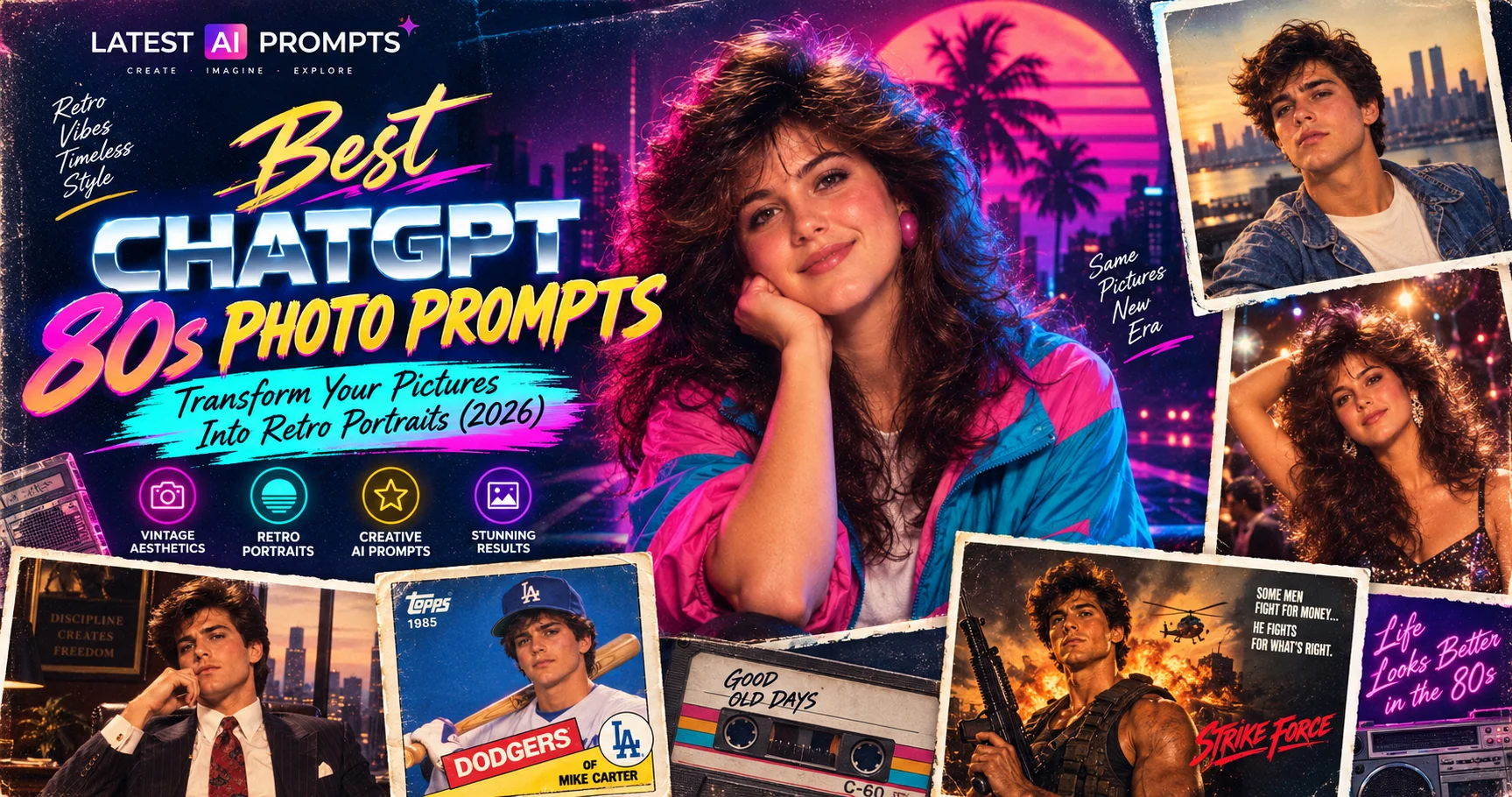
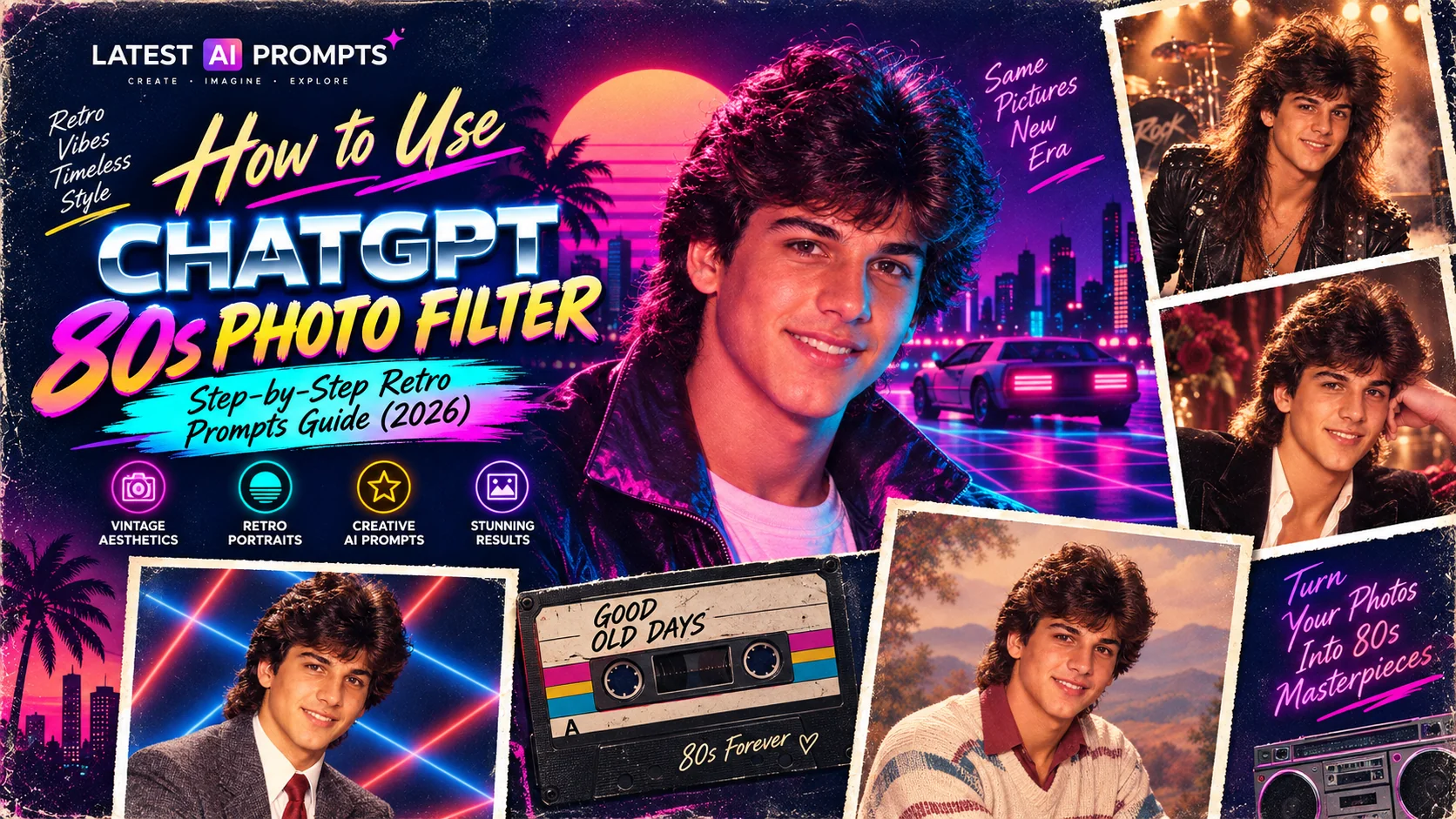
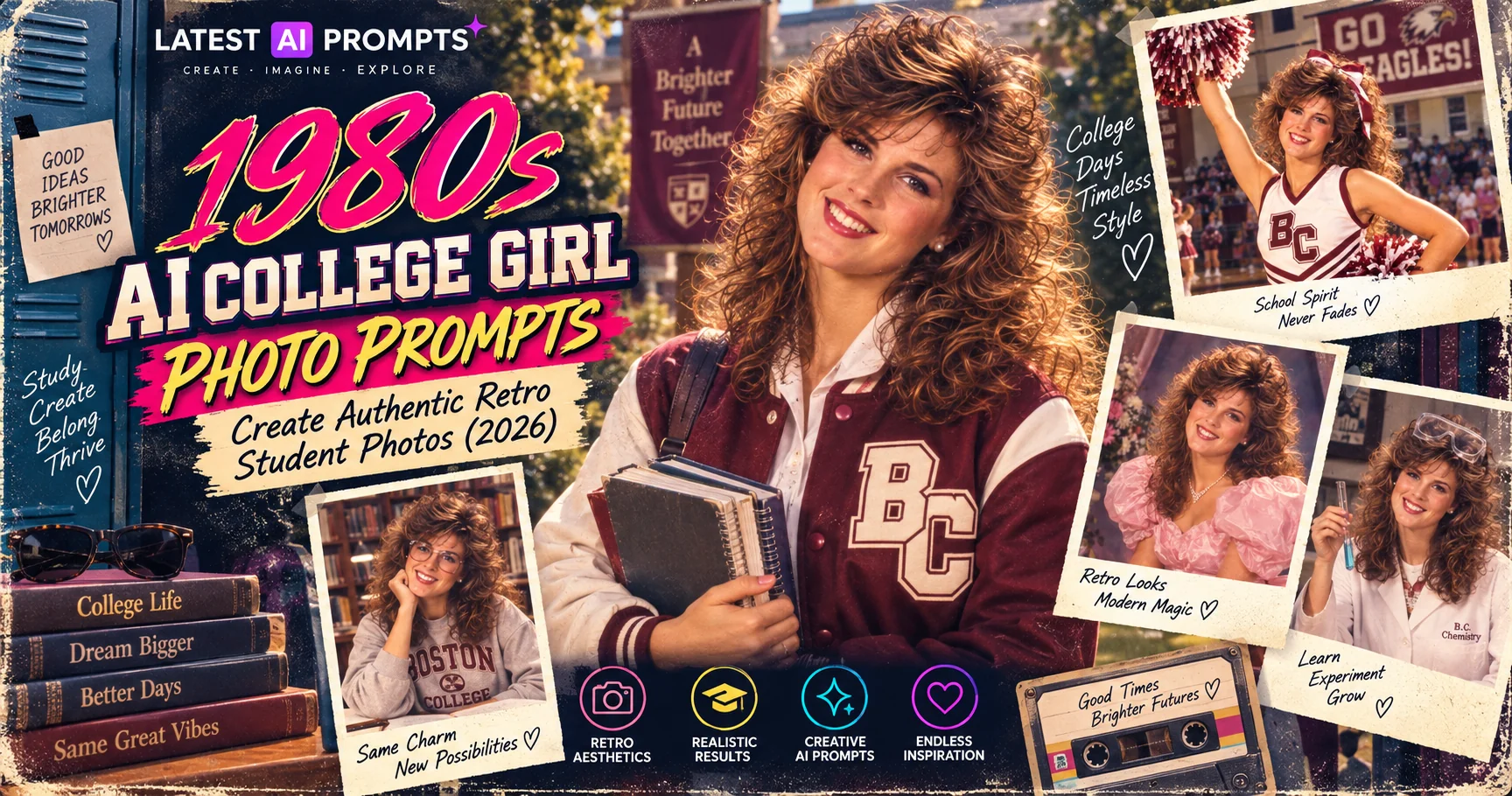
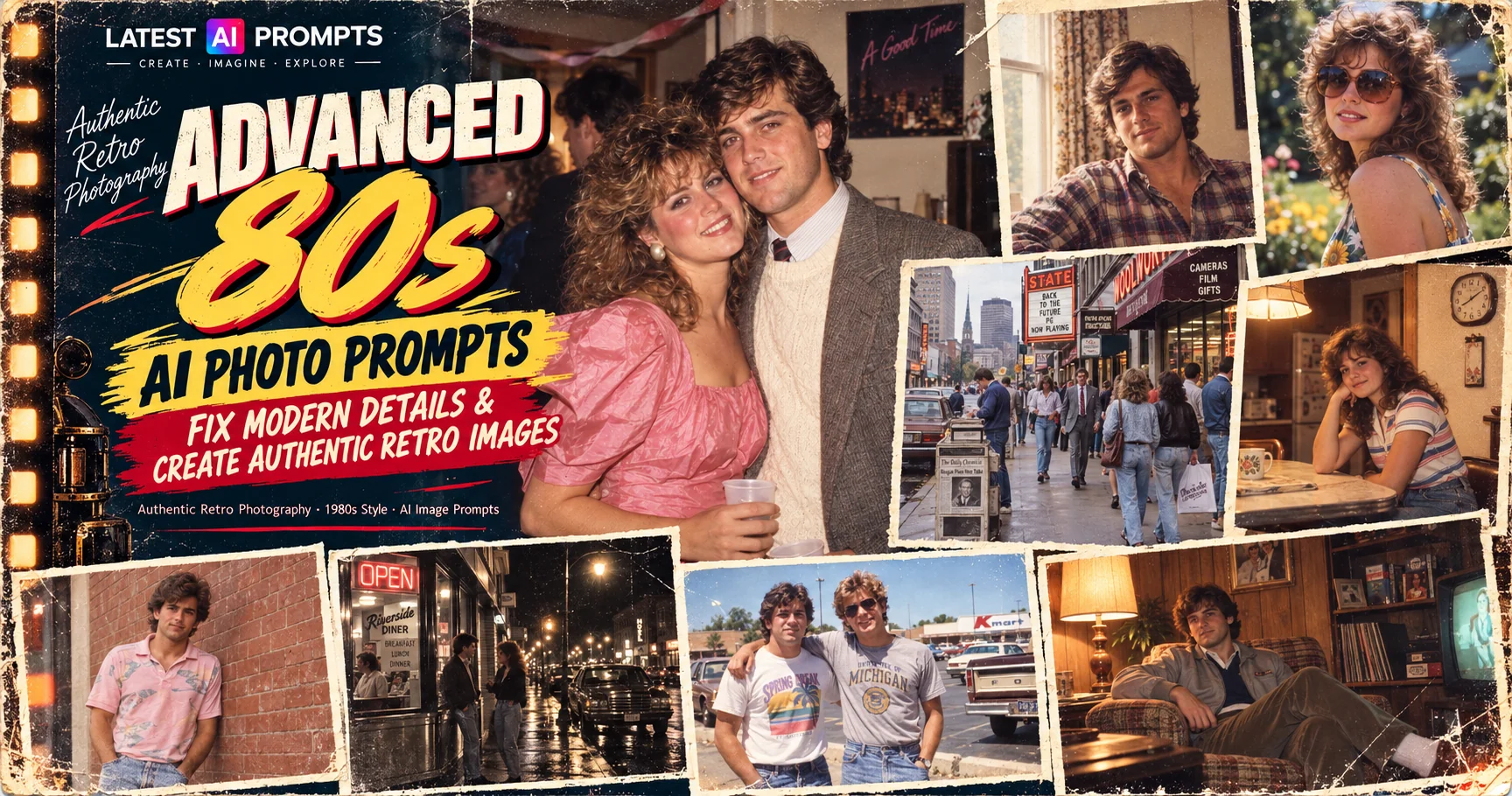
1980s AI college boy prompts are rapidly becoming one of the most searched retro photo trends of 2026 — and with very good reason. The American college campus of the 1980s gave men one of the most instantly recognisable visual identities in the history of photography: Ralph Lauren polo shirts with the collar popped, varsity letterman jackets with felt patches, voluminous side-parted hair, Kodak Gold 200 film grain, Lifetouch yearbook portrait studios, sun-drenched campus quads, and dorm rooms filled with cassette players and spiral-bound notebooks. Now, with ChatGPT DALL·E 3, Midjourney, Google Gemini, and Adobe Firefly, you can recreate every corner of that iconic era without a time machine. In this guide, we share the 10 best 1980s AI college boy prompts covering the full spectrum of campus life: from classic yearbook studio headshots and preppy autumn campus fashion to varsity sports portraits, dorm room candids, graduation ceremonies, and early-morning campus strolls with a Sony Walkman. Every prompt is engineered with precise film stock simulation, era-authentic styling details, period-accurate props, and warm 1980s colour grading for consistently convincing retro results.
- 10 ready-to-copy prompts — no editing needed
- Works with ChatGPT DALL·E 3, Gemini, Midjourney & Adobe Firefly
- Covers yearbook portraits, preppy campus, varsity jacket, dorm room, graduation & more
- Includes cultural context for each 1980s college boy style
- 100% free — no signup required
Whether you want to relive the feeling of flipping through an old campus yearbook, create retro-aesthetic social media content, or produce a nostalgic creative project, these 1980s AI college boy prompts give you a direct shortcut into the visual language of male campus life four decades ago.
5 Elements That Make 1980s College Boy AI Photos Look Authentic
Before diving into the prompts, understanding these five key elements will help you get the most era-accurate, nostalgically convincing 1980s college male results from any AI image generator:
1. Film Stock Specification
Naming a real 1980s film stock — such as Kodak Gold 200, Kodak Ektacolor, or Fujicolor C200 — instantly anchors the AI in the correct era. Each stock had a distinct colour science: Kodak Gold produced warm golden-amber highlights and slightly saturated reds, while Fujicolor leaned toward cooler skin tones with a slight green-grey cast in shadows. These are the exact stocks that Lifetouch and independent campus photographers used throughout the decade for both yearbook portraits and candid campus shoots.
2. Period-Accurate Male Fashion
The 1980s college boy look is defined by three distinct camps: the preppy Ivy League aesthetic (Ralph Lauren Polo with collar popped, cuffed khaki chinos, Sperry Top-Siders, cable-knit sweater tied over the shoulders), the sporty athletic style (varsity letterman jacket with felt patches, high-top Converse, nylon Adidas windbreaker), and the casual campus look (graphic college sweatshirt, acid-wash jeans, canvas backpack). Including even two or three specific details from one of these camps immediately places the image in the correct decade.
3. Studio Lighting Vocabulary
1980s campus portrait studios — most notably Lifetouch, the dominant provider for American college yearbooks throughout the decade — used a very specific lighting setup: a tungsten-toned main softbox positioned at 45 degrees, a gentle fill reflector on the opposite side, and a gradient-painted backdrop typically shifting from deep navy at the edges to a lighter blue-grey at the centre. Specifying “Lifetouch yearbook studio lighting” or “gradient painted backdrop, soft 45-degree fill lighting, warm tungsten main light” communicates precisely this setup to the AI.
4. Campus Setting Details
Context is everything for believability. A yearbook portrait needs the gradient studio backdrop and formal studio posing. A campus stroll needs red-brick Georgian architecture, an autumn maple canopy, and a concrete pathway. A dorm room candid needs cinder-block walls with concert posters, a single bed with a patterned comforter, a cassette player on the desk, and a spiral-bound notebook on the floor. A sports portrait needs gymnasium bleachers or an athletics field with period-accurate goal posts and a cinder track. These environmental details tell the AI precisely which slice of 1980s college life to render.
5. Colour Grading Descriptors
Modern AI tools default to sharp, clean digital colour. To push them convincingly into 1980s territory, add explicit colour grading instructions such as “warm faded amber highlights”, “gentle colour fade and organic film grain”, “slight magenta-yellow cast typical of aged Kodacolor print film”, or “soft chromatic glow and natural lens vignette at the edges”. These phrases instruct the AI to replicate the specific optical and chemical signatures of analogue photography from the era, separating the result cleanly from anything that looks digitally produced.
1. 1980s College Yearbook Portrait — Retro Student AI Prompt
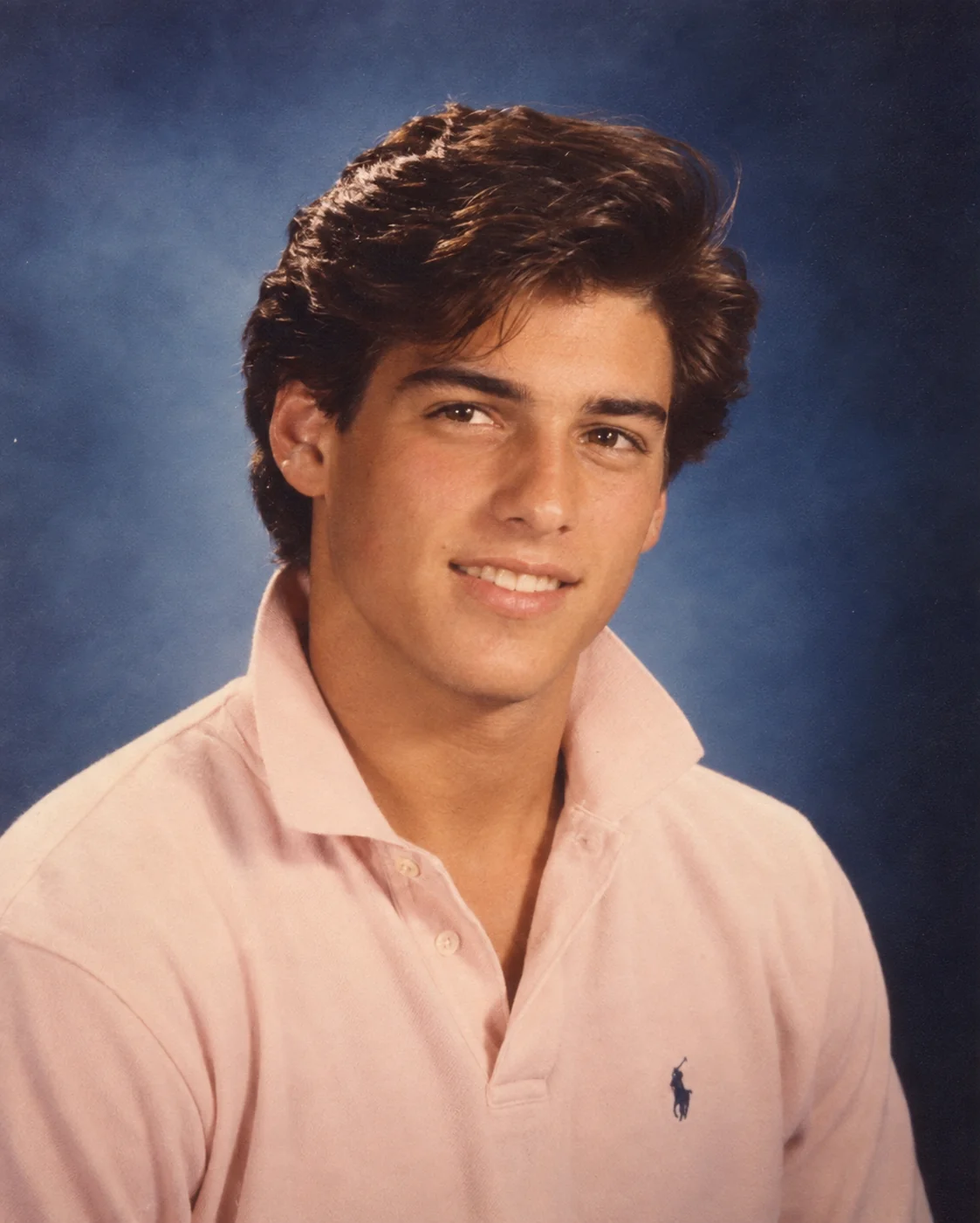
The college yearbook portrait was the single most universal photographic format of 1980s American campus life. Every male student — from Harvard to the smallest state community college — sat for a Lifetouch or Prestige Portraits studio setup at the beginning of each academic year. The painted gradient backdrop, shifting from deep navy at the periphery to a lighter blue-grey at the centre, became so deeply embedded in the cultural memory of the decade that it still instantly reads “1980s school photo” to anyone who attended college during those years. The warm, slightly amber colour science of Kodak Ektacolor — the professional print film Lifetouch used in its studio cameras — gave every portrait that distinctive golden, slightly hazy glow that separates it completely from the cold clarity of modern digital photography.
2. Preppy Campus Fashion Portrait — 1980s College Boy AI Prompt
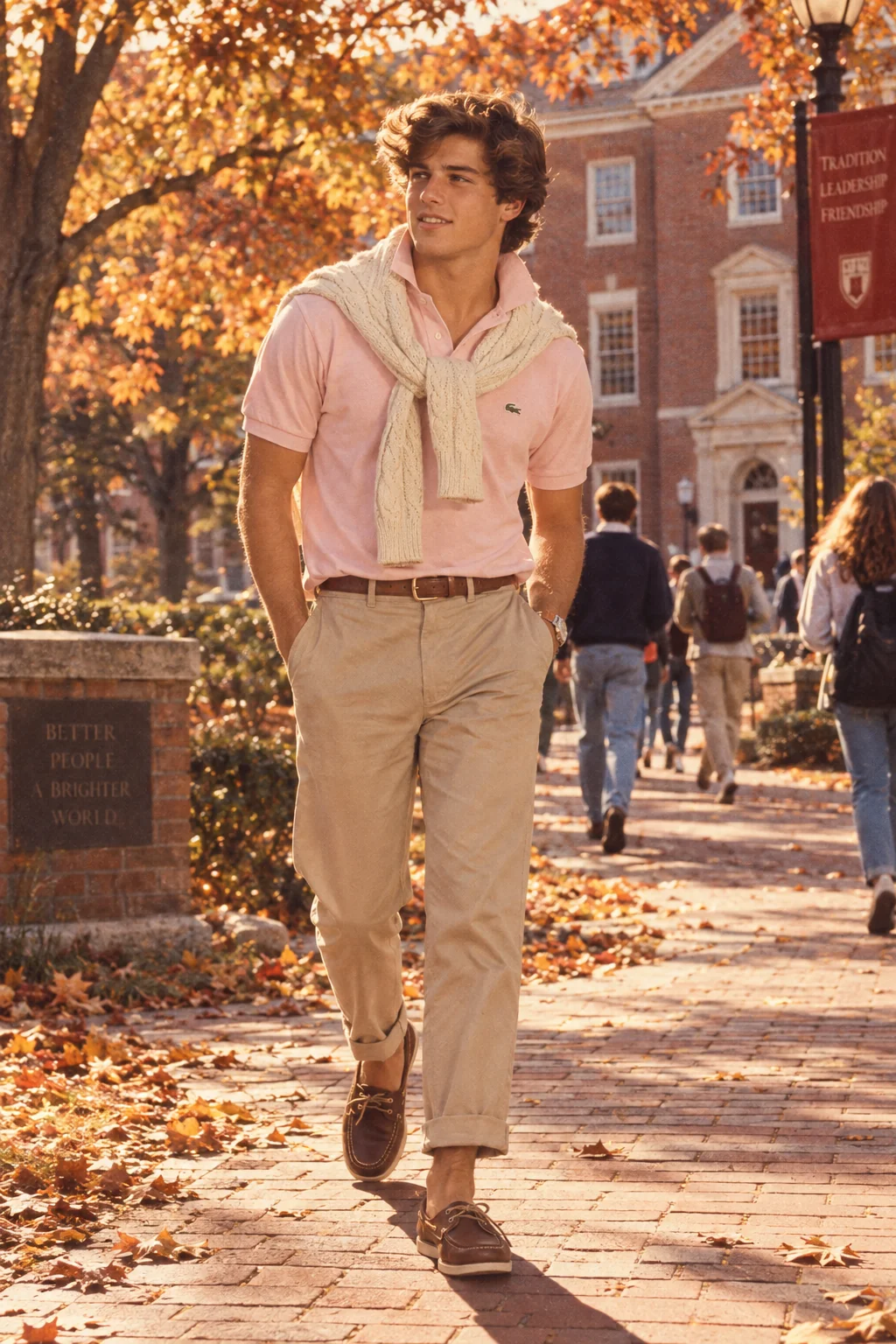
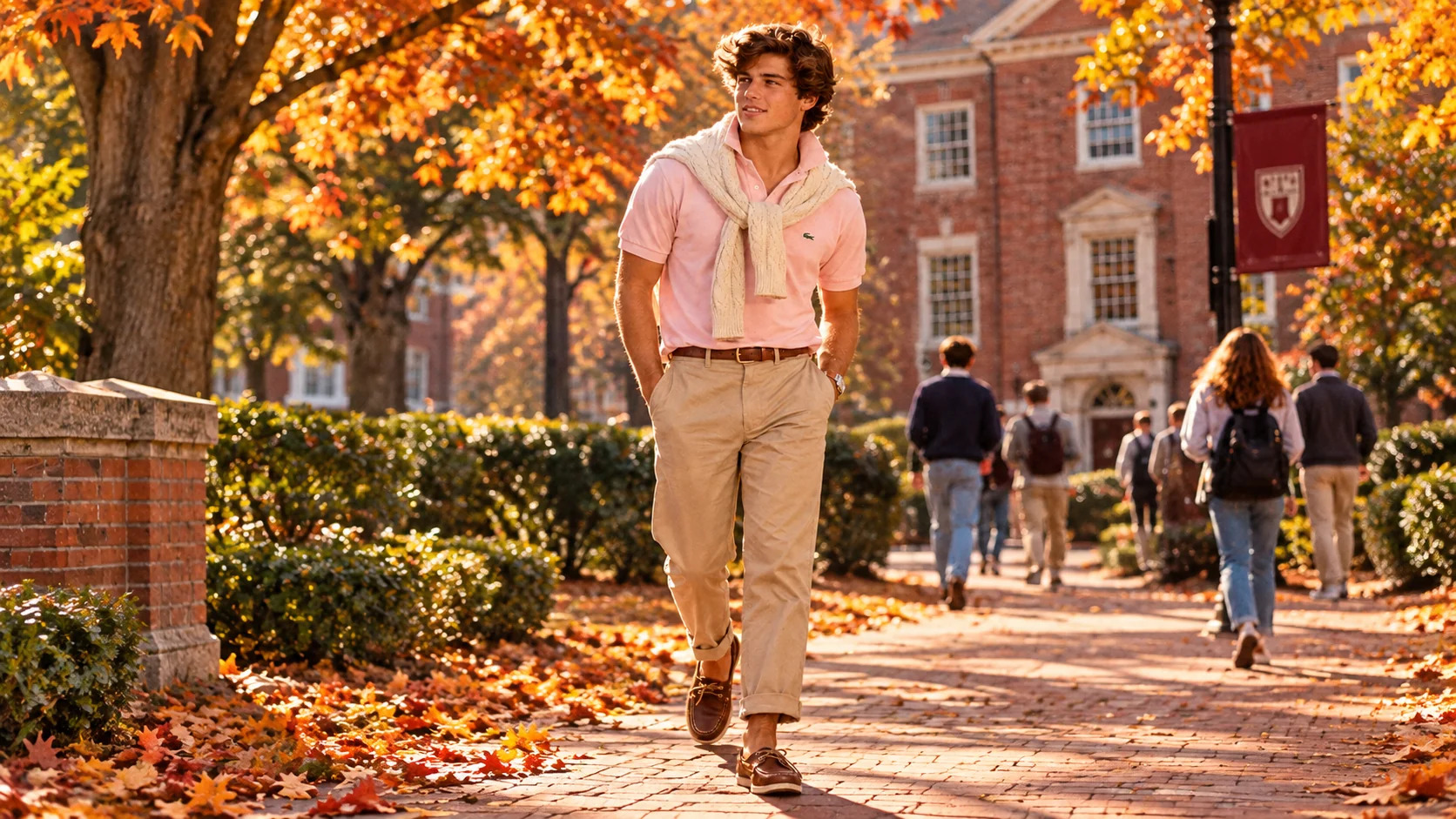
The preppy Ivy League aesthetic dominated American college male fashion throughout the 1980s with a thoroughness that is difficult to overstate. Brands like Ralph Lauren, Izod Lacoste, Brooks Brothers, and L.L. Bean were not merely clothing labels — they were social signifiers, markers of belonging to a campus culture defined by old-money confidence and the relaxed athleticism of the northeastern university circuit. The polo shirt with its collar popped — a detail that has since become almost a parody of the decade — was at the time a genuine expression of casual upper-class campus identity. Shot on Kodak Gold 200 against a backdrop of red-brick Georgian architecture and autumn maple trees, this combination of setting and styling creates one of the most immediately recognisable visual archetypes of 1980s American college life.
3. Campus Library Study Session — 1980s College Boy AI Prompt
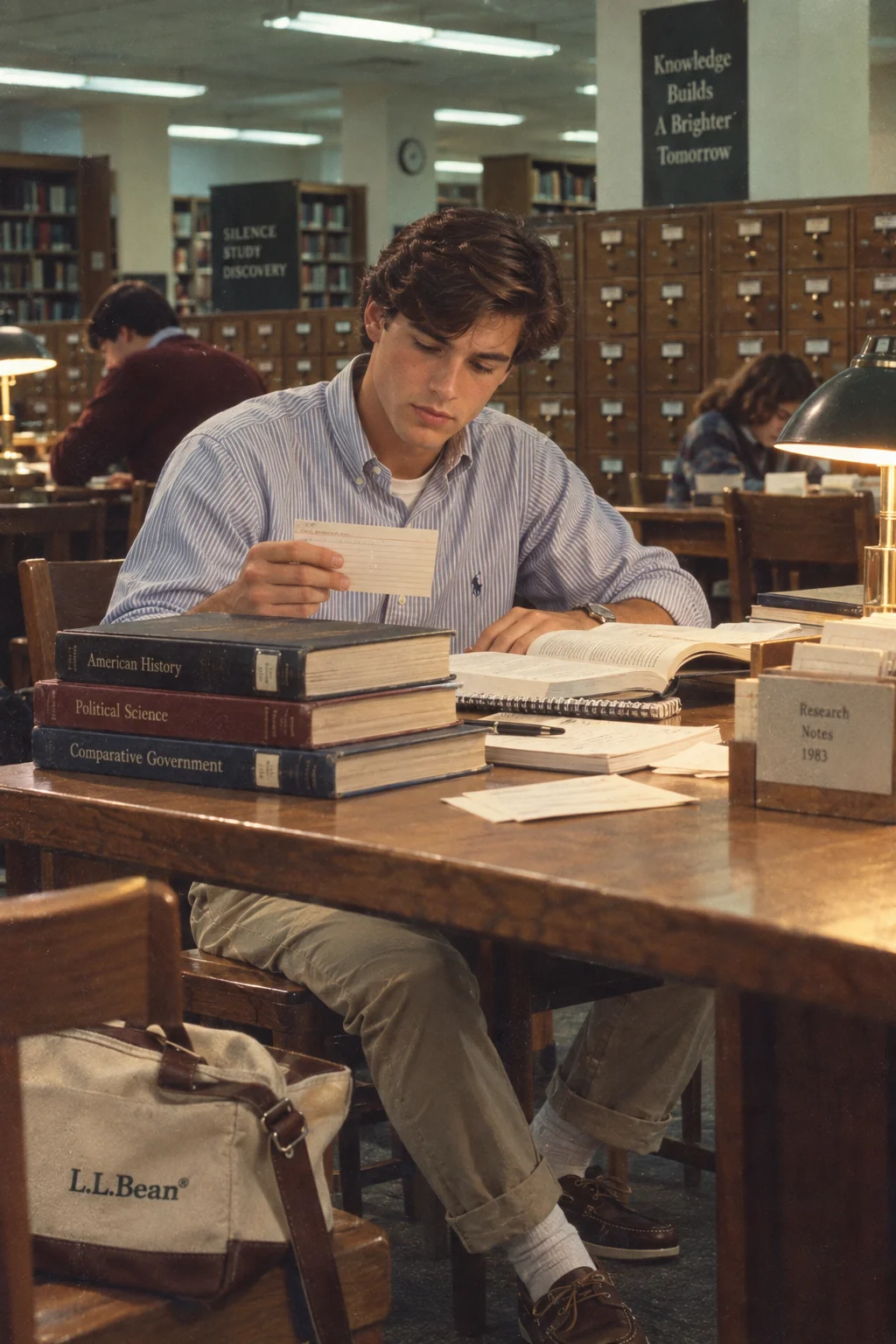
Before the internet, before laptops, and before digital card catalogues, the college library was the intellectual nerve centre of campus life — and the card catalogue drawer system was its defining physical artifact. Each wooden drawer, labelled with hand-typed paper inserts, held hundreds of index cards cataloguing every volume in the collection by author, title, and subject. Researching a paper meant physically opening dozens of drawers, pulling cards, cross-referencing, and transcribing call numbers by hand. Photographed under the specific quality of 1980s fluorescent tube lighting — a cooler, slightly greenish cast that Fujicolor C200 rendered with a characteristic cyan-tinted shadow palette — this scene captures both the intellectual atmosphere and the particular visual texture of a decade defined by analogue information management.
4. Varsity Letterman Jacket Portrait — 1980s College Boy AI Prompt
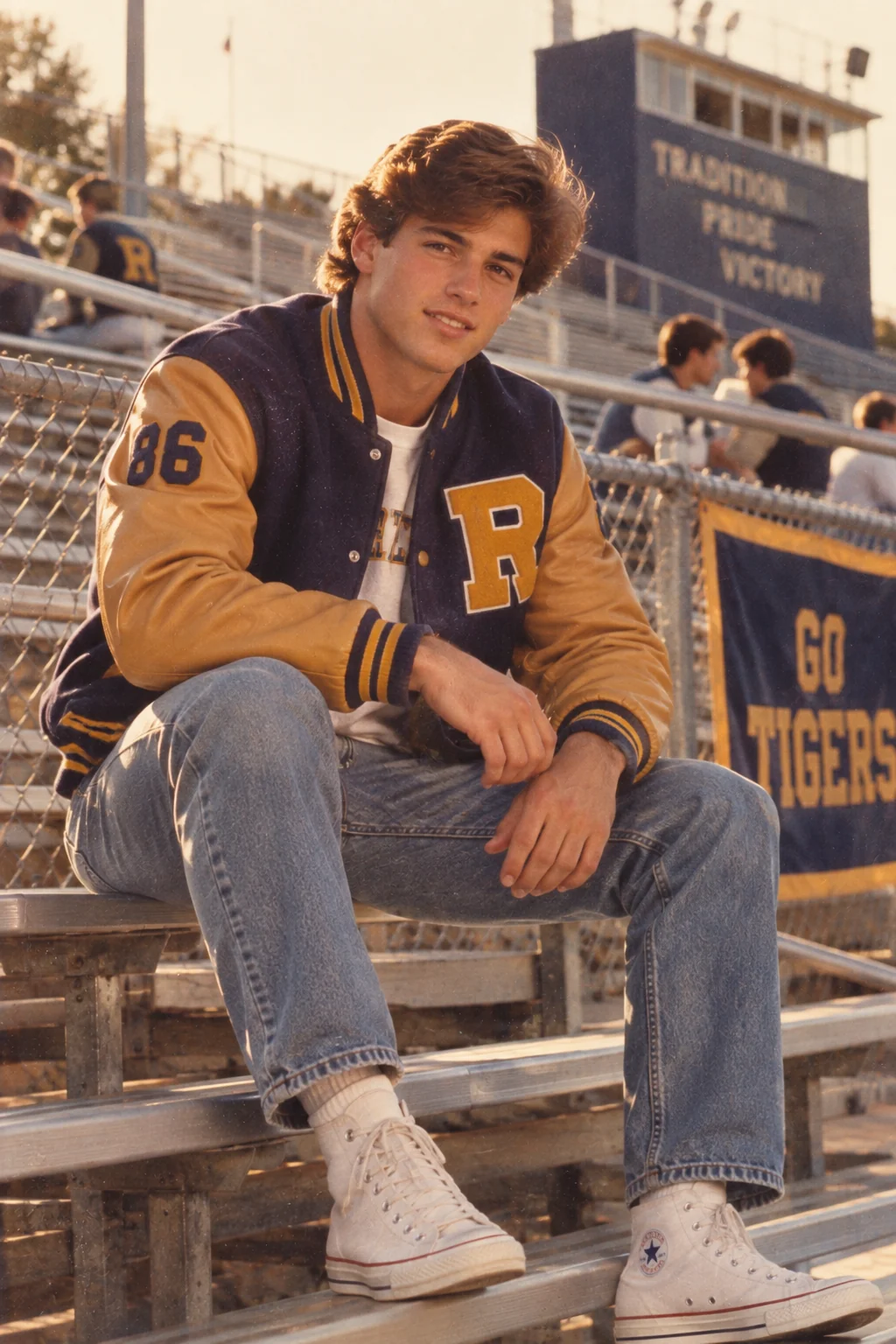
The varsity letterman jacket occupied a uniquely elevated position in the social hierarchy of 1980s American college life. Earning the right to wear one — by achieving varsity status in a school-sanctioned sport — was a rite of passage that conferred immediate social recognition on any campus. The wool body in school colours, the leather sleeves, the felt letter patch, and the ribbed collar and cuffs were as much a uniform of identity as they were a garment. Shot against gymnasium bleachers or a chain-link athletics fence under warm late-afternoon stadium light, with Kodak Gold 200’s characteristic amber warmth rendering the scene, this prompt captures one of the most aspirational and culturally loaded images in the entire archive of 1980s American college photography.
5. Dorm Room Candid Portrait — 1980s College Boy AI Prompt
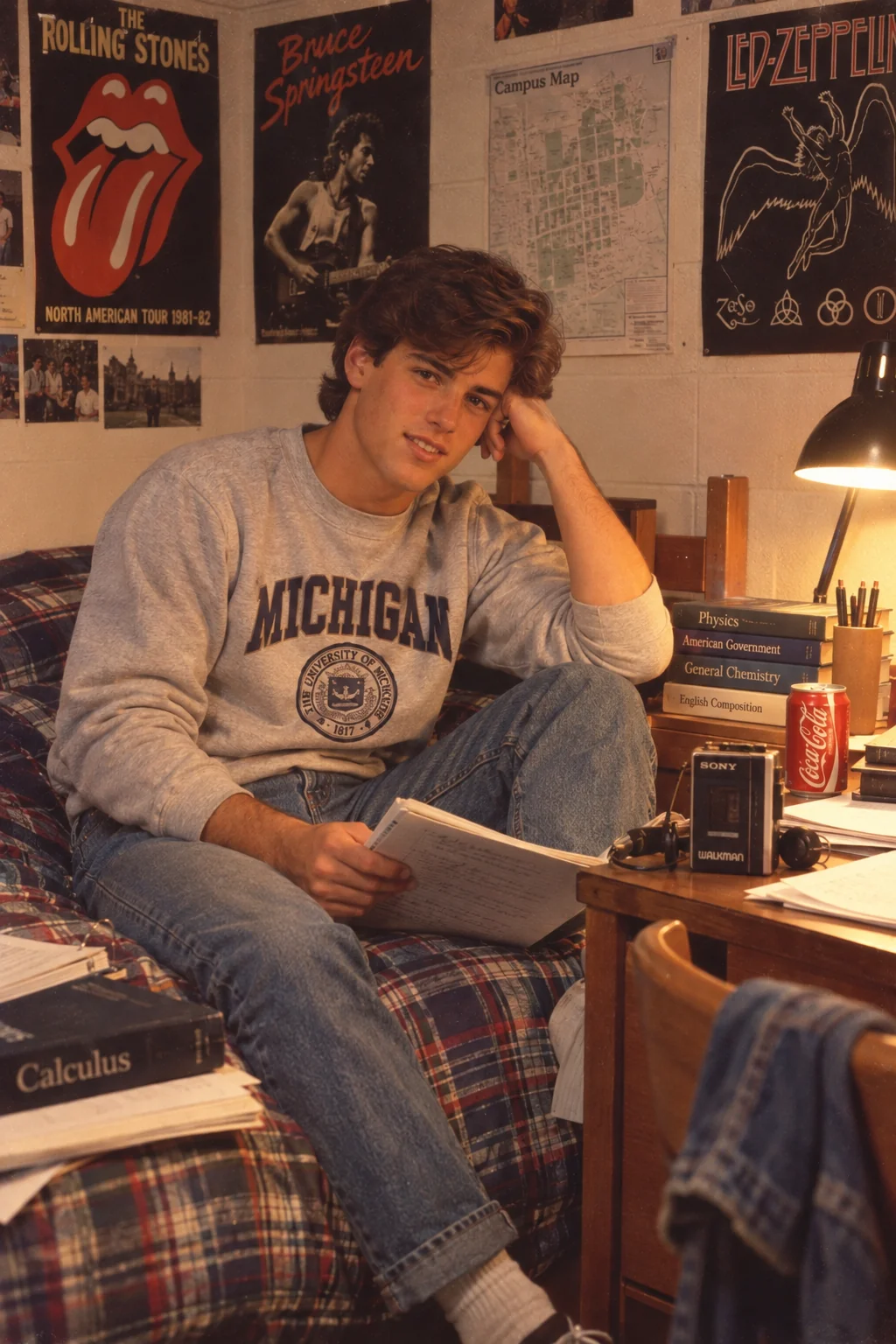
The college dormitory room was the private interior world of 1980s campus life — and it was one of the most visually distinctive spaces of the entire decade. Painted cinder-block walls covered in concert posters (Bruce Springsteen, The Police, U2), a narrow single bed with a patterned comforter from home, a compact desk lamp angled over a chaos of open textbooks and hand-written notes, and a Sony Walkman sitting beside a can of Coke — these details collectively formed the material reality of dormitory living for an entire generation of American college students. Fujicolor C200’s slightly warm, amber-heavy rendering of incandescent light gives this scene exactly the intimate, lived-in quality that separates a convincing 1982 dorm room portrait from anything that could pass for a modern image.
6. Sporty Windbreaker Campus Shot — 1980s College Boy AI Prompt
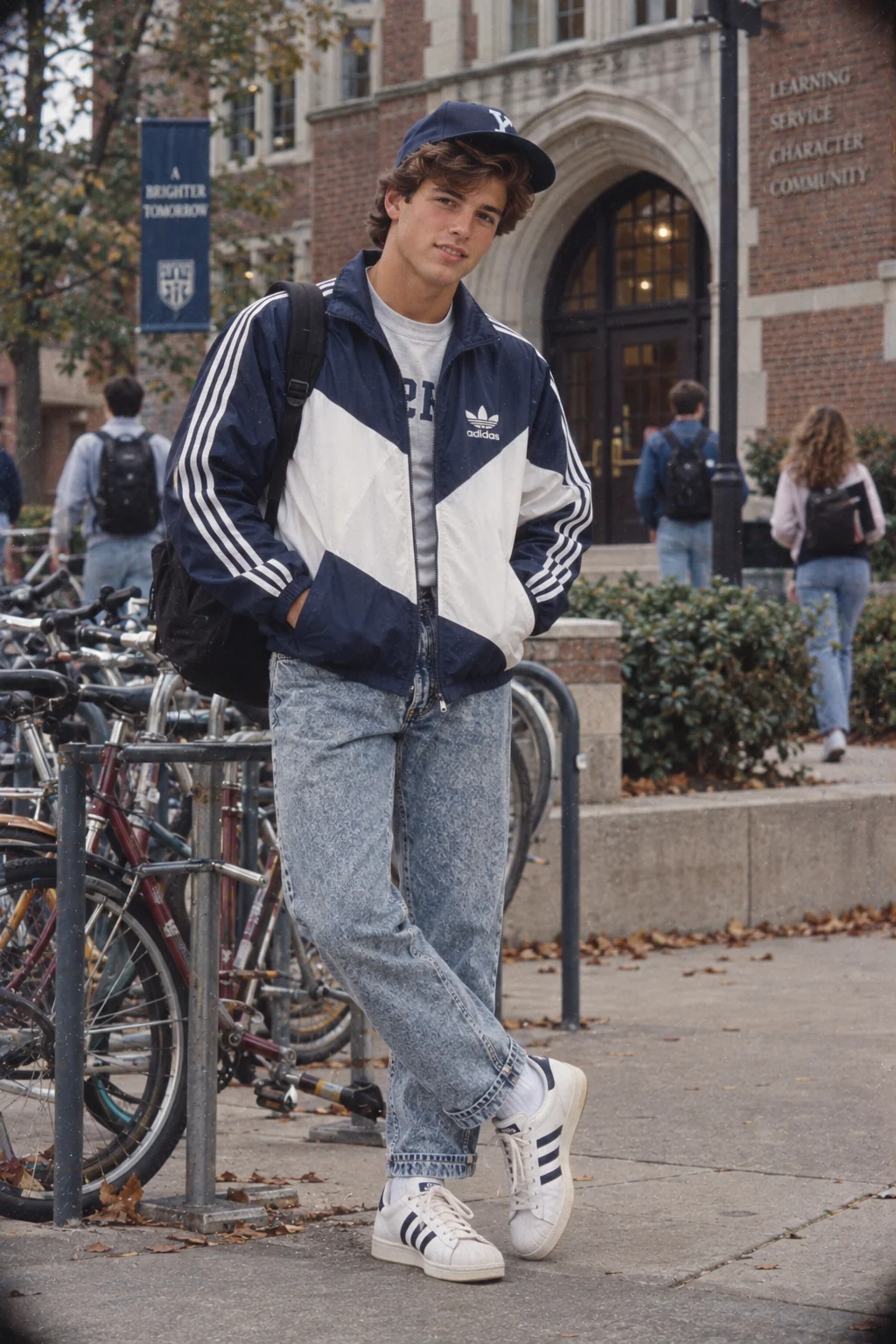
By the mid-to-late 1980s, the influence of athletic brands on everyday college campus fashion had become total. Adidas — riding the enormous cultural wave generated by hip-hop’s adoption of the brand, most iconically by Run-D.M.C. in their 1986 ode to the Superstar sneaker — had crossed over completely from the gymnasium to the lecture hall and the campus pathway. The colour-blocked nylon windbreaker became the defining outerwear garment of the era’s sporty college male: practical against the campus wind, immediately recognisable in its graphic blocked panels, and carrying the cultural weight of athletic aspiration. Kodacolor VR 400’s cooler, slightly more muted colour rendering — compared to the warmer Kodak Gold — gives this outdoor campus shot the particular flat, slightly overcast atmosphere that characterises the best candid photography of the late 1980s.
7. Fraternity Common Room Portrait — 1980s College Boy AI Prompt
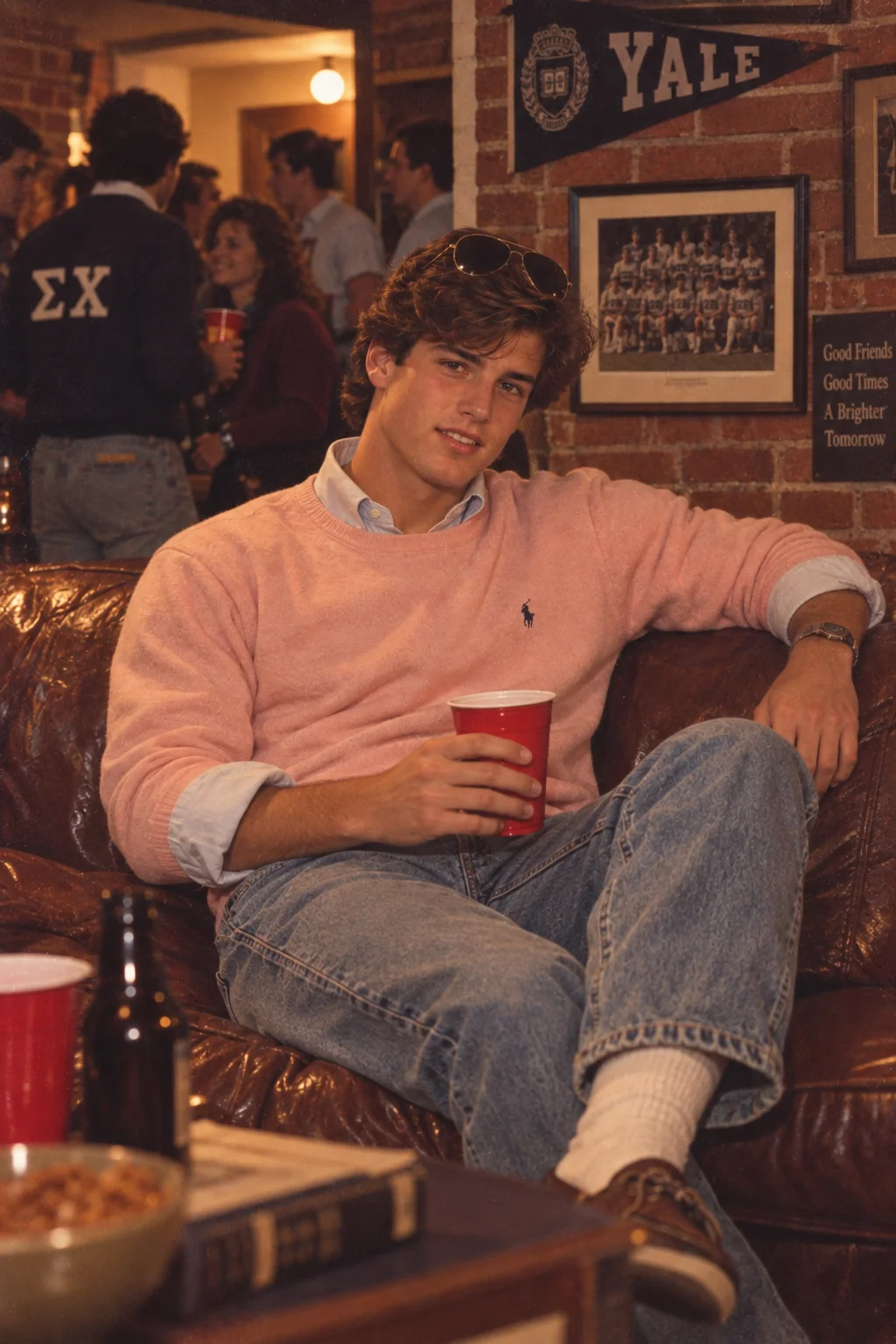
The fraternity house and campus social scene occupied a central role in 1980s American college culture in a way that is genuinely difficult to convey to anyone who did not experience it. Greek life at large state universities — and to a lesser but still significant extent at private colleges — structured much of the informal social calendar of campus life. The visual language of these spaces was defined by exposed brick walls hung with sports pennants, worn leather furniture accumulated over decades of student occupancy, warm incandescent lighting that turned every gathering into an amber-glowing scene of casual confidence, and clothing that perfectly split the difference between the preppy Ivy aesthetics of daytime campus wear and something slightly more relaxed. Kodak Ektacolor’s warm, amber-biased colour rendering makes it the ideal film stock for capturing the particular visual mood of these interiors.
8. Preppy Stone Steps Portrait — 1980s College Boy AI Prompt
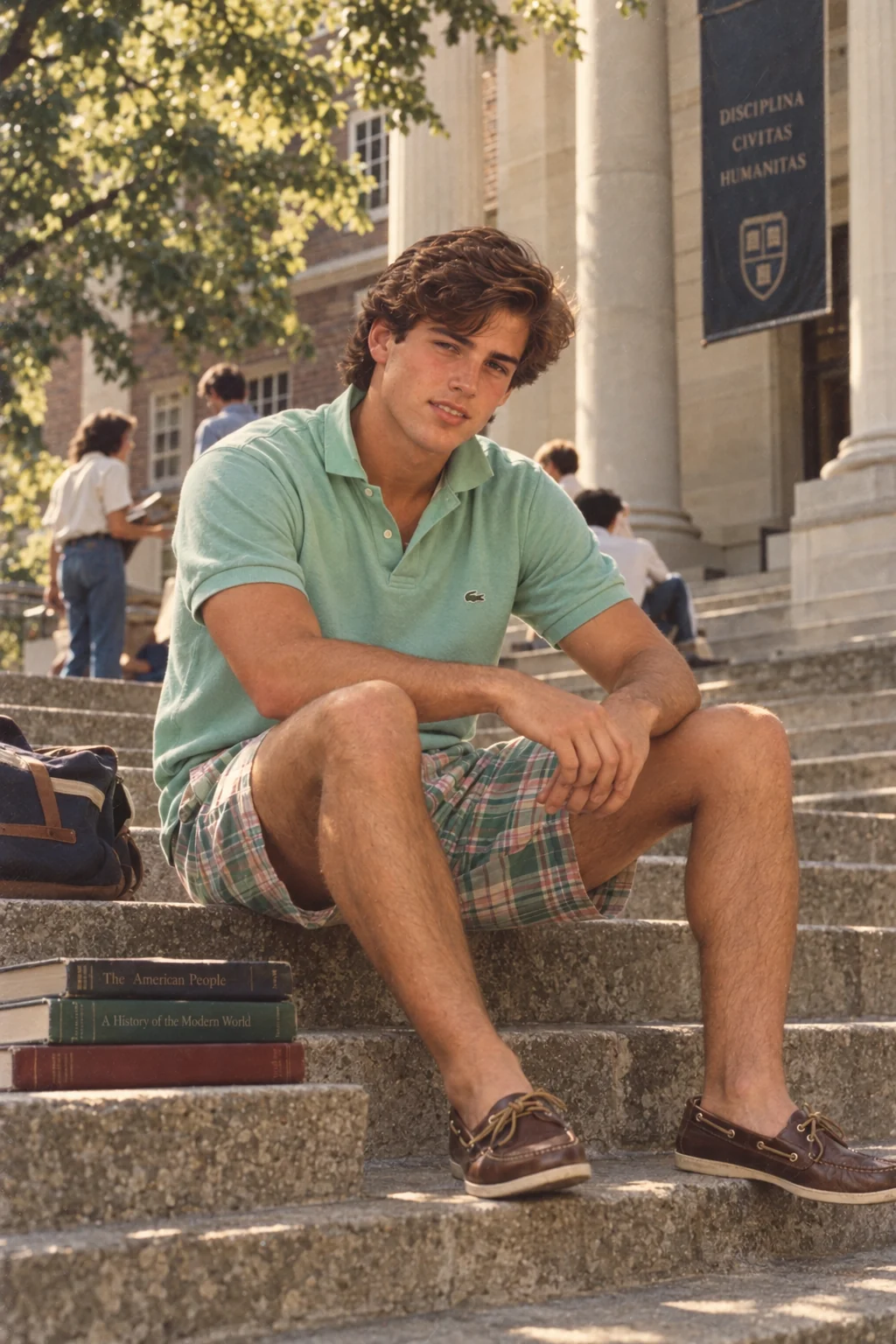
The wide stone steps of a Georgian or Federal-style campus building provided perhaps the single most archetypal setting for informal portrait photography in 1980s American college life. These steps — found at the entrance to libraries, administration buildings, and main academic halls across universities from Georgetown to the University of Virginia — served as the natural gathering point and social stage of campus life between classes. Sitting on these steps in quintessentially preppy summer campus attire — polo shirt, Madras shorts, boat shoes — under warm afternoon light filtered through the canopy of mature trees planted decades earlier, captured a very specific vision of privileged American college life that Fujicolor C200’s characteristic amber-green tone renders with the exact quality of warmth and slight softness that makes it immediately read as analogue 1980s photography.
9. Walkman Campus Morning Stroll — 1980s College Boy AI Prompt
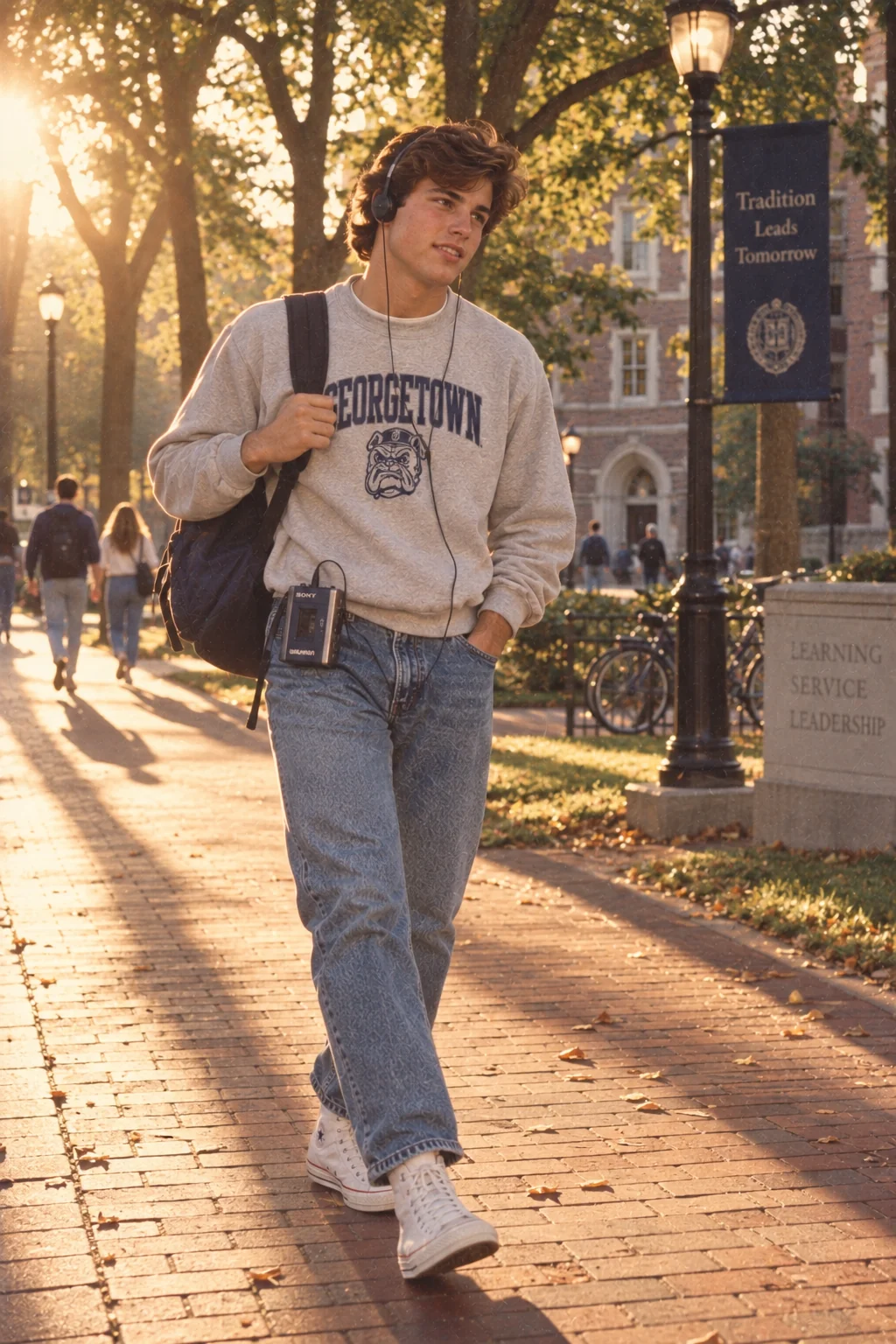
When Sony released the Walkman TPS-L2 in 1979 and it rapidly became the defining consumer electronics object of the early 1980s, it fundamentally changed what it meant to move through public space with a private soundtrack. For a generation of American college students, the Walkman transformed the morning walk to class from a mundane transition between spaces into something closer to a personal cinematic experience — the campus pathway became a dolly track through one’s own carefully curated life. The foam-padded headphones, the orange “WALKMAN” text on the player’s body, the cassette tape visible through the small window — these details are so specifically of their moment that including them in an AI prompt immediately and unmistakably places the resulting image in a very precise two-to-three year window of the early 1980s. Kodak Gold 200’s warm morning-light rendering, with its characteristic slight overexposure in the golden-hour highlights, completes the picture.
10. 1980s Graduation Day Portrait — College Boy AI Prompt
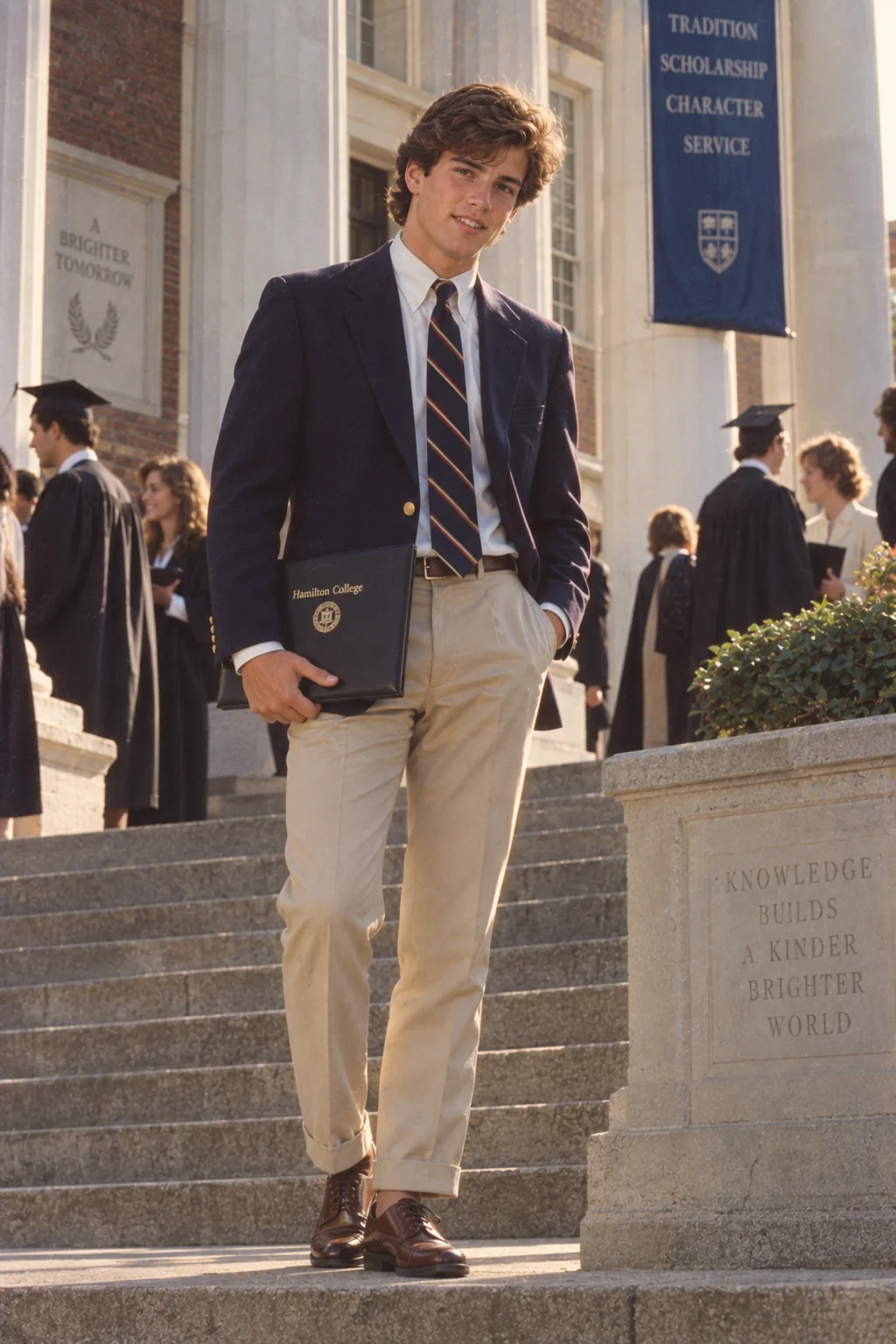
The formal graduation or end-of-year portrait marked the final photographic chapter in the 1980s American college experience — and it carried a visual weight that distinguished it clearly from the casual candid and yearbook photography that preceded it. The navy blazer over a white Oxford shirt and regimental tie was the unofficial male dress uniform for these occasions across virtually every American campus from the mid-1970s through to the early 1990s: clean, conservative, aspirational, and unmistakably associated with the particular moment of transition from student to graduate. Shot in soft afternoon daylight against classical stone architecture, with Fujicolor C200’s warm amber midtone rendering and the characteristic slight halation glow that diffusion filters produced in bright areas of 1980s film photography, this prompt recreates the visual quality of one of the most emotionally resonant image types in the entire archive of decade’s campus photography.
How to Get the Best Results from 1980s AI College Boy Prompts
These six techniques will significantly improve the authenticity and consistency of your 1980s AI college boy results across any AI image generator:
Use a Clear Front-Facing Photo
For ChatGPT DALL·E 3 and similar tools that accept image uploads, start with a clean, well-lit, front-facing portrait as your reference. The AI needs clear facial geometry to preserve your identity accurately while overlaying period-specific styling. Avoid heavily filtered, sunglasses-wearing, or profile-angle source photos, as these give the AI less information to work with and frequently result in facial features being altered along with the aesthetic transformation.
Lock Your Identity Explicitly
Always include an explicit identity-preservation instruction in your prompt, such as “preserve my exact facial features, face shape, skin tone, bone structure, and identity unchanged — change only the styling, clothing, and setting”. Without this instruction, AI image generators will frequently interpret the aesthetic transformation as permission to alter facial structure, skin tone, or age, producing results that look period-accurate but no longer resemble you.
Name a Specific Film Stock
The single most effective technical upgrade you can make to any 1980s AI prompt is to replace the generic term “vintage look” with the name of a real 1980s film stock. Kodak Gold 200 produces warm amber highlights. Fujicolor C200 gives cooler, slightly greenish shadows. Kodak Ektacolor was the dominant professional studio print film of the era. Each of these stock names communicates an entire colour science, grain structure, and tonal character to the AI that generic descriptors simply cannot replicate.
Be Specific About Clothing Brands
Generic clothing descriptions produce generic results. Replace “a polo shirt” with “a Ralph Lauren Polo shirt in pale blue with the collar popped”. Replace “a jacket” with “a wool and leather varsity letterman jacket in navy and gold with a felt letter patch on the chest”. The AI responds to specificity — brand names, colours, construction details, and accessories like boat shoes, tasselled loafers, or high-top Converse all help anchor the styling precisely in the 1980s male collegiate wardrobe.
Iterate with Technical Adjustments
If your first result looks too digitally sharp or modern, iterate by adding: “increase film grain intensity”, “add more colour fading and warm amber bias”, or “soften the focus further and add natural lens vignette”. Conversely, if the result has over-applied the vintage effect and looks distorted, add “subtle film grain only — maintain photographic realism”. Think of the prompt as a dial, not a switch — the best results come from fine-tuning rather than a single attempt.
Exclude Modern Elements Explicitly
AI image generators have been trained predominantly on modern photography and will insert anachronistic modern details unless explicitly prevented. Include negative constraints such as “no smartphones, no modern vehicles, no LED lighting, no digital sharpening, no modern hairstyles, no contemporary signage”. For Midjourney specifically, use the negative prompt parameter: --no smartphones, laptops, modern cars, LED lights, contemporary clothes. These exclusions are as important as the positive descriptors in achieving an authentic 1980s result.
Why These 1980s AI College Boy Prompts Work So Well
The precision of these prompts comes from combining four specific types of knowledge that most AI prompt users overlook:
Historically Grounded Cultural Detail
Each prompt is built from genuine historical knowledge of 1980s American college life — not generic “vintage” assumptions. The specific brands (Ralph Lauren, Izod Lacoste, Adidas, Sperry, Converse), the specific campus providers (Lifetouch yearbook studios), the specific consumer electronics (Sony Walkman TPS-L2), and the specific architectural settings (Georgian red-brick campuses, painted cinder-block dorm rooms) all came from documented research into what the 1980s American college campus actually looked and felt like. This depth of historical specificity is what separates these results from generic retro filters.
Real Film Stock Science
The film stocks named in these prompts — Kodak Gold 200, Kodak Ektacolor, Fujicolor C200, Kodacolor VR 400 — are not invented. Each had a documented colour science, grain structure, and tonal character that photographers, printers, and consumers recognised at the time. Kodak Gold’s warm amber bias, Fujicolor’s cooler shadows, Ektacolor’s professional studio rendering — these technical differences translate directly into the way AI image generators interpret and apply the aesthetic, producing results with genuine photographic character rather than a uniform “vintage filter” look.
Multi-Tool Compatibility
Every prompt in this guide has been constructed with language that works across the four major AI image platforms — ChatGPT DALL·E 3, Midjourney, Google Gemini, and Adobe Firefly. The vocabulary of film stocks, lighting setups, and period-accurate clothing details is understood consistently across all four tools. For Midjourney users, appending --style raw --ar 3:4 to any portrait prompt will further enhance the analogue film quality. For DALL·E 3, selecting HD quality before generating improves detail retention significantly.
Precise Layering of Descriptors
Each prompt layers five distinct categories of description: era anchor (the year and cultural context), clothing specifics (brand, colour, construction detail), setting details (architectural environment and props), film stock and lighting (technical photographic character), and colour grading (the tonal palette of aged print film). This layered structure means the AI receives enough redundant, reinforcing information from multiple angles to produce a consistently on-era result, rather than the inconsistent outputs that single-dimension “make it look 80s” prompts typically generate.

Jitendra Patra
AI Prompt Researcher & Software Engineering Student
Jitendra Patra is a software engineering student and AI prompt researcher specialising in Google Gemini and generative image models. He actively experiments with structured prompt engineering techniques to produce accurate, era-specific visual transformations across retro, vintage, and period photography categories.
His research into 1980s college boy AI prompts focuses on identifying the precise film stock vocabulary, lighting setup language, colour grading descriptors, and period-accurate cultural prop details that produce the most authentically convincing decade-specific results from AI image generators — distinguishing genuinely 1980s college male outputs from the generic “vintage” aesthetics that under-specified prompts typically produce.
These prompts are developed through iterative testing across ChatGPT DALL·E 3, Midjourney, Gemini, and Adobe Firefly to ensure cross-tool compatibility and consistent retro quality across all major AI image platforms.
Frequently Asked Questions
Can ChatGPT create a realistic 1980s college boy photo from a modern photo?
Yes. ChatGPT with DALL·E 3 can transform a modern photo into a convincing 1980s college boy portrait. Upload a clear front-facing photo and use a prompt specifying era-accurate clothing such as a polo shirt, varsity jacket, or cuffed khakis, a period hairstyle like a voluminous side-part or brushed-back look, a real film stock like Kodak Gold 200, and warm 1980s studio lighting. Always instruct the AI to preserve your facial features and identity exactly for the best identity-retaining results.
Which 1980s college boy style looks most authentic in AI photos?
The classic yearbook portrait style produces the most instantly recognisable 1980s college boy result. Using a painted blue-to-navy gradient studio backdrop, butterfly portrait lighting, a Ralph Lauren Polo shirt, and Kodak Ektacolor film emulation creates an image that reads unmistakably as 1980s American campus photography. The letterman varsity jacket prompt is also highly convincing for an athletic, sports-oriented 1980s male student look that immediately reads as the era.
Do these 1980s college boy prompts work with Midjourney and DALL-E 3?
Yes, all 10 prompts are tested for compatibility across ChatGPT DALL·E 3, Midjourney, Google Gemini, and Adobe Firefly. Each prompt includes real film stock names, lighting descriptions, and specific clothing references that all major AI image generators understand. For Midjourney, append --ar 16:9 --style raw for the most authentic analogue film look. For DALL·E 3, upload a reference photo alongside the prompt and select HD quality for best identity preservation.
What clothing and hairstyle details make 1980s college boy AI photos look authentic?
The most effective 1980s college boy clothing details are: a Ralph Lauren Polo or Izod Lacoste shirt with the collar popped, cuffed khaki chinos, a varsity letterman jacket with felt patches, a cable-knit sweater tied loosely over the shoulders, high-top Converse Chuck Taylor sneakers, and Sperry Top-Sider boat shoes. For hairstyles, voluminous side-parted hair brushed back with light product, a neatly combed preppy parting, or a slight mullet (longer at the back) are the most period-accurate options for 1982 to 1989.
How do I make my 1980s AI college boy photo look like real film photography?
Include these technical descriptors in your prompt: name a specific film stock such as Kodak Gold 200 or Fujicolor C200, specify organic 35mm film grain, add warm slightly faded colour tones with gentle amber highlights, request soft focus or a diffusion filter glow, and mention natural lens vignetting at the edges. Avoid modern descriptors like 4K, HDR, ultra-sharp, or photorealistic digital rendering, which all push the AI toward a contemporary aesthetic that defeats the period-specific effect.
Can I use AI-generated 1980s college boy photos commercially?
Commercial usage rights depend on the AI tool you use. Adobe Firefly images are fully cleared for commercial use. ChatGPT DALL·E 3 images are commercially usable under OpenAI’s current terms as of 2026. Midjourney commercial rights depend on your subscription tier — Pro and higher plans include commercial licensing. Always review the current terms of service of whichever platform you use before publishing AI-generated images in a commercial context.